






🗺️ LESSONS OF FAITH FROM JOSHUA
⛪ Lesson 10 : The True Joshua
📘 10.2 Type and Antitype
✨ Unity in Diversity – How Typology unfolds God’s work of salvation
🟦 Introduction
The Bible tells one continuous story of salvation.
The Old Testament reveals shadows – the New Testament reveals their reality.
Types are more than symbols – they are prophecy in pictures.
Antitypes are their fulfillment in Christ, the Church, and the end of time.
Typology means:
• discovering Jesus in the Old Testament
• understanding God’s way of leading His people
• finding hope, because every type points toward redemption
…………………………….. 🗺️ ……………………………..
📖 Bible Study
We examine three major Old Testament types:
| Typus | Meaning in the OT |
|---|---|
| Israel | Chosen people, carriers of the covenant |
| Exodus from Egypt | Deliverance from slavery – a new beginning |
| Sanctuary | Place of sacrifice, grace & God’s presence |
1. Israel as a Type
Israel is called God’s son (Hosea 11:1).
Yet Israel failed — lacking trust, obedience, faithfulness.
Christ becomes the true Israel — the perfect Son who fulfills the calling fully.
In the New Testament this calling expands:
A spiritual Israel forms — born not from blood, but from faith and rebirth.
In the end-time a restored Israel stands again — sealed, purified, faithful.
Movement:
Israel → Jesus → Church → End-time Remnant
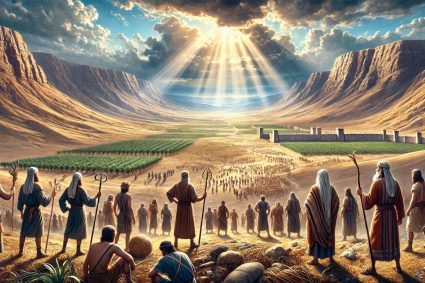
2. The Exodus from Egypt as a Type
Egypt represents bondage, sin, false security.
The Exodus is God’s intervention — salvation from the humanly impossible.
Christ experiences His own “Exodus,” called out of Egypt as a child —
the beginning of His mission as the new Moses, Redeemer and Deliverer.
The Church shares the same calling:
Out of the old life — out of spiritual chains —
not into a geographical land, but into a spiritual inheritance.
At the end of time God calls His people again:
“Come out of Babylon” — the final Exodus before Christ returns.
3. The Sanctuary as a Type
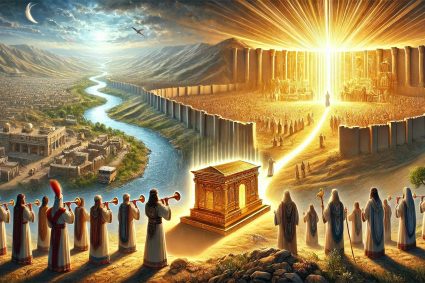
The earthly sanctuary made visible what is reality in heaven:
S in → Sacrifice → Atonement → Restoration
In Christ, God Himself dwells bodily among us.
Jesus is the Lamb, the High Priest, and the Sanctuary.
The Church becomes the temple —
a dwelling place for the Holy Spirit.
In eternity God will dwell with His people directly —
no temple, no veil, no separation.
The line is clear:
Shadow Sanctuary → Christ in the flesh → Church as His dwelling → Eternal Presence with no temple needed
…………………………….. 🗺️ ……………………………..
🗣️ Answers to the Questions
Frage 1: How are Israel, the Exodus and the Sanctuary fulfilled in three phases — Christological, Ecclesiological and Eschatological?
1. Israel
a) Christological (Matt. 2:15):
Jesus is the true Israel — He repeats and perfects Israel’s history.
b) Ecclesiological (Gal. 6:16):
The Church becomes the Israel of God — defined by faith, not bloodline.
c) Eschatological (Rev. 7:4–8,14):
A final remnant appears — sealed, purified, faithful to God.
2. Exodus from Egypt
a) Christological (Matt. 2:19–21):
Jesus lives His own Exodus — salvation begins in Him.
b) Ecclesiological (2 Cor. 6:17):
The Church is called out of spiritual bondage — out of worldliness & darkness.
c) Eschatological (Rev. 18:4):
God’s people leave end-time Babylon — the last great Exodus.
3. Sanctuary
a) Christological (John 1:14; 2:21):
Christ Himself is the temple — God lived in Him.
b) Ecclesiological (1 Cor. 3:16–17):
The Church becomes God’s temple — the Spirit dwells in believers.
c) Eschatological (Rev. 3:12; 11:19; 21:3,22):
God dwells forever with His people — no temple needed, for God IS the temple.
Question 2: What do you do when it is sometimes difficult for you to understand the meaning of certain passages?
• I pray for light — understanding comes from God.
• I keep reading — patience deepens comprehension.
• I compare Scripture with Scripture.
• I use study tools (commentaries, concordance).
• I discuss passages with other believers.
• I accept that growth is a journey — not a leap.
…………………………….. 🗺️ ……………………………..
✨ Spiritual Principles
✔ Christ stands at the center of all typology
✔ Faith sees light inside shadows
✔ Every Exodus begins with obedience
✔ Whoever lives near the Sanctuary lives near God
…………………………….. 🗺️ ……………………………..
🛠 Life Application
☑ Leave your “Egypt” — habits that enslave you
☑ Live as a temple — pure, open to the Spirit
☑ Stand as the remnant — faithful, loving, stable
☑ Walk by faith even when you see nothing
…………………………….. 🗺️ ……………………………..
🧩 Conclusion
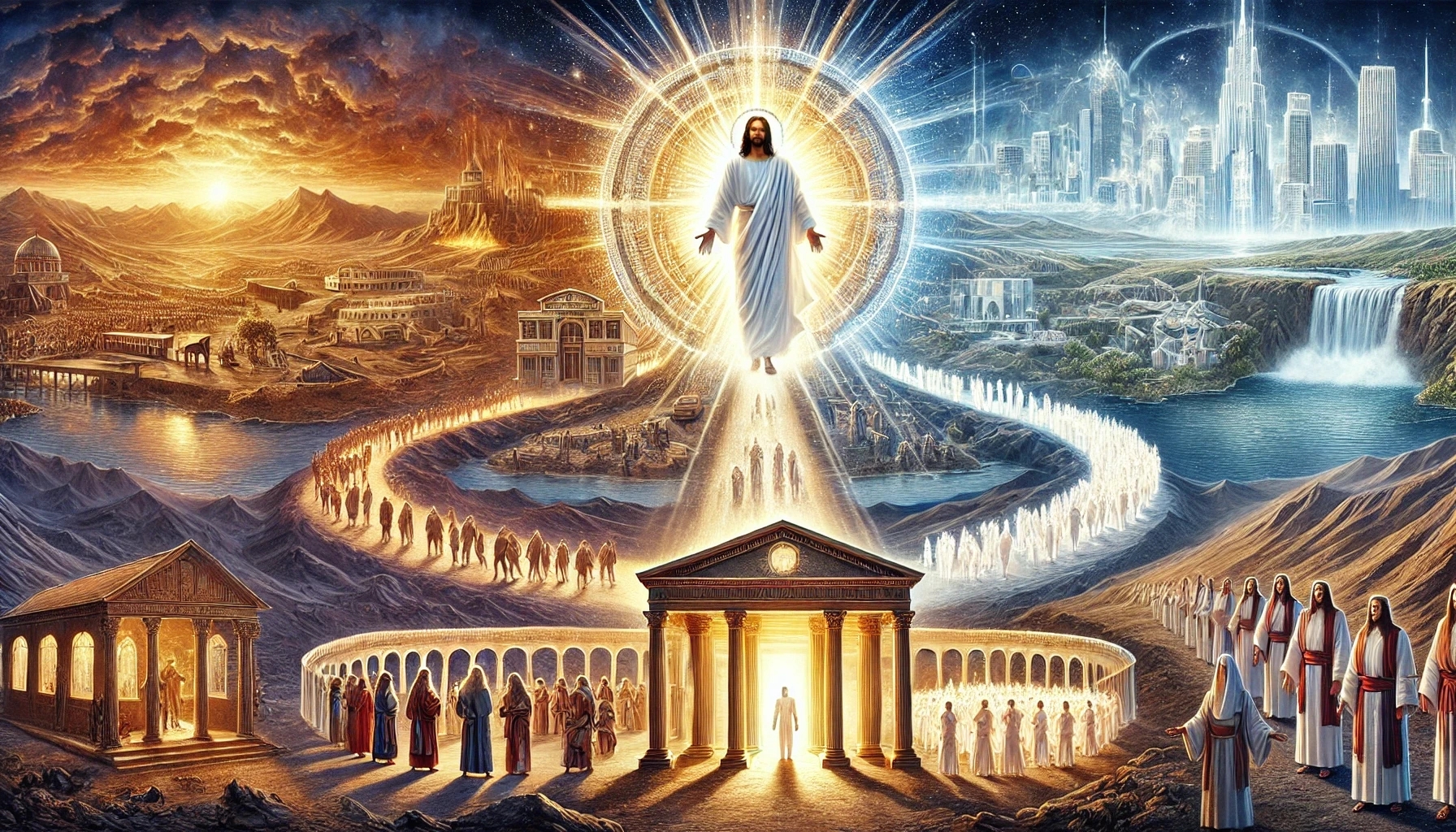
Old Testament types are signposts.
They lead from shadow → to the Cross → to the Church → to eternity.
…………………………….. 🗺️ ……………………………..
💭 Thought of the Day
Faith begins where sight ends — and God takes over.
…………………………….. 🗺️ ……………………………..
✍️ Illustration
Shadows in the Glass Light
The story of Israel, Exodus, and Sanctuary inside a modern soul
Chapter 1 – Israel in the Heart
When David closed the door of his small apartment, he felt like a wanderer once again.
No destination, no homeland — only questions.
His room was filled with things, but not with peace.
His life with schedules — not with meaning.
He sat at the kitchen table, too small for dreams and too large for loneliness, and whispered:
“Lord… who am I in Your story?”
Israel.
Not the land — the heart.
Calling without obedience.
Longing without direction.
A quiet, unsettling truth echoed inside his chest:
He was Israel — called, but scattered.
Loved, yet running.
✦ ─────────────── ✦ ─────────────── ✦
Chapter 2 – Egypt in Neon Light
His city was not named Egypt.
And yet — it was.
People chased security in money, achievement, approval.
David too was enslaved by deadlines, ambition, and the need to prove himself.
He worked hard, laughed rarely, prayed fast.
One evening — tired, overworked, empty — he stopped before a glass facade.
His reflection stared back like a prisoner behind transparent walls.
“I am free, yet I live bound,” he thought.
Then he remembered the Exodus:
Israel did not free itself — God did.
They did not break chains — He opened a path through the sea.
David closed his eyes.
Maybe freedom did not begin with strength.
Maybe it began with surrender.
✦ ─────────────── ✦ ─────────────── ✦
Chapter 3 – The Sanctuary of Flesh
The next morning he set his coffee aside and reached for his Bible —
not as duty, but as search.
“If You dwell here, Lord… show me the way.”
While he read, he sensed something new.
Not loud, not emotional —
more like warm wind in a cold room.
Christ was not only history.
Not only Redeemer —
He was Presence.
David saw:
He didn’t have to climb up to God —
God came down.
Into flesh.
Into weakness.
Into nearness.
If Christ was the temple —
and we are His body —
then David himself was a sanctuary.
A place designed for Presence.
Not for noise.
Not for fear.
For God.
✦ ─────────────── ✦ ─────────────── ✦
Chapter 4 – The Antitype in Everyday Life
The shadows of the Old Testament began to shine inside him.
Israel → God’s call
Egypt → deliverance
Sanctuary → presence
Not just history.
His story.
He rose from the table, opened the window, and breathed deeply.
Today was no ordinary day.
Today was Exodus.
Today was restoration.
David put away his phone —
and chose not to spend his lunch break in the office, but in the park.
With a chapter of Scripture.
With prayer.
With silence.
Not because he was holy —
but because God was holy, and He sought him.
✦ ─────────────── ✦ ─────────────── ✦
Chapter 5 – The Future in Light
Weeks later David shared his journey with his small group.
No dramatic miracle, no shining vision —
only a heart that had learned:
Faith is more a walking than a explaining.
They listened, some with tears.
Others nodded softly.
The shadow of Israel, the Exodus from Egypt, the sanctuary of God —
they were not just theological categories.
They had become life.
And David knew:
This was not the end.
Only prophecy.
Foreshadowing.
Shadow of a glory yet to come.
…………………………….. 🗺️ ……………………………..
🌿 Final Reflection on the Story
The Bible does not end on paper —
it continues writing itself into human hearts.
Type becomes path.
Antitype becomes life.
And you are part of it.
