







🌱LIVING FAITH | 10.The True Joshua | 10.4 The True Joshua, the Antitype | 🗺️ LESSONS OF FAITH FROM JOSHUA
🗺️ LESSONS OF FAITH FROM JOSHUA
⛪ Lesson 10 : The True Joshua
📘 10.4 The True Joshua, the Antitype
✨ Jesus – the true Joshua who secures our eternal inheritance
🟦 Introduction
To understand the book of Joshua, we must recognize that the biblical wars are not just historical military reports, but salvation-historical symbols. God led His people into the Promised Land – not merely as a geographical conquest, but as a theological movement from slavery to inheritance, from unrest to rest, from chaos to order.
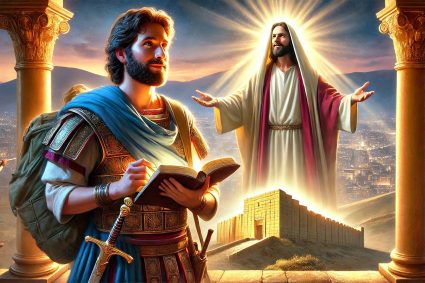
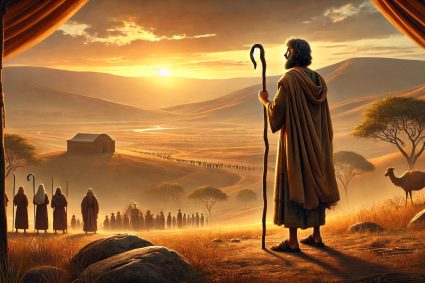
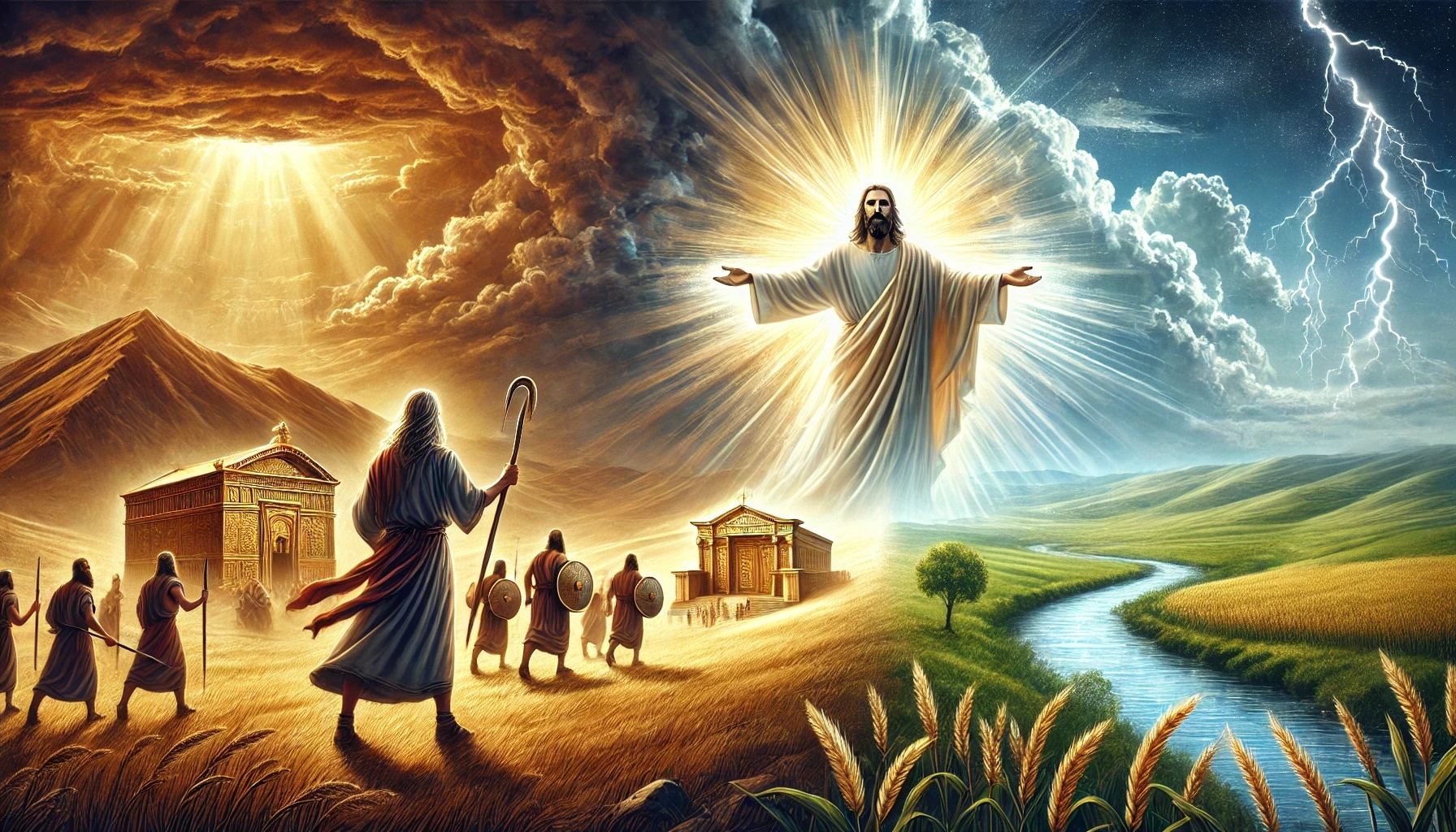
Joshua was the successor of Moses, but in the New Testament he appears as a foreshadowing of Christ, who does not give us land but heavenly inheritance and true rest. Jesus is the antitypical Joshua, the final leader who wins the battle we could never win ourselves.
…………………………….. 🗺️ ……………………………..
📖 BIBLE STUDY
🔍 1. Joshua – a historical leader and spiritual symbol
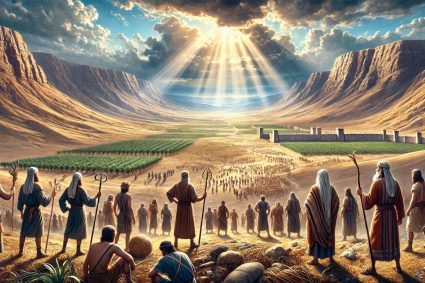
In the Old Testament, Joshua is not only a military commander, but a tool of God to allocate the Promised Land to the people of Israel. It is not about personal conquest or imperial expansion, but about God’s salvation plan: the people are to find rest in the land and live according to His commandments.
📘 Joshua 21:43–44: “So the LORD gave Israel all the land which He had sworn to give to their fathers… And the LORD gave them rest all around…”
🟨 Commentary:
The “rest” here is geographic and political. But it is limited, because later the people fall back into unfaithfulness. Therefore, the rest that Joshua gives is not the perfect rest of God, but a foretaste of something higher.
🔍 2. Hebrews 3:7–19: The warning against unbelief
📘 Hebrews 3:12:
“Take care, brothers, lest there be in any of you an evil, unbelieving heart that leads you to fall away from the living God.”
🟨 Commentary:
The book of Hebrews refers to Israel’s rebellion in the wilderness (Psalm 95). Despite God’s promise, the people refused in unbelief. The result: they missed the rest – the Promised Land.
The author warns: we today can also miss God’s rest through unbelief. Israel’s history is a mirror for the church today.
🔍 3. Hebrews 4:1–11: True rest is in Christ
📘 Hebrews 4:8:
“For if Joshua had given them rest, God would not have spoken later of another day.”
🟨 Commentary:
The text makes a clear distinction:
• Joshua’s rest = temporary, incomplete
• Jesus’ rest = eternal, perfect
The writer argues: if Joshua had given the true rest, there would be no further “today” (v.7). But God still speaks centuries later of a new “today” – meaning the promise of rest is still open.
📘 Hebrews 4:9:
“So there remains a Sabbath rest for the people of God.”
🟨 Commentary:
The term “Sabbath rest” (Greek sabbatismos) is unique – it means not the weekly Sabbath, but the perfect rest that comes through Christ. It is the rest from trying to earn salvation, because Christ has already finished the work (John 19:30).
🔍 4. The parallels between Joshua and Jesus
-
The name:
“Joshua” in Hebrew = Yehoshua → “God saves”
“Jesus” in Greek = Iēsous → same meaning!
🟨 Commentary:
Jesus’ name is no accident, but a deliberate link to Joshua. Jesus is not only the new Moses (prophet) but the new Joshua (conqueror and giver of inheritance).
-
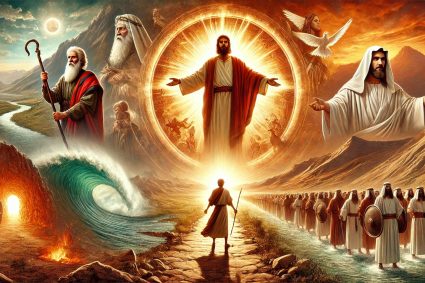
The Jordan experience:
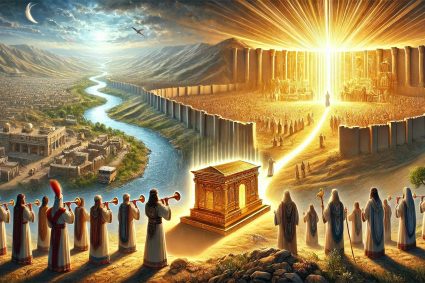
• Joshua leads Israel through the Jordan → into the land
• Jesus is baptized in the Jordan → beginning of His ministry (Matt. 3:13–17; Luke 3:22)
📘 Matthew 3:17: “This is my beloved Son…”
🟨 Commentary:
Jesus’ baptism is like a symbolic crossing: He enters the spiritual battle just as Joshua entered the land. God confirms His calling.
-
The number 40:
• Israel: 40 years in the wilderness
• Joshua: steps in as leader afterward
• Jesus: 40 days in the wilderness (Matt. 4:1–11)
• After the resurrection: 40 days with the disciples (Acts 1:3)
🟨 Commentary:
The number 40 in the Bible often signifies testing and preparation. Jesus enters His public ministry and the heavenly battle against evil after the testing.
-
The spiritual battle
Joshua fights earthly kings – Jesus fights spiritual powers:
📘 Ephesians 6:12: “For our struggle is… against the powers of darkness.”
📘 Colossians 2:15: “He disarmed the rulers and authorities… through the cross.”
🟨 Commentary:
Jesus is the true “warrior of God,” but not with the sword; rather, through obedience, love, and sacrifice. His victory is invisible but final.
-
Distribution of inheritance
Joshua distributes land – Jesus distributes eternal inheritance:
📘 Hebrews 9:15: “…so that those who are called may receive the promised eternal inheritance.”
📘 Ephesians 1:11: “In Him we have obtained an inheritance…”
🟨 Commentary:
The inheritance Jesus gives us is not land, but:
• Peace with God
• New identity
• Eternal life
• Fellowship with God
• Spiritual blessings in Christ
📌 Summary of the Bible study
| Theme | Joshua (Type) | Jesus (Antitype) |
| — | — | — |
| Name | “God saves” | “God saves” |
| Calling | Leader of Israel | Savior of the world |
| Jordan | Crossing into the land | Baptism – start of ministry |
| Battle | Against nations | Against sin & Satan |
| Rest | Temporary in the land | Eternal in God |
| Inheritance | Land in Canaan | Heavenly life |
| Work | Earthly, limited | Heavenly, perfect |
…………………………….. 🗺️ ……………………………..
🗣️ Answers to the Questions
✔️ Question 1: How does Hebrews 3:7–4:11 confirm the typology between Joshua and Jesus?
• Hebrews states that Joshua did not lead Israel into the true and final rest.
• The “rest” in the book of Joshua was a picture, not the goal.
• The New Testament clearly states: true rest comes through Christ.
• Jesus is the antitypical Joshua, who gives the real inheritance: eternal life, forgiveness, and reconciliation with God.
✔️ Question 2: What does it mean to rest in what Christ has done for us?
• Rest means to stop trying to prove yourself to God.
• We rest because the battle has already been won.
• We live not by performance, but by finished work (John 19:30).
• Rest means no longer fearing condemnation (Rom. 8:1).
✔️ Question 3: How do we know for certain that Jesus defeated Satan?
• Through the resurrection (Acts 2:24).
• Through the authority of His name (Phil. 2:9–10).
• Through the transformation of our lives (Gal. 5:22–23).
• Through the testimony of Scripture (Col. 2:15; Heb. 2:14–15).
• Through experiences of faith: deliverance, peace, healing, renewal.
…………………………….. 🗺️ ……………………………..
✨ Spiritual Principles
-
Christ fulfills all stories and patterns in the Bible. Typology shows God as an author with a plan.
-
Every outward act of Joshua finds its spiritual counterpart in Jesus.
-
The true battle is spiritual, not political. (Eph. 6:12)
-
True rest comes from trust, not from work.
-
God leads people in stages: wilderness → Jordan → inheritance → rest.
…………………………….. 🗺️ ……………………………..
🛠 Life Application
• Stop trying to earn God’s love. Rest in Christ.
• Don’t fight temptation or sin alone. Jesus is already victorious.
• Trust that God has prepared the inheritance you need: reconciliation, identity, peace, future.
• If you feel “in the wilderness”: that does not mean God is far away – it means you are being prepared.
• Cross your “Jordan” daily: prayer, God’s Word, a decision of faith, an act of obedience.
…………………………….. 🗺️ ……………………………..
🧩 Conclusion
Joshua stands for the old.
Jesus stands for the fulfillment.
Joshua led the people into a land.
Jesus leads His people into eternal life.
Joshua defeated earthly enemies.
Jesus defeated sin, death, and Satan.
Joshua gave temporary rest.
Jesus gives eternal rest.
…………………………….. 🗺️ ……………………………..
💭 Thought of the Day
“It’s not that I fight for God – Jesus has already fought for me.”
…………………………….. 🗺️ ……………………………..
✍️ Illustration
Transition – A journey from resistance to rest
Chapter 1 – The glass wall
Mira sat motionless at the window of her small fifth-floor apartment. The city below was loud, fast, and alive – the exact opposite of what was happening inside her. For weeks she had felt like she was in a glass cage: she could see everything, but reach nothing. Her strength was drained, her will worn out.
She had tried everything: working more, praying more, reading more. She was exemplary in her church, led Bible studies, played in the worship team, and at the same time tried to save a broken relationship. But something inside her had shattered – not all at once, but slowly.
“Why is there no rest? Why do I feel empty, even though I’m doing everything right?”
✦ ─────────────── ✦ ─────────────── ✦
Chapter 2 – The sermon she didn’t want to hear
One cold Sunday in November, she dragged herself to church. Inside she was tired, outside she functioned as usual. The sermon was from Hebrews. “Joshua brought the people into the land, but not into rest,” said the pastor. “This true rest only comes through Jesus.”
Mira listened. The text was Hebrews 4. It was as if someone was reading from her diary.
“For whoever has entered His rest has also rested from his works, as God did from His.” (Hebrews 4:10)
The pastor wasn’t even looking in her direction, but his voice struck her like electricity:
“Maybe you are tired because you are trying to fight spiritually where Jesus has already won.”
Inside Mira something protested. “I fight because it’s necessary! I can’t just let go!” But that was exactly the problem. She fought – and lost.
✦ ─────────────── ✦ ─────────────── ✦
Chapter 3 – The Jordan
A few days later, Mira sat alone in a café. Her Bible lay open in front of her at Hebrews 4. Her eyes stopped at a sentence:
“Let us therefore strive to enter that rest.”
She laughed bitterly. “So I still have to strive. Still fight. Still perform.” But then she read the next verse:
“…so that no one may fall by the same sort of disobedience.”
Disobedience?
Maybe her struggle wasn’t faithfulness, but resistance to God’s invitation to rest.
Suddenly she understood: she was like Israel – standing before the Jordan, on the edge of the promise, but too afraid to let go. She wanted to control her life, even her faith. She wanted to earn the victory.
✦ ─────────────── ✦ ─────────────── ✦
Chapter 4 – The crossing
Later that week something inside her began to break – not painfully, but healingly. In a prayer that was more silence than words, she finally said:
“Lord, I’m tired. I can’t do this anymore. And maybe that’s exactly the point. I give up. I stop fighting. I step over. I trust – that You have won.”
There was no lightning, no miracle, no flood of tears. But there was peace. Not as emotion – but as decision. As rest in the innermost being.
She knew: the Jordan lay behind her. The inheritance lay before her. And Christ – the true Joshua – would lead her there.
✦ ─────────────── ✦ ─────────────── ✦
Chapter 5 – The new land
Mira’s life did not suddenly become easier. There were still appointments, conflicts, exhaustion. But something fundamental had changed:
• She no longer served out of duty, but out of love.
• She no longer prayed to persuade – but to trust.
• She no longer lived for approval – but out of grace.
People asked her what had happened. She only smiled and said:
“I have arrived. Not because I ran – but because I let myself be led.”
✦ ─────────────── ✦ ─────────────── ✦
Epilogue – The true rest
In the end Mira understood:
The rest Christ gives is not a place, but a person. Not a state, but a relationship. Not a success, but a gift.
She had crossed the Jordan – not by strength, but by faith.
And she had learned:
“Jesus is not only my Savior – He is my Joshua.”

More stories