













✉️ FIRST AND SECOND CORINTHIANS
🎁 Lesson 6. Spiritual Gifts
📌 6.6 Summary
🏛️ Spiritual Gifts: Diverse, Orderly, and Guided by Love
📖 1. Introduction
Lesson 6 shows that spiritual gifts are a gift from God to His church. They do not come from human pride but from grace and the work of the Holy Spirit. Paul wants to teach the Corinthians that gifts are not given for self-display, comparison, or division. Every gift has its place, but all gifts are to serve the one Lord. The church is like a body with many members who need one another. Therefore, spiritual gifts must always be used in love, order, and for the glory of Christ.
📜 2. The Biblical Foundation
Paul writes:
“There are different kinds of gifts, but the same Spirit.”
1 Corinthians 12:4
“For we were all baptized by one Spirit so as to form one body.”
1 Corinthians 12:13
“Now you are the body of Christ, and each one of you is a part of it.”
1 Corinthians 12:27
Then Paul shows the better way:
“Love is patient, love is kind. It does not envy, it does not boast, it is not proud.”
1 Corinthians 13:4
And concerning the use of the gifts he says:
“But everything should be done in a fitting and orderly way.”
1 Corinthians 14:40
These texts show: Gifts need unity, love, intelligibility, and spiritual order.
🌍 3. Connection to Our Time
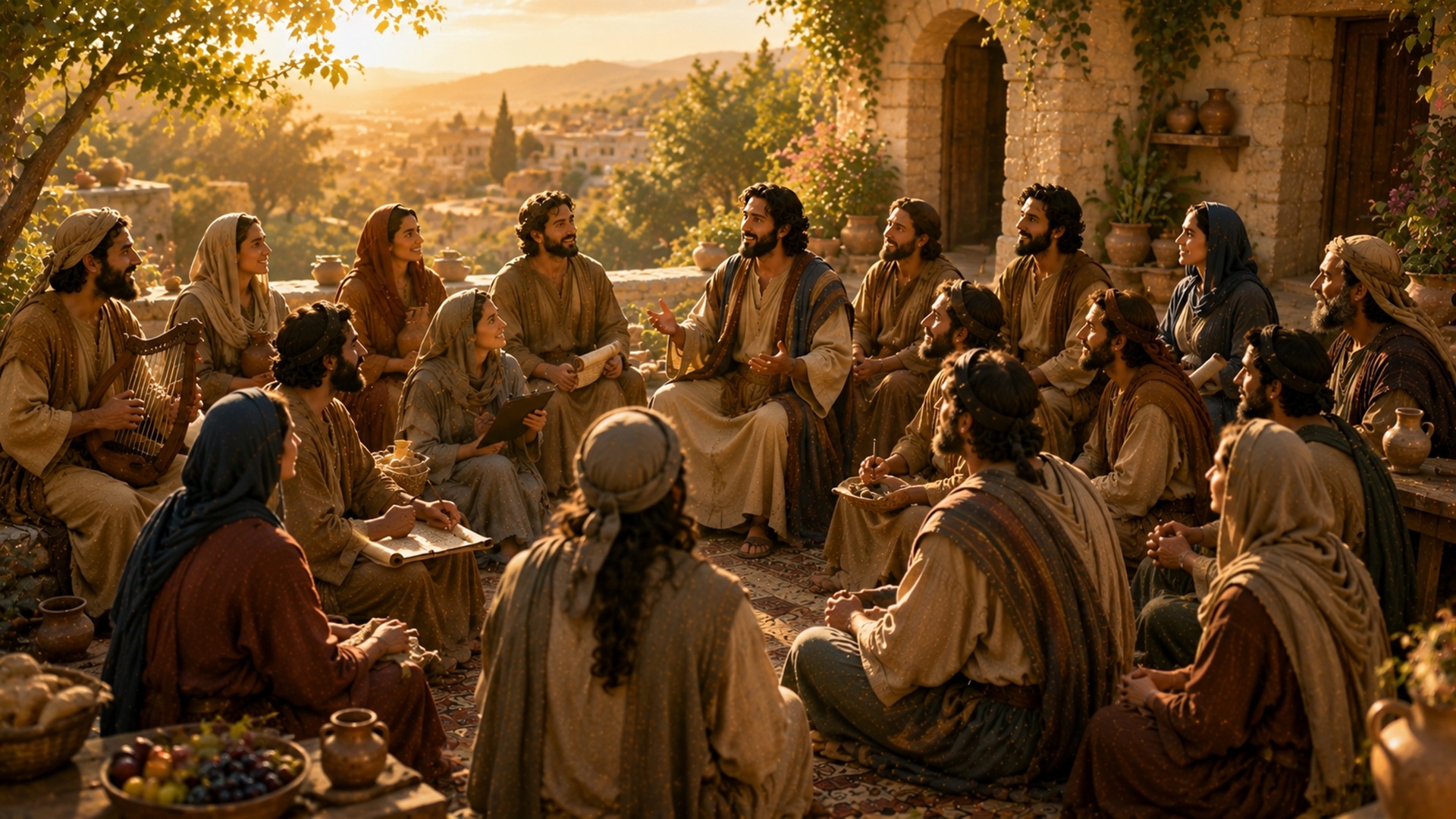
The church still needs spiritual gifts today. It needs people who teach, comfort, serve, pray, lead, help, encourage, translate, engage in mission, and prophetically point people to God’s Word. Yet even today there is a danger that visible gifts may be valued more highly than quiet forms of service. Some feel superior, while others feel unimportant. Paul reminds us that every member is needed in the body of Christ. A healthy church grows where diversity does not become competition but works together in love.
💡 4. Central Message of the Lesson
👉 Spiritual gifts are diverse gifts from God that should be used in love, order, and humility so that the church is built up, Christ is honored, and God’s mission is fulfilled.
✝️ 5. Theological Emphasis
The theological emphasis of this lesson is that spiritual gifts originate in God. Paul speaks of the one Spirit, the one Lord, and the one God. In this way, he shows that the gifts cannot be understood independently of the nature of God. They come from God’s grace, stand under the lordship of Christ, and become effective through the Holy Spirit.
Spiritual gifts are therefore not personal possessions. No one can boast about a gift as though he had produced it himself. Everything we are able to do in service for God is first something we have received. A gift is grace, not achievement. Therefore, it should lead to humility, not pride.
At the same time, Paul emphasizes diversity. Not everyone has the same gift. Not everyone serves in the same way. Not everyone stands in the same place. Yet this very diversity is God’s plan. The body of Christ needs many members because the church has many tasks.
The image of the body is theologically very profound. The church is not merely a religious organization but the body of Christ. Christ is the Head, and believers are members who are connected with one another. One member cannot live independently of the others. In the same way, no Christian can say, “I do not need the others.”
At the same time, no one should say, “I am not important.” Paul clearly opposes this attitude. Even the members that appear weak or insignificant are necessary. God sees hidden service, quiet prayer, faithful help, and unseen care.
Another major emphasis is love. It is no coincidence that 1 Corinthians 13 stands between the chapters about spiritual gifts. Paul shows that without love even impressive gifts lose their spiritual value. Knowledge, prophecy, speaking in tongues, faith, and self-sacrifice can become empty if they are not carried by love.
Love is the standard by which every gift is tested. It does not ask, “How will I be seen?” but rather, “How will Christ be seen?” It does not seek personal glory but the building up of others. It protects the church from pride, jealousy, competition, and the misuse of spiritual gifts.
That is why Paul also places great importance on order and intelligibility. Especially when speaking about tongues, he shows that a gift serves the church only when it can be understood. The Holy Spirit does not create chaos but peace, clarity, and edification.
The gift of prophecy also has a clear purpose: It is meant to build up, exhort, and comfort. Prophecy is not given for sensationalism but for strengthening the church. It must always be tested by Holy Scripture and place Christ at the center.
The theological core is this: Spiritual gifts are given by God, ordered under Christ, and empowered by the Holy Spirit. They fulfill their purpose only when they are used in love, humility, truth, and for the building up of the body of Christ.
🌟 6. Spiritual Deepening
This lesson invites us to examine our understanding of spiritual service. People often pay attention to what is visible, striking, and impressive. But God sees the heart, the motives, and faithfulness. A small gift used in love may be more valuable before God than a great gift used out of pride.
The Corinthians were rich in gifts, but they needed spiritual maturity. This shows us that giftedness does not replace character. A person can be capable and still act without love. A person can know a great deal and still become proud. A person can serve visibly and still lose Christ from the center.
Therefore, Paul repeatedly leads the church back to Jesus. The first and most important work of the Holy Spirit is the confession: Jesus is Lord. All gifts must stand under this lordship. If a gift does not honor Christ but exalts the person, it is being misused.
Spiritual maturity is shown when we do not compare our gifts with those of others. Envy and feelings of inferiority weaken ministry. Whoever is envious overlooks God’s gift in his own life. Whoever feels inferior forgets that God has intentionally placed even quiet members in His body.
The body of Christ needs not only preachers, teachers, or leaders. It also needs people who pray, comfort, help, encourage, welcome others, listen, visit, support, and remain faithful behind the scenes. In God’s eyes, no service is worthless when it is done in love.
This lesson also calls us to mutual appreciation. A church becomes unhealthy when its members despise one another. It becomes strong when every member respects the others. If one suffers, all should share in the suffering. If one is honored, all should rejoice together. This is the spirit of the body of Christ.
Love is the “better way.” Without love, gifts become harsh, cold, or self-centered. With love, they become healing, strengthening, and Christlike. Love gives gifts warmth, direction, and spiritual depth.
Order also belongs to love. A worship service that creates confusion does not help the church. Words that no one understands do not build up. Spiritual speech should be clear, understandable, and centered on Christ. The Holy Spirit does not work toward disorder but toward edification.
The gift of prophecy reminds us that God guides His people. He speaks, warns, comforts, and calls to faithfulness. But every prophetic message must be tested by the Bible. Holy Scripture remains the highest standard for faith, doctrine, and life.
For Seventh-day Adventists, the gift of prophecy is a precious subject, especially in relation to the testimony of Jesus and the remnant church. At the same time, this gift must be understood correctly: It does not replace the Bible but leads to it. It does not exalt a human being but points to Christ.
In the end, this lesson is not only about the question, “What gift do I have?” It is about the deeper question: “How do I use what God has given me?” Do I serve out of love? Do I seek God’s glory? Do I build others up? Does Christ remain at the center?
When spiritual gifts are used in this way, the church is strengthened. Competition gives way to cooperation. Diversity becomes not a danger but a blessing. The body of Christ becomes visible as a community guided by the Spirit of God and carried by the love of Christ.
🔧 7. Application in Everyday Life
Practical Steps:
- Ask God to show you your gift and your place in the body of Christ.
- Do not constantly compare yourself with others, but serve faithfully where God has placed you.
- Value quiet and less visible forms of service in the church.
- Do not use your gift for self-display but for building up others.
- Always examine whether your service is marked by love, humility, and truth.
- Seek order, intelligibility, and consideration in spiritual service.
- Test every spiritual message by Holy Scripture.
- Ask the Holy Spirit to use all gifts in the church for the glory of Christ.
❓ 8. Reflection Question
Am I using my gifts in such a way that Christ remains at the center and others are built up in faith?
🌟 9. Closing Thought
Lesson 6 shows that spiritual gifts are a great blessing for the church when they are rightly understood and used. They are diverse, but they come from the same Spirit. They are different, but they serve the same Lord. They are valuable, but without love they lose their meaning. Therefore, all gifts should be used in humility, order, intelligibility, and love. When everyone accepts his or her place in the body of Christ and serves faithfully, the church is strengthened and Christ is honored.
“Now you are the body of Christ, and each one of you is a part of it.”
1 Corinthians 12:27 📌🏛️🕊️✨
✉️
Questions:
1. Think further about the gift of prophecy. Why is prophecy more important than speaking in tongues when tongues are not interpreted? If necessary, read 1 Corinthians 14 again and summarize Paul’s arguments.
2. Discuss the life and ministry of Ellen White and why we as a church believe that she truly had the gift of prophecy. What great blessings does this gift bring to the church? What challenges are there at the same time in knowing how best to use this gift?
3. Think of three to five people who truly love you. How do you know that their love is genuine? What does this tell you about why Paul spoke so much about love in his discussion of spiritual gifts?
4. As important as love is, why must it not be the only criterion for judging whether someone is speaking the truth and is worth listening to?
Answers:
1. Why is prophecy more important than speaking in tongues when tongues are not interpreted?
Prophecy is more important than uninterpreted speaking in tongues because it is understandable and directly builds up the church. Paul emphasizes in 1 Corinthians 14 that spiritual gifts should not be evaluated by how impressive they appear, but by whether they serve others. If someone speaks in a language that no one understands, the message remains useless to the congregation. Prophecy, by contrast, speaks “for strengthening, encouragement, and comfort” and reaches both the heart and the mind of the listeners. Therefore, Paul does not say that speaking in tongues is bad, but that it must be interpreted in order to fulfill its purpose. The central standard is this: Everything in worship should be understandable, orderly, and serve to build up the church.
2. What blessings and challenges does the gift of prophecy through Ellen White bring?
As Seventh-day Adventists, we believe that God gave Ellen White the gift of prophecy because her ministry exalts Christ, leads people to the Bible, and has spiritually shaped the church. Her writings have helped many people understand the love of Jesus more deeply, see the great controversy more clearly, take the Second Coming more seriously, and bring practical areas such as mission, education, health, family, and character development into biblical order. One great blessing of this gift is that it repeatedly calls the church back to Scripture, to Christ, and to a sanctified life. At the same time, there are challenges: Her writings must not be placed above the Bible, used legalistically or harshly, or taken out of context. Used incorrectly, they can burden people instead of leading them to Christ. Properly understood, they are a light that points to the greater light of Holy Scripture and strengthens the church in faithfulness, love, and mission.
3. Why does Paul speak so much about love when discussing spiritual gifts?
When we think of people who truly love us, we recognize genuine love not only by their words but also by their behavior. They remain patient, seek our good, honestly tell us the truth, forgive, carry burdens with us, pray for us, and do not act selfishly. This is exactly why Paul speaks so extensively about love in the middle of his teaching on spiritual gifts. A gift may appear powerful outwardly but without love can become cold, proud, or hurtful. Love reveals whether a gift is truly being used in the Spirit of Christ. Spiritual gifts are not meant to make the gifted person great but to build people up, comfort, exhort, and lead them closer to Jesus.
4. Why must love not be the only criterion for judging truth?
Love is indispensable, but it must not be separated from the Word of God. A person can appear kind, warmhearted, and sympathetic while still teaching something that does not agree with the Bible. Paul shows that love does not rejoice in wrongdoing but rejoices with the truth. Therefore, we must test every spiritual message not only by whether it sounds loving but also by whether it exalts Christ, agrees with Holy Scripture, and produces spiritual fruit. True love and truth always belong together. Without love, truth becomes harsh; but without truth, love becomes sentimental and can easily lead to deception.
