
✉️ FIRST AND SECOND CORINTHIANS
🤝 Lesson 3: Unity in Christ
✝️ 3.5 A Lifestyle That Reflects the Cross
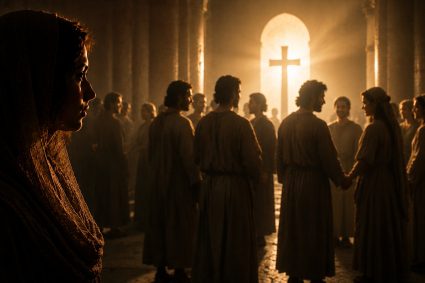
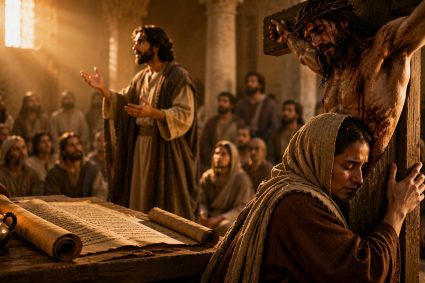
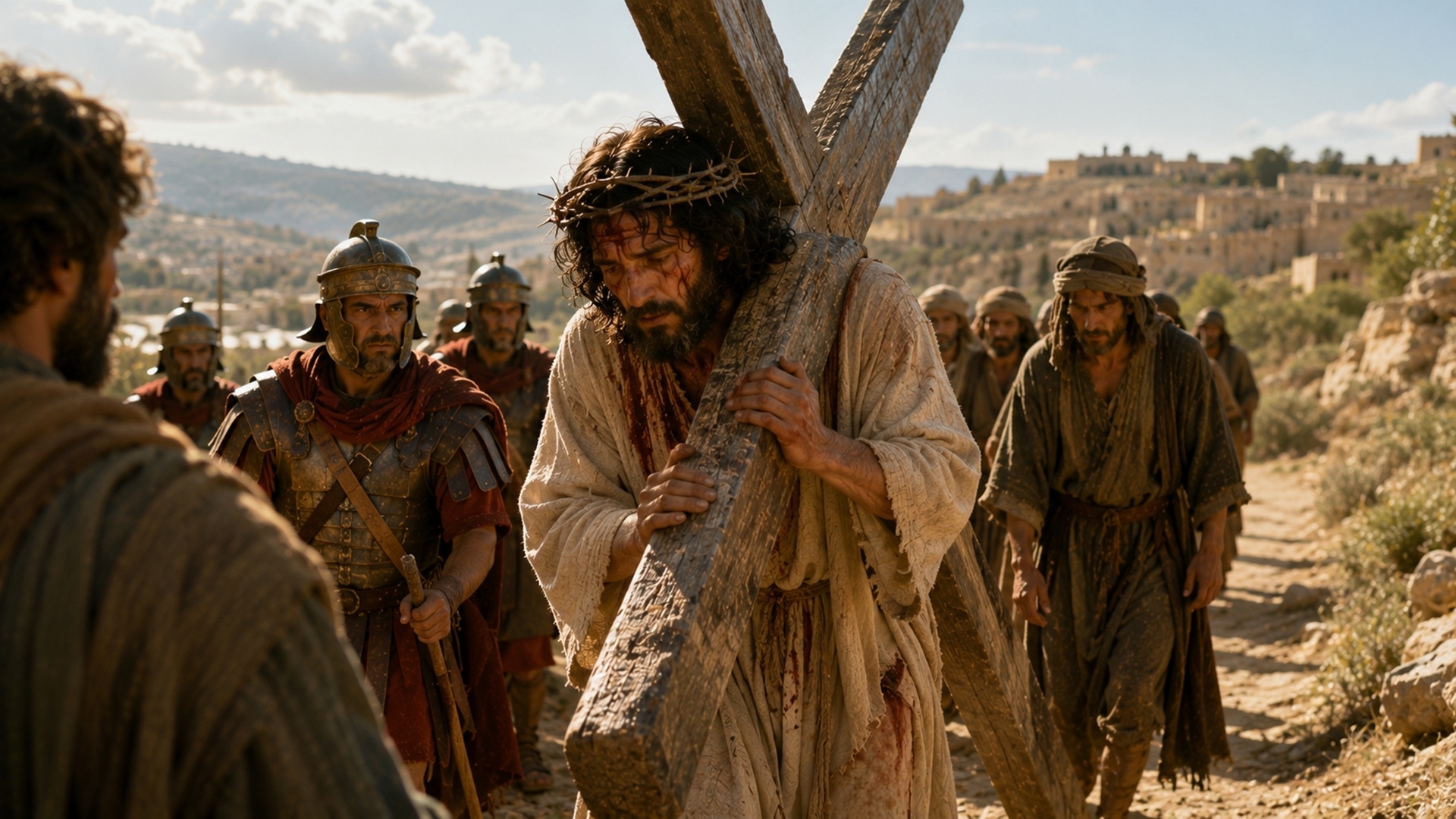
🔥 Leadership in the Shadow of the Cross
📖 1. Introduction
Paul shows the Corinthians that Christian leadership must not be understood according to worldly standards. In Corinth, strength, prestige, wisdom, and influence were highly valued, but Paul sets the cross against this way of thinking. A leader who follows Christ does not seek glory, control, or admiration, but serves with humility and faithfulness. Paul’s own life was marked by suffering, sacrifice, rejection, and devotion to the gospel. In this way, he showed that true service often does not appear impressive, but reflects the cross. Whoever serves Christ must be willing to put self aside so that God’s power may become visible.
📜 2. The Biblical Foundation
Paul writes:
“Let a man so consider us, as servants of Christ and stewards of the mysteries of God.” 1 Corinthians 4:1
He continues:
“For I think that God has displayed us, the apostles, last, as men condemned to death.” 1 Corinthians 4:9
He describes his ministry with these words:
“To the present hour we both hunger and thirst, and we are poorly clothed, and beaten, and homeless.” 1 Corinthians 4:11
In 2 Corinthians, Paul also writes about his sufferings:
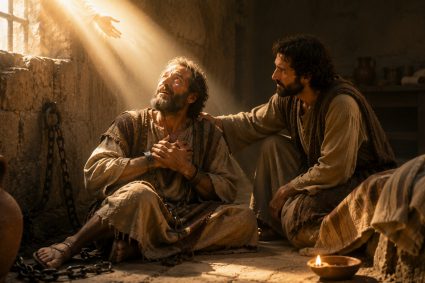
“I have been in prisons more frequently, in stripes above measure, in deaths often.” 2 Corinthians 11:23
These verses show that true Christian service is often connected with suffering, humility, and devotion.
🌍 3. Connection to Our Time
Today, leadership is also often associated with success, influence, visibility, and recognition. Even in the church, the temptation may arise to evaluate spiritual ministry according to worldly standards: Who is better known, stronger, more convincing, or more popular? Paul reminds us that Christian leadership is not based on self-promotion, but on faithfulness to Christ. A life that reflects the cross does not seek comfort or honor first, but the will of God and the good of others. This is especially important today because our culture often places self-fulfillment above self-sacrifice. Yet the way of Jesus calls us to humility, sacrifice, and love.
💡 4. Central Message of the Lesson
👉 A life that reflects the cross does not seek human glory, but serves Christ with humility, faithfulness, devotion, and a willingness to suffer.
✝️ 5. Theological Emphasis
The central idea of this lesson is that Christian service must be shaped by the cross. The cross is not only the foundation of our salvation, but also the pattern for our life and service. Whoever follows Christ follows a Lord who gave Himself.
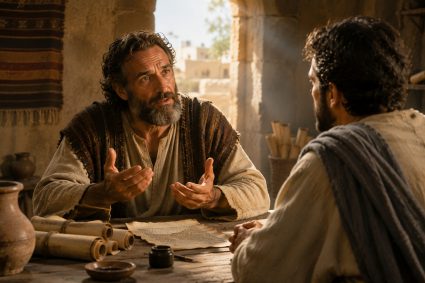
Paul does not present himself or other leaders as lords over the church, but as servants of Christ and stewards of God. In this way, he corrects the thinking of the Corinthians. Leaders are not owners of the church, but people to whom God has entrusted responsibility.
A steward does not live for personal honor. A steward manages something that does not belong to him. In the same way, spiritual ministry is not our possession. The church belongs to Christ. The message belongs to Christ. The gifts come from Christ. Therefore, every ministry must be directed toward the glory of God.
Paul further shows that suffering may be part of true ministry. He describes the apostles as “men condemned to death.” This is a powerful image. It shows that apostolic ministry did not consist of outward splendor, but of devotion, weakness, and a willingness to suffer for Christ.
The Corinthians may have wanted to associate spiritual greatness with prestige and strength. Paul shows the opposite: true greatness in the kingdom of God is often revealed in humility, sacrifice, and faithfulness under pressure. The cross overturns human ideas of success.
This does not mean that suffering is good in itself or that it should be sought. But it does mean that following Christ is not always comfortable. Whoever serves the crucified Lord should not expect to receive applause, security, and recognition at all times.
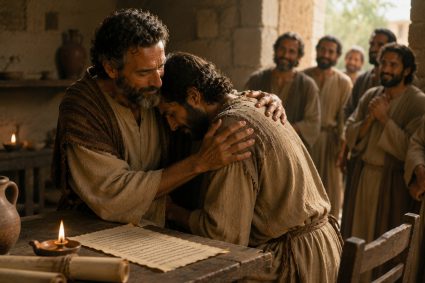
Paul’s life shows that ministry often comes at a cost. Hunger, thirst, persecution, slander, and rejection were part of his path. Yet he did not see these sufferings as signs of failure, but as part of his service to Christ.
In Colossians 1:24, Paul speaks of rejoicing in his sufferings for the church. This does not mean that Christ’s sacrifice was incomplete. The sacrifice of Jesus is perfect. Rather, Paul means that his own suffering in service to the church is an expression of his union with Christ.
Theologically, this lesson shows that the cross shapes the character of the servant. It breaks pride, selfishness, and the desire for power. It teaches us that God’s power can be made visible in weakness. It calls us to use our lives not for ourselves, but for Christ and for others.
Therefore, leadership in the shadow of the cross is always servant leadership. It does not ask: How can I become greater? Instead, it asks: How can Christ become visible through my life? It does not seek control, but faithfulness. It does not seek applause, but God’s approval.
🌟 6. Spiritual Deepening
This lesson challenges us to examine our understanding of Christian service. Do we serve only as long as it is pleasant, or also when it costs us something? Do we remain faithful when no one praises us? Can we suffer for Christ without becoming bitter?
A life that reflects the cross begins with the death of the ego. This may be one of the most difficult lessons of discipleship. We want to be seen, understood, and appreciated. Yet the cross calls us to consider Christ more important than our own honor.
Paul was willing to be misunderstood and despised as long as Christ was proclaimed. This reveals deep spiritual maturity. He did not seek his own greatness, but the salvation of others and the glory of God. His life was a living testimony to the message he preached.
We too must ask whether our lives agree with our message. If we speak about the cross but live with pride, oversensitivity, a desire to control, or selfishness, our witness loses credibility. The cross should not appear only in our words, but should become visible in our character.
This means that we must learn to give up our rights. Jesus gave up heavenly glory to save us. Paul gave up comfort and recognition to serve the gospel. We too will sometimes be invited to give up pride, the need to be right, comfort, or personal advantages.
Suffering for Christ can take different forms. Not everyone experiences persecution as Paul did. But we may experience rejection, misunderstanding, loneliness, sacrifices of time, strength, or money, or the pain of faithfully serving others while receiving little gratitude in return.
The question is not only whether we suffer, but how we suffer. Do we become hard and bitter? Or do we allow Christ to shape us? Paul shows that suffering in ministry does not have to destroy us when we understand it in the light of the cross.
A life in the shadow of the cross also means that we evaluate success differently. Worldly success asks about numbers, influence, visibility, and recognition. Spiritual success asks about faithfulness, love, truth, and the fruit that God gives.
This is liberating. We do not have to constantly prove how important we are. We may be faithful in what God has entrusted to us. Even hidden service is valuable before God. Even small sacrifices are known to Him.
For leaders, this lesson is especially important. Spiritual authority must never be manipulative, proud, or controlling. Whoever leads stands under Christ. Leadership means responsibility, not ownership. It means service, not self-exaltation.
For church members, this lesson means that we should not judge leaders according to worldly standards. We should not ask only whether someone appears impressive, but whether that person’s life reflects Christ. Faithfulness, humility, love, and willingness to sacrifice are more important than outward splendor.
This lesson calls the whole church to walk the way of the cross. A church that reflects the cross will be less marked by pride and competition. It will be willing to bear with one another, forgive, serve, and make sacrifices for Christ’s sake.
The cross makes us small before God, but strong in His grace. It takes away false glory and gives us a deeper joy: the joy of becoming like Christ and serving His kingdom.
🔧 7. Application in Daily Life
Practical steps:
- Examine whether you seek God’s glory or your own recognition in ministry.
- Serve faithfully even when your efforts are neither seen nor praised.
- Ask God to reveal pride, the need to be right, and the desire for power in your heart.
- Learn to make sacrifices for Christ and for others.
- Do not evaluate spiritual ministry only by outward success, but by faithfulness.
- Pray for leaders to serve with humility and Christlike character.
- Support those who work faithfully behind the scenes.
- Ask Jesus to shape your life more and more by the spirit of the cross.
❓ 8. Reflection Question
Where is Christ calling me to submit my ego, my desire for recognition, or my comfort to the cross?
🌟 9. Closing Thought
Paul shows that genuine Christian life and true spiritual leadership are shaped by the cross. The servant of Christ does not seek glory, power, or recognition, but faithfulness to God and love for people. Paul’s sufferings did not make his ministry less credible; instead, they showed that he was following the crucified Christ. Today as well, the church needs people whose lives reflect the humility, devotion, and self-sacrifice of Jesus. The cross calls us away from pride and self-promotion and toward a life of service. Whoever lives in the shadow of the cross will not exalt himself, but will make Christ visible.
“Moreover it is required in stewards that one be found faithful.” 1 Corinthians 4:2 ✨✝️🔥🙏