
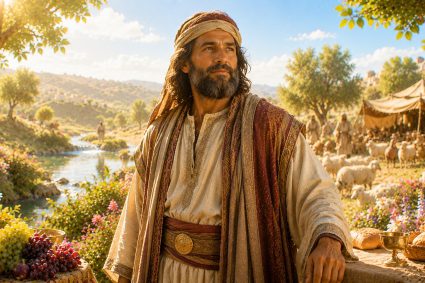
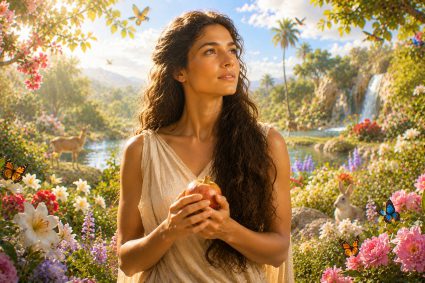
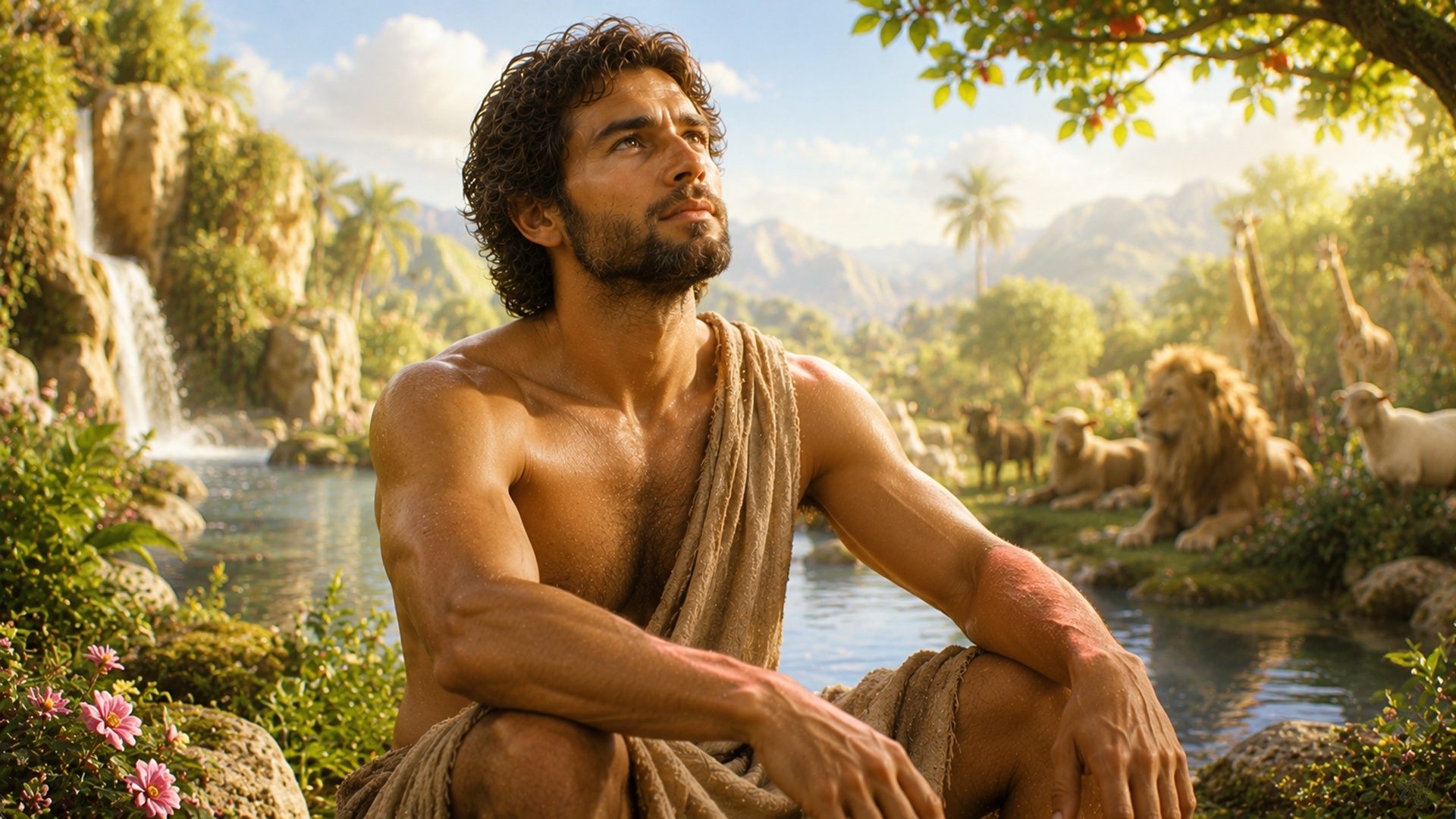
👤 The Biblical Person of the Day
🌍 Adam – the First Man and the Beginning of Humanity
📌 Profile
- Name: Adam
- Time of birth: at the beginning of creation
- Place of birth: the Garden of Eden
- Time of death: unknown
- Age: 930 years
- Occupation: the first man, keeper of the Garden of Eden, and ancestor of humanity
📖 Short Story
Adam was the first human being created by God. God formed him from the dust of the ground and breathed the breath of life into him. In this way, Adam became a living soul.
He was placed in the Garden of Eden, a place filled with beauty, order, and life. There he was to cultivate and care for the garden.
At first, Adam lived in a perfect world. He knew no sin, fear, death, or separation from God.
God gave him responsibility over creation and brought the animals to him so that Adam could name them. This revealed that humanity had been given a special place within creation.
Yet Adam was alone, and God said that it was not good for man to be alone. Therefore, God created Eve to be his companion.
In the Garden of Eden, Adam and Eve received a clear command: They could eat from every tree except the tree of the knowledge of good and evil.
When Eve was deceived by the serpent and Adam also ate from the forbidden fruit, sin entered the world. Adam lost his innocence, his closeness to God was broken, and death became part of human history.
🔥 The Decisive Moment
Adam eats from the forbidden fruit and thereby brings sin, guilt, and death into human history.
✨ 7 Special Facts About Adam
- He was the first human being
- He was formed by God from the dust of the ground
- He received the breath of life from God
- He lived in the Garden of Eden
- He gave names to the animals
- He was Eve’s husband
- He became the ancestor of humanity
⚖️ Strengths & Weaknesses
✔ created by God
✔ entrusted with responsibility
✔ lived in direct fellowship with God
✔ received a special place within creation
❌ disobeyed God’s command
❌ shifted responsibility instead of clearly confessing his guilt
❗ The Failure That Shaped Him
Adam did not obey God’s command, but ate from the fruit that God had forbidden.
➡️ His story shows that disobedience does not have only personal consequences, but can change entire spheres of life.
📜 Key Verse
“And the Lord God formed man of the dust of the ground, and breathed into his nostrils the breath of life; and man became a living soul.” (Genesis 2:7)
🧠 The Life Lesson
Human beings were created, loved, and entrusted with responsibility by God, but true life remains whole only where trust and obedience toward God are preserved.
🎯 Application for Today
Remember that your life comes from God and belongs to Him. Freedom is a gift, but it requires trust, responsibility, and a willingness to listen to God’s Word.
❓ Question for You
Where is God calling you today to trust Him more than your own judgment?
📌 Context
Adam stands at the beginning of the biblical history of humanity. His story forms the foundation for understanding creation, responsibility, sin, and redemption.
🔗 Connection
Adam is connected with Eve, the Garden of Eden, the Fall, and the great biblical theme that Christ, as the second Adam, brings restoration.
Conclusion:
Adam shows that human beings were desired, created, and endowed with dignity by God, but also that disobedience has profound consequences. At the same time, his story points toward the necessity of redemption.
Until tomorrow with the next biblical person! 📖
✨ The Life Story ✨
✨ The Life Story of Adam – Beginning, Responsibility, and Lost Innocence ✨
🌄 The First Man
Adam stands at the beginning of human history. He was not the result of chance or an impersonal process of development, but was intentionally created by God.
God formed him from the dust of the ground and breathed the breath of life into him. Through this, Adam became a living soul, sustained by God’s creative power.
Even in this beginning, there is a profound truth: Human beings are not worthless, accidental, or abandoned to themselves. Their life comes from God.
🌿 In the Garden of Eden
Adam was placed in the Garden of Eden, a place of beauty, abundance, and harmony. Everything there was good, ordered, and alive.
The garden was not only a place to live, but also a place of responsibility. Adam was to cultivate and preserve it.
His story therefore shows that work was not a curse before the Fall. Responsibility belonged to God’s good plan for humanity from the beginning.
🐾 Responsibility for Creation
God brought the animals to Adam so that he could give them names. This task revealed that Adam held a special place within creation.
He was not to destroy, but to understand, organize, and act responsibly. Creation was entrusted to him, not surrendered to his abuse.
Adam was therefore not merely an inhabitant of the earth, but the steward of a living world that God had created.
💞 It Is Not Good for Man to Be Alone
Although Adam lived in a perfect world, God said that it was not good for man to be alone. Adam needed fellowship, companionship, and relationship.
Therefore, God created Eve. She was not created as an inferior companion, but as a suitable helper and an equal counterpart.
With Eve, Adam received a relationship in which love, trust, and shared responsibility were meant to grow.
🌳 God’s Command
God gave Adam and Eve great freedom. They could eat from all the trees in the garden. Only one tree was excluded: the tree of the knowledge of good and evil.
This command was not an arbitrary restriction, but an invitation to trust. Adam was to acknowledge that God is Lord and that true life is preserved through obedience to His Word.
The tree made it clear that love and trust require genuine freedom. Adam could obey God, but he could also choose to turn against Him.
🐍 The Temptation
When the serpent tempted Eve, God’s Word was called into question. Doubt was planted, and trust was replaced by suspicion.
Eve took the fruit and also gave some to Adam. Adam took it and ate. At that moment, he crossed the boundary God had established.
The Fall was not merely reaching for a piece of fruit. It was reaching for self-rule apart from God.
🍂 Guilt and Hiding
After their disobedience, Adam and Eve’s eyes were opened, but not in the way they had hoped. They recognized their nakedness and felt ashamed.
When God called in the garden, they hid. Open fellowship with God had been broken, and fear took the place of trust.
When God confronted Adam, he shifted the responsibility. He pointed to Eve and indirectly even to God, who had given her to him. In this way, it became clear that sin not only separates, but also damages relationships.
🚪 The Loss of Eden
The consequences of disobedience were severe. Toil, pain, sweat, thorns, and death entered human history.
Adam and Eve had to leave the Garden of Eden. The way back to the tree of life was blocked.
Yet even in judgment, hope was heard. God spoke of a Descendant of the woman who would crush the serpent’s head. With this, the promise of redemption began.
✨ The Lasting Message of His Life
Adam shows how precious and, at the same time, how fragile human life is. He was created by God, endowed with dignity, and entrusted with responsibility.
Yet his story also makes clear how deep the consequences of disobedience are. When human beings distrust God, they do not gain freedom, but lose the very thing that was meant to preserve freedom: fellowship with God.
🌌 Closing Thought
Adam was the first man, created by God’s hand and brought to life by God’s breath. He lived in a perfect world and received a task filled with dignity.
Yet his fall revealed that human beings are broken when they live without trust in God. At the same time, his story points beyond itself toward the hope that God Himself promised.
👉 His life story shows: Human beings were created and loved by God, but only through trust in God’s Word can they find true life and lasting fellowship with their Creator.
