
👤 The Biblical Person of the Day
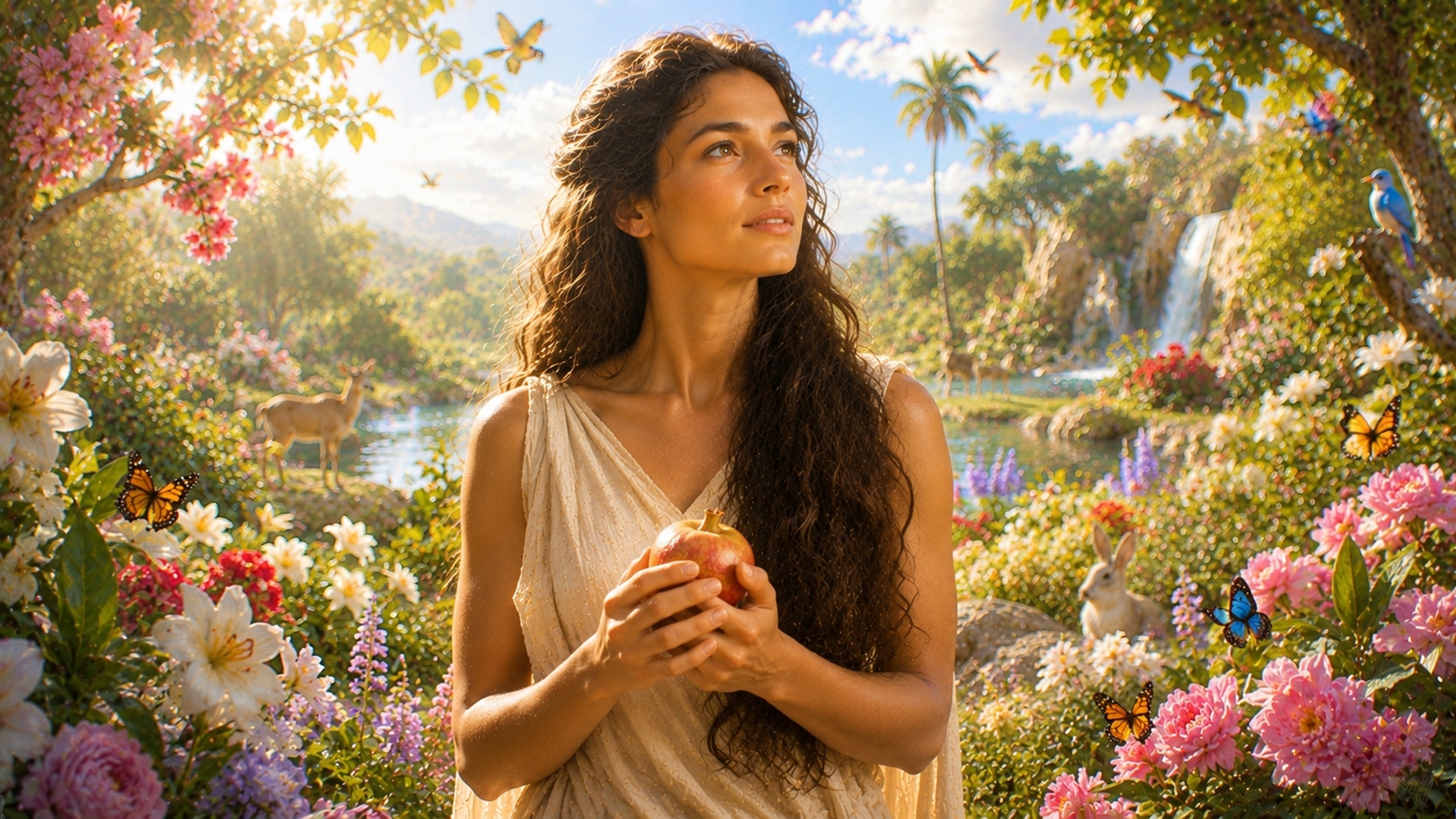
🍎 Eve – the First Woman and Mother of All Living
📌 Profile
- Name: Eve
- Time of birth: at the beginning of creation
- Place of birth: the Garden of Eden
- Time of death: unknown
- Age: unknown
- Occupation: the first woman, Adam’s wife, and mother of all living
📖 Short Story
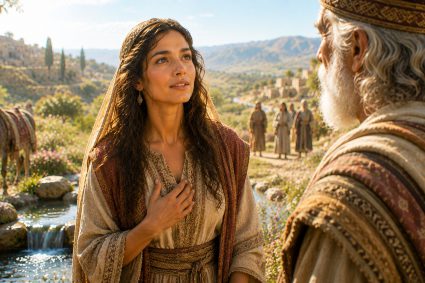
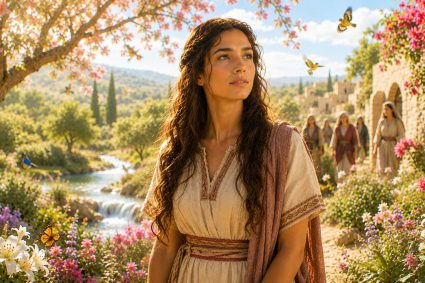
Eve was the first woman created by God. After Adam was alone, God said that it was not good for man to be alone. Therefore, He created Eve as a counterpart, companion, and helper suitable for Adam.
Eve was not created as a secondary figure, but as a complete human being, desired by God and endowed with dignity. Together with Adam, she was to live in the Garden of Eden, enjoy God’s creation, and bear responsibility.
At first, Eve lived in perfect harmony with God, with Adam, and with creation. There was no fear, shame, guilt, or death.
But one day, the serpent spoke to Eve and called God’s Word into question. It awakened doubt about God’s goodness and made the forbidden fruit appear desirable.
Eve took the fruit and ate. Then she also gave some to Adam, and he ate as well. In this way, sin entered human history.
After their disobedience, Adam and Eve became aware of their nakedness, felt ashamed, and hid from God. Their open fellowship with Him had been broken.
Yet even in judgment, hope remained. God gave the first promise of redemption and announced that the Descendant of the woman would crush the serpent’s head.
🔥 The Decisive Moment
Eve listens to the voice of the serpent, doubts God’s Word, and takes the forbidden fruit.
✨ 7 Special Facts About Eve
- She was the first woman
- She was created by God as a counterpart for Adam
- She lived in the Garden of Eden
- She was endowed with dignity and responsibility from the beginning
- She was tempted by the serpent
- She became the mother of Cain, Abel, Seth, and other children
- She is called the “mother of all living”
⚖️ Strengths & Weaknesses
✔ created and desired by God
✔ endowed with dignity
✔ called to fellowship
✔ mother of humanity
❌ allowed herself to be deceived by the serpent
❌ questioned God’s Word and God’s goodness
❗ The Failure That Shaped Her
Eve listened to the voice of the serpent and took the fruit that God had forbidden.
➡️ Her story shows how dangerous it is to allow doubt, mistrust, and personal desire to displace God’s Word.
📜 Key Verse
“And Adam called his wife’s name Eve; because she was the mother of all living.” (Genesis 3:20)
🧠 The Life Lesson
God’s Word protects life. When mistrust toward God is given room, human beings become vulnerable to deception and wrong decisions.
🎯 Application for Today
Pay attention to the voices you trust. Not every voice that promises freedom truly leads to life.
❓ Question for You
Where do you need to trust God’s Word today more than a voice that sows doubt about His goodness?
📌 Context
Eve stands at the beginning of human history. Her story belongs to the foundational biblical themes of creation, fellowship, temptation, sin, and redemption.
🔗 Connection
Eve is connected with Adam, the Garden of Eden, the Fall, and the first promise of the coming Redeemer.
Conclusion:
Eve shows that human beings were created by God for fellowship, but also how quickly doubts about God’s Word can lead the heart astray. Yet her story does not end only with guilt, but also with the hope of redemption.
Until tomorrow with the next biblical person! 📖
✨ The Life Story ✨
✨ The Life Story of Eve – Dignity, Temptation, and Hope ✨
🌄 It Is Not Good for Man to Be Alone
Eve enters the biblical story because God Himself sees that man should not remain alone. Adam lived in the Garden of Eden, surrounded by beauty, life, and abundance, yet he lacked a true counterpart.
God said that it was not good for man to be alone. This made it clear that fellowship belonged to God’s good plan from the very beginning.
Eve was created so that Adam would not remain alone. She was not an afterthought, but part of God’s perfect order of creation.
💞 Created as a Counterpart
God caused a deep sleep to fall upon Adam and created Eve. When Adam saw her, he recognized in her someone who belonged with him and corresponded to him.
Eve was not formed again from the dust like Adam, but was taken from his side. This image speaks of closeness, fellowship, and belonging together.
She was not created beneath him to be despised, nor above him to rule over him, but at his side as a companion with equal dignity before God.
🌿 Life in the Garden of Eden
Eve lived with Adam in the Garden of Eden. Everything was good. Their relationship with God was open, the relationship between man and woman was without shame, and creation was free from death and decay.
In this world there was work, responsibility, beauty, and joy. Adam and Eve were allowed to enjoy the garden, but also to care for it.
Their life did not begin with fear or struggle, but with God’s presence and with a home shaped by His blessing.
🌳 Freedom with a Boundary
God gave Adam and Eve great freedom. They could eat from the trees of the garden, but they were not to eat from the tree of the knowledge of good and evil.
This boundary was not a sign of harshness, but an invitation to trust. They were to learn that true life does not consist in determining everything for themselves, but in acknowledging God as good and true.
As long as they trusted God’s Word, their freedom remained protected.
🐍 The Voice of the Serpent
One day, the serpent approached Eve. It did not begin with open rebellion, but with a question. It called God’s Word into question and sowed doubt.
Then it attacked God’s goodness. Suddenly, the prohibition no longer appeared as protection, but as restriction. The fruit became desirable, and God’s warning was pushed aside in Eve’s thinking.
Her story therefore shows how temptation often begins: not with a loud break, but with quiet mistrust toward God.
🍎 Reaching for the Fruit
Eve saw that the fruit was good for food, pleasant to the eyes, and desirable for gaining wisdom. She took it and ate.
Then she gave some to Adam, and he ate as well. At that moment, the trust that had sustained their fellowship with God was broken.
Sin entered not only through an outward action, but through a heart that no longer placed God’s Word above its own judgment.
🍂 Shame, Fear, and Hiding
After their disobedience, Adam and Eve’s eyes were opened, but not to the freedom the serpent had promised. They recognized their nakedness and felt ashamed.
They sewed fig leaves together and made coverings for themselves. When they heard God’s voice in the garden, they hid.
Where there had once been closeness, there was now fear. Where there had been trust, there was now guilt. Sin had not merely broken a rule; it had damaged relationships.
⚖️ Judgment and Hope
God called Adam and Eve to account. The consequences of disobedience were announced: pain, toil, conflict, and death would shape human history.
Yet in the midst of judgment, God also gave hope. He announced that the Descendant of the woman would crush the serpent’s head.
In this way, Eve was connected not only with the Fall, but also with the promise. From her line would come the One who would overcome sin, the serpent, and death.
👶 Mother of All Living
Adam gave his wife the name Eve because she became the mother of all living. This name carries hope within it.
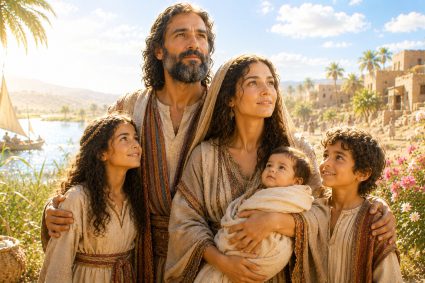
Although death had entered the world, life continued. Eve became a mother and experienced joy, pain, and loss in the deepest way.
With Cain and Abel, the story of humanity outside Eden began, and it soon became clear how deeply sin had wounded the family and the world.
✨ The Lasting Message of Her Life
Eve reveals the dignity of woman as a person created and desired by God. She reminds us that fellowship, marriage, and life were gifts from God from the very beginning.
Her story also warns us against questioning God’s Word and trusting a voice that sows mistrust toward Him. At the same time, it shows that God’s hope is stronger than human failure.
🌌 Closing Thought
Eve began her life in perfect fellowship with God and Adam. She was created for relationship, dignity, and life.
Yet through deception and disobedience, guilt entered her story. Nevertheless, God did not leave her without hope, but gave the first promise of redemption.
👉 Her life story shows: Even when human beings fall through mistrust, God gives hope, life, and the promise of a Savior.
