
✉️ FIRST AND SECOND CORINTHIANS
🌅 Lesson 8. The Power of Christ’s Resurrection
📌 8.6 Summary
🌟 Christ lives – therefore our hope remains unshakable
📖 1. Introduction
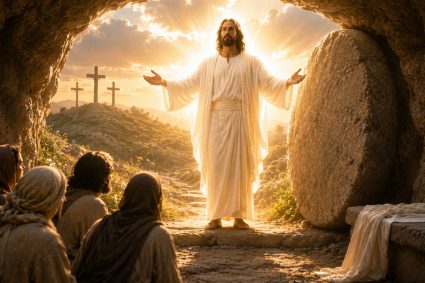
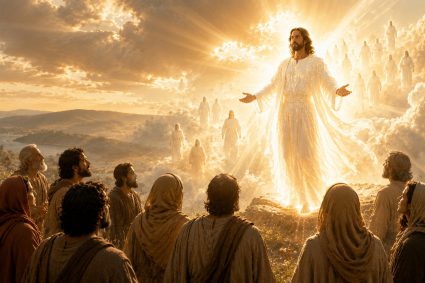
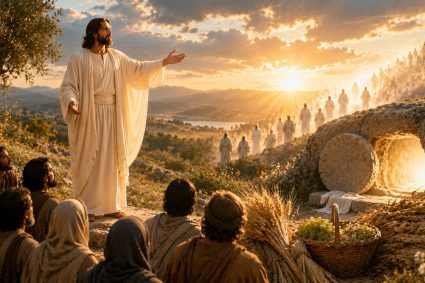
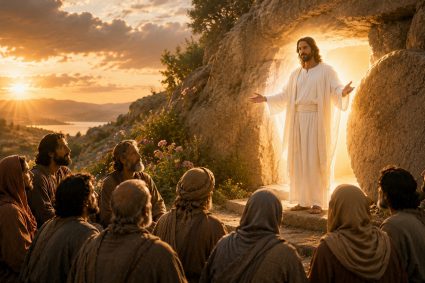
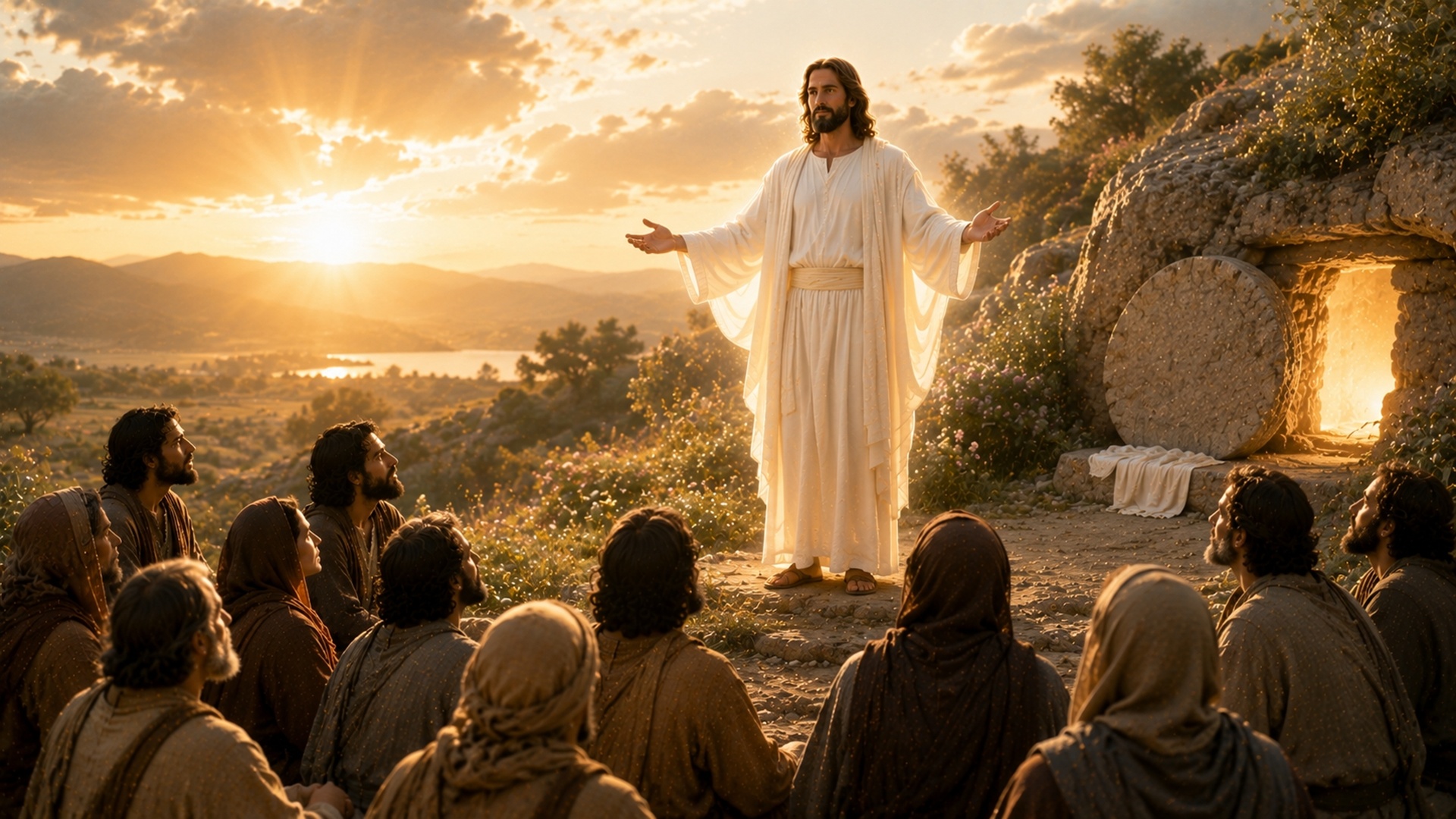
Lesson 8 takes us to the heart of the Christian gospel: the resurrection of Jesus Christ. In 1 Corinthians 15, Paul shows that without the resurrection, faith would be empty, useless, and without hope. But Christ has truly risen. Therefore, His resurrection is not merely an event of the past, but the foundation of our present and our future. It confirms the cross, gives forgiveness, guarantees the resurrection of believers, and promises the final victory over death. Whoever believes in the risen Christ does not live in fear of the grave, but in hope of God’s coming glory.
📜 2. The Biblical Foundation
Paul summarizes the gospel in this way:
“That Christ died for our sins according to the Scriptures; and that He was buried; and that He rose again on the third day according to the Scriptures.”
1 Corinthians 15:3–4
Then he says:
“And if Christ has not been raised, your faith is futile; you are still in your sins.”
1 Corinthians 15:17
But Paul confesses with complete certainty:
“But now Christ has been raised from the dead, the firstfruits of those who have fallen asleep.”
1 Corinthians 15:20
And at the end he exclaims:
“But thanks be to God, who gives us the victory through our Lord Jesus Christ!”
1 Corinthians 15:57
These texts show: The resurrection of Christ is the foundation, hope, and victory of the Christian faith.
🌍 3. Connection to Our Time
People today also need a hope that is stronger than guilt, sickness, loss, and death. Many try to suppress death or comfort themselves with vague ideas of life after death. Paul, however, gives us no uncertain hope, but a firm foundation: Christ has risen. Therefore, the grave is not the end for those who belong to Christ. The resurrection reminds us that God’s power is greater than our mortality. In a world full of uncertainty, the risen Christ remains the firm foundation of our hope.
💡 4. Central Message of the Lesson
👉 The resurrection of Christ is the foundation of the gospel, the guarantee of our future resurrection, and the certainty that Christ will finally defeat death.
✝️ 5. Theological Focus
The theological focus of this lesson is that the resurrection of Christ is indispensable to the gospel. Paul begins by recalling the message he had preached: Christ died for our sins, was buried, and rose again on the third day. These three realities belong inseparably together.
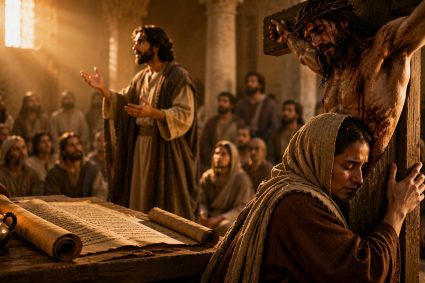
The death of Jesus shows that Christ truly bore our guilt. His burial confirms that His death was real. His resurrection shows that God accepted His sacrifice and conquered death. Without the resurrection, the cross would not be revealed as a victory.
Paul makes clear how serious the consequences would be if Christ had not risen. Then preaching would be empty, faith useless, the apostles false witnesses, believers still in their sins, and the dead without hope. The Christian faith therefore stands or falls with the reality of the resurrection.
But Paul does not remain with this hypothetical catastrophe. He says: “But now Christ has been raised.” This is the turning point. Christian hope does not rest on wishful thinking, but on God’s action in history. Christ lives.
As the “firstfruits,” Christ is the beginning of the coming resurrection harvest. His resurrection is not isolated, but filled with promise. What happened to Him will also happen to those who belong to Him. At His second coming, those who have fallen asleep in Christ will rise.
Paul also explains that the resurrection is bodily. God does not save only an invisible part of the human being, but the whole person. The present body is perishable, weak, and mortal, but the future body will be imperishable, glorious, and powerful.
This does not mean that we will live without bodies in God’s kingdom. Rather, our bodies will be transformed. Christ will transform our lowly bodies to be like His glorious body. The resurrection is therefore God’s complete answer to sin, sickness, decay, and death.
At the end stands the final victory. Death, which has rested upon humanity since the Fall, will not reign forever. At the second coming of Christ, mortality will put on immortality. Then the declaration will become reality: “Death is swallowed up in victory.”
The theological core is this: Through His death and resurrection, Christ has won the victory. His resurrection confirms our forgiveness, establishes our hope, promises our transformation, and guarantees the final victory over death.
🌟 6. Spiritual Reflection
This lesson is not only doctrine, but comfort. Every human being eventually encounters the reality of death. We experience farewells, sickness, aging, weakness, and loss. Death appears final, but Paul shows that in Christ it has lost its ultimate power.
The resurrection of Christ changes the way we view life. We are not moving toward a dark ending, but toward the return of Jesus. Death remains an enemy, but it is a defeated enemy. Christ passed through the grave and emerged as the Victor.
This hope is especially important at gravesides. Christians truly grieve, but they do not grieve without hope. The Bible describes the dead in Christ as those who have fallen asleep. They rest until the day when the voice of Jesus calls them back to life.
The teaching of death as sleep makes the hope of the resurrection especially clear. The dead do not consciously experience the passage of time. For them, the next conscious experience will be the second coming of Christ. Therefore, Jesus’ coming is truly near for every believer.
The resurrection also gives assurance of forgiveness. If Christ had not risen, we would still be in our sins. But because He lives, we may know: The sacrifice of Jesus was complete. Guilt is not stronger than His grace. Death is not stronger than His life.
This hope also helps us deal with physical weakness. Our present bodies are limited and perishable. Sickness, pain, and aging remind us of the consequences of sin. But God will not discard this body; He will transform it. What is now weak will be raised in power.
Christian hope is therefore holistic. God does not save only thoughts, feelings, or a bodiless soul. He redeems the whole person. The resurrection shows that God does not abandon His creation, but renews it.
This truth also gives meaning to our service. Paul ends 1 Corinthians 15 with the call to remain steadfast and immovable in the work of the Lord. Why? Because our labor in the Lord is not in vain. The resurrection gives meaning to faithfulness.
If Christ had not risen, one could say: “Let us eat and drink, for tomorrow we die.” But because Christ lives, our lives have an eternal direction. Our decisions, our service, our faithfulness, and our hope stand in the light of the coming resurrection.
The resurrection protects us from despair. It says: Your tears are not the final word. Your weakness is not the final word. Your loss is not the final word. Your grave is not the final word. Christ has the final word.
It also protects us from superficiality. If eternal life is truly coming, then we must not live as though this world were everything. We should not live only for pleasure, possessions, or recognition, but for Christ and His kingdom.
This lesson calls us to gratitude. Paul says: “But thanks be to God.” Victory over death is not a human achievement. It is God’s gift through Jesus Christ. We cannot earn it, but we may receive it by faith.
Therefore, our hope remains unshakable. Not because we are strong, but because Christ lives. Not because we understand everything, but because God’s promise is sure. Not because death is harmless, but because Jesus is stronger.
🔧 7. Application in Daily Life
Practical Steps:
- Hold firmly to the resurrection of Christ as the center of your faith.
- Seek forgiveness and assurance in the completed work of Jesus.
- Comfort yourself in grief with the hope of the resurrection.
- Do not live only for what is temporary, but in the light of eternity.
- Thank God that death does not have the final word.
- Treat your body as a gift from God, but place your hope in its future transformation.
- Remain faithful in service even when you do not immediately see results.
- Remind yourself daily: Christ lives, and therefore my hope remains firm.
❓ 8. Reflection Question
How does the resurrection of Christ change the way I deal with guilt, fear, death, grief, physical weakness, and my daily service for God?
🌟 9. Closing Thought
Lesson 8 shows that the resurrection of Christ is the unshakable foundation of the Christian faith. Without it, preaching, faith, forgiveness, and hope would be empty. But Christ has risen, and therefore our salvation is secure. He is the firstfruits of those who have fallen asleep, the guarantee of our future resurrection, and the Victor over death. At His second coming, the dead in Christ will rise and the living will be transformed. Therefore, God’s people live today in gratitude, faithfulness, and hope: Christ lives – and the final victory belongs to Him.
“But thanks be to God, who gives us the victory through our Lord Jesus Christ!”
1 Corinthians 15:57 📌🌟🙏✨
Questions:
1. Think about those who were eyewitnesses of Christ’s resurrection (Acts 1:22; 2:32; 3:15; 4:33; 5:30–32). How can we, about 2,000 years after this event, be “witnesses” of His resurrection?
2. The resurrection of Christ is an essential part of the gospel message (1 Cor. 15:1–4). Without it, the proclamation of Christ’s death would be irrelevant (1 Cor. 15:14). Christ’s death itself would be irrelevant. Why? What does your answer say about the power of Christ’s resurrection?
3. Reflect on Paul’s fascinating statement: “If the dead do not rise, then ‘let us eat and drink, for tomorrow we die!’” (1 Cor. 15:32). What does he mean?
4. Discuss the state of the dead. Why would 1 Corinthians 15 make no sense if the saved went immediately to heaven after death?
Answers:
1. How can we be witnesses of the resurrection today?
We were not eyewitnesses like the apostles who personally saw the risen Christ. Nevertheless, we can be witnesses of His resurrection today by trusting the biblical testimony and sharing it with others. The apostles proclaimed not an idea, but a real event for which they were willing to suffer and die. We testify to the resurrection when our lives show that Jesus lives: through hope, forgiveness, courage, faithfulness, and a transformed heart. Our testimony also grows out of our encounter with Christ through His Word, the Holy Spirit, and the experience of His saving power. Thus, we are not eyewitnesses of the empty tomb, but living witnesses of the risen Lord.
2. Why would Christ’s death be irrelevant without the resurrection?
Without the resurrection, Christ’s death would appear not as a victory, but merely as a tragic end. The cross shows that Jesus died for our sins, but the resurrection shows that His sacrifice was accepted and that death was defeated. If Christ had remained in the grave, there would be no assurance of forgiveness, no living intercession, no second coming, and no hope of resurrection. Paul therefore says that preaching and faith would be in vain without the resurrection. The power of the resurrection lies in the fact that it confirms the cross and shows that sin, death, and Satan have not won. Christ lives, and therefore the gospel is truly good news.
3. What does Paul mean by: “Let us eat and drink, for tomorrow we die”?
Paul is showing how meaningless Christian devotion would be if there were no resurrection. Without the resurrection, there would be no eternal future, no judgment, no final restoration, and no victory over death. Then it would seem logical to live only for the here and now and to seek as much pleasure as possible. But Paul’s point is exactly the opposite: Because Christ has risen, our lives have eternal significance. Therefore, faithfulness, service, sacrifice, and holiness are worthwhile. The resurrection protects us from a superficial life centered only on pleasure, security, and momentary happiness.
4. Why would 1 Corinthians 15 make no sense if the saved went immediately to heaven after death?
In 1 Corinthians 15, Paul clearly directs the hope of believers toward the future resurrection at the second coming of Christ. He speaks of the dead as those who have “fallen asleep” and says that they will rise when Christ comes. If the saved were already fully in heaven immediately after death, the resurrection would no longer be the central comfort Paul describes here. His statement that the dead would be lost if Christ had not risen would also be difficult to understand. Paul shows instead that the hope of the dead lies not in conscious existence without the body, but in God’s power to raise them bodily at Jesus’ second coming. Therefore, 1 Corinthians 15 fits very clearly with the biblical teaching of death as sleep and with the hope of the resurrection.
