


📅 August 22, 2026
📚 BELIEVE HIS PROPHETS
📖 Daily Bible Reading: 🎵 Psalm 15
⛺ Who May Dwell with God?
✨ A life in God’s presence is revealed in character
🌐 Read online here
🌅 Introduction
Psalm 15 begins with one of the most important questions of spiritual life: “LORD, who may dwell in Your tent? Who may live on Your holy mountain?” David is not merely asking who may attend a worship service or outwardly count himself among God’s people. The question concerns fellowship with God. What does a person look like whose life truly corresponds to such fellowship? The answer of the Psalm leads directly into everyday life: truthfulness, righteousness, faithfulness, the way we treat other people, and the reliability of our word. Psalm 15 makes it clear that genuine nearness to God transforms character.
⋯⋯⋯⋯⋯⋯⋯⋯⋯⋯◆⋯⋯⋯⋯⋯⋯⋯⋯⋯⋯
🔍 Commentary
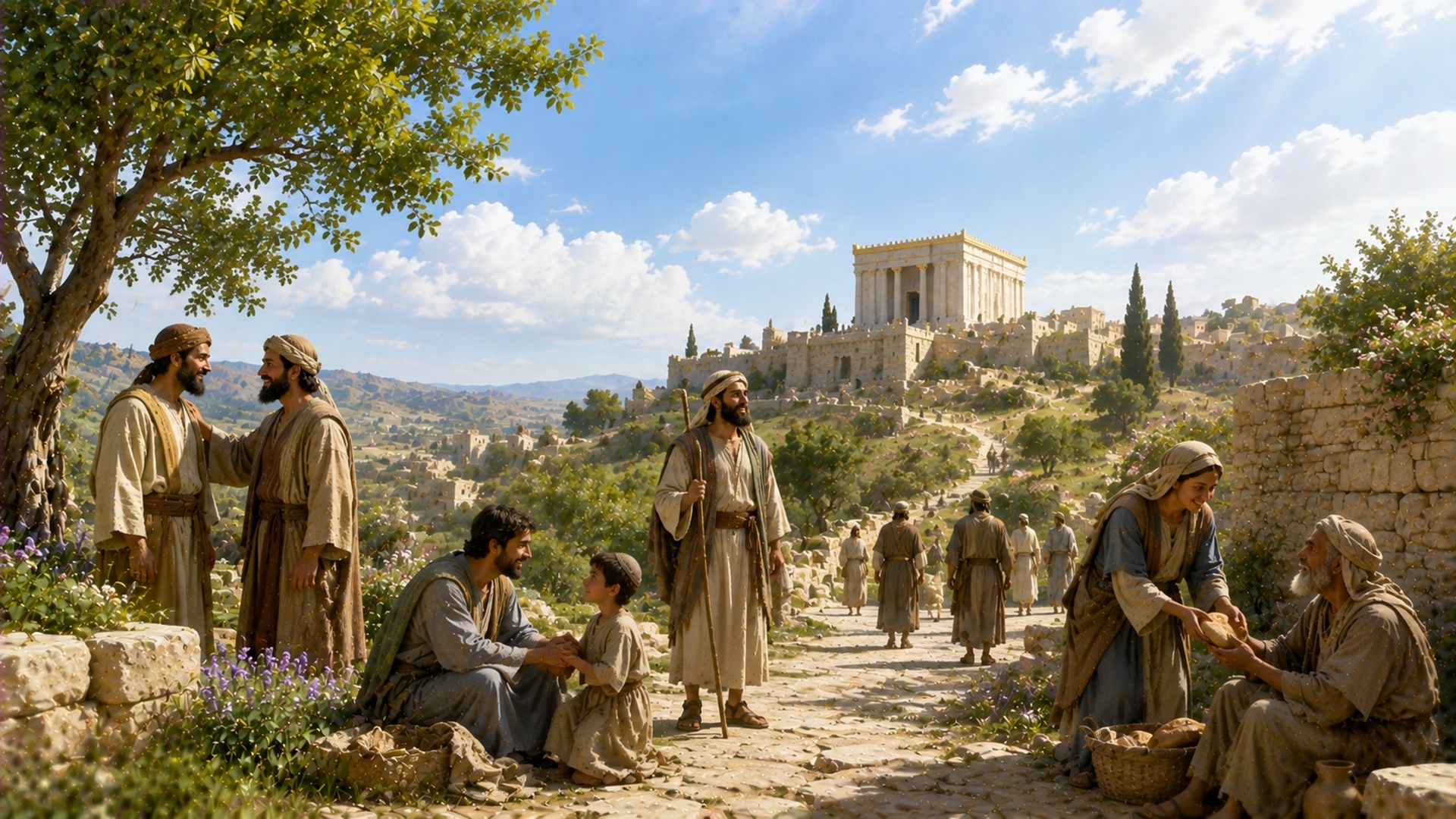
David opens the Psalm with two closely connected questions. Who may dwell in God’s tent? Who may live on His holy mountain? The image recalls the sanctuary and Zion, the place associated with God’s special presence. But David is not merely interested in the requirements for entering a particular place. His question goes deeper: Who can live in continual fellowship with the holy God?
The answer begins with the whole manner of life: it is the person who walks blamelessly and practices righteousness. “Blameless” does not mean that a person is sinless or perfect by his own strength. It refers to an undivided, sincere life before God. There should be no deliberate contradiction between one’s confession of faith and everyday life.
Then attention turns to the heart: the person speaks truth “from the heart.” Biblical truthfulness is not limited to avoiding obvious lies. God desires truth in the innermost being. Words and motives, outward behavior and inward thinking, should agree with one another.
Psalm 15 speaks especially clearly about the way we treat other people. Whoever lives with God does not slander his neighbor, does not do him wrong, and does not bring disgrace upon him. Here the Psalm touches an area in which godliness becomes very practical: our speech.
A person may speak religious words and at the same time cause great harm with his tongue. Rumors, degrading remarks, half-truths, and slander can destroy relationships. Psalm 15 therefore shows that the way we handle another person’s reputation is part of our life before God.
The Psalm then speaks about how we evaluate people. The God-fearing person is not dazzled by outward success or social status. He honors those who fear the Lord. God’s standards shape his values more strongly than human prestige.
Then comes an especially challenging quality: the righteous person keeps his word even when doing so brings him disadvantage. A promise does not matter to him only as long as it is convenient. His faithfulness does not depend on whether circumstances have changed.
Here character becomes visible. It is easy to be reliable as long as reliability costs nothing. But Psalm 15 describes a person whose word carries weight because his faithfulness comes from an inner attitude.
The use of money is also mentioned. The righteous person does not exploit the need of others and does not accept a bribe to harm the innocent. Financial conduct and spiritual life must not be separated from one another. God is also concerned with whether we handle power, possessions, and financial opportunities justly.
It is remarkable how concrete the entire Psalm remains. The great question about dwelling with God is not answered with complicated theological formulas. Instead, David speaks about truth, speech, relationships, promises, money, and justice. Nearness to God becomes visible in ordinary life.
Yet the Psalm must not be understood as a list by which we could earn access to God. The entire biblical message shows that no sinful human being can stand before the holy God by his own righteousness. Our acceptance with God rests on His grace. But precisely this grace transforms the person who entrusts himself to Him.
In Jesus Christ we see the life described in Psalm 15 perfectly fulfilled. He was without deceit, completely righteous, faithful in every word, and full of love toward people. Through Him we receive access to God, and through His work He desires increasingly to make His character visible in our lives as well.
The final sentence of the Psalm contains a wonderful promise: “Whoever does these things shall never be shaken.” This does not mean that a believer will never experience difficulties, temptations, or upheavals. But his true foundation remains firm. Whoever allows his life to be guided in God’s presence stands on a foundation that does not depend on changing circumstances.
⋯⋯⋯⋯⋯⋯⋯⋯⋯⋯◆⋯⋯⋯⋯⋯⋯⋯⋯⋯⋯
📌 Summary
Psalm 15 asks who can live in continual fellowship with God. The answer describes a person whose faith shapes both character and everyday life: he acts justly, speaks truth, protects the reputation of others, keeps his word, and handles money and power responsibly. The Psalm therefore shows that nearness to God and the way we live cannot be separated. Whoever entrusts himself to God also allows Him to transform his character.
⋯⋯⋯⋯⋯⋯⋯⋯⋯⋯◆⋯⋯⋯⋯⋯⋯⋯⋯⋯⋯
💡 Message for Us Today
Our spiritual life is not revealed only in what we believe or confess in worship. It becomes visible in the way we speak about others, how reliable our word is, how we handle money, and how we act when no one is watching. God’s grace accepts us, but it does not leave our character unchanged. The closer we come to Christ, the more He desires to produce truthfulness, faithfulness, righteousness, and love in our daily lives. Preparation for God’s eternal kingdom therefore does not begin sometime in the future – it is happening today in the seemingly small decisions of everyday life.
⋯⋯⋯⋯⋯⋯⋯⋯⋯⋯◆⋯⋯⋯⋯⋯⋯⋯⋯⋯⋯
💭 Thought for Reflection
If my faith today could not be recognized by my words, but only by the way I treat other people – what would my life reveal about my relationship with God?
