









🤩 Bible Stories to Marvel At
Where God’s wonders become great – for little and big hearts
👁️ Psalm 17 – God Hears the Prayer of a Sincere Heart
🛡️ When God keeps us as the apple of His eye
🌅 Introduction
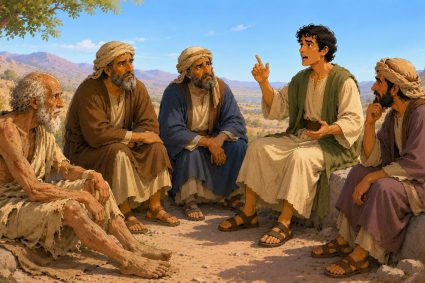
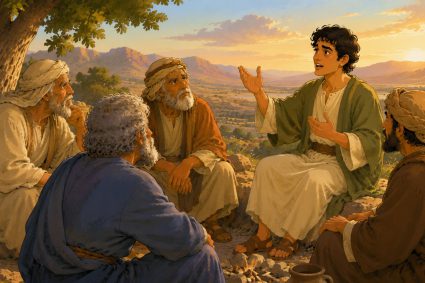
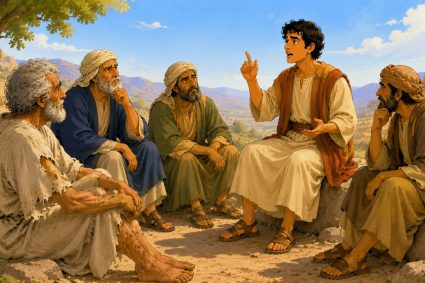
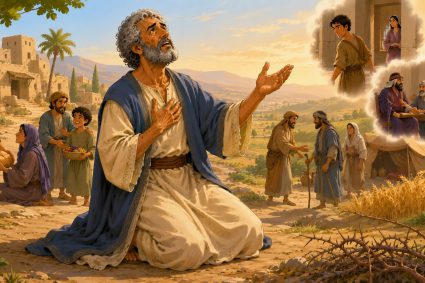
Psalm 17 is a solemn prayer of David. He speaks to God in a situation in which he feels threatened. People oppress him, enemies surround him, and David does not seek protection first in his own strength, but in God.
In Psalm 16, David confessed that the Lord was his secure portion. He trusted God to preserve him, guide him, and show him the path of life. Psalm 17 now reveals what this trust looks like when danger approaches. David does not flee away from God, but toward God.
David asks God to hear his cause. He knows that God hears not only words, but also examines the heart. He therefore asks the Lord to search his inner life. He does not want to pray with deceitful lips, but to stand before God with a sincere heart.
This psalm speaks frequently about protection. David asks God to keep him as the apple of His eye and hide him beneath the shadow of His wings. These are very tender images. The pupil of the eye is especially sensitive and precious. Wings remind us of closeness, warmth, and protection.
At the end, David looks beyond his distress. He sees not only his enemies, but also hopes to behold God’s face. He knows that the people of this world often seek their portion only in visible things. David, however, expects to find his deepest joy in seeing God and being fully satisfied in His presence.
📖 The Biblical Story
🙏 David Calls upon God for Justice
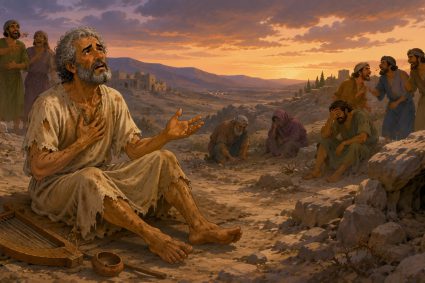
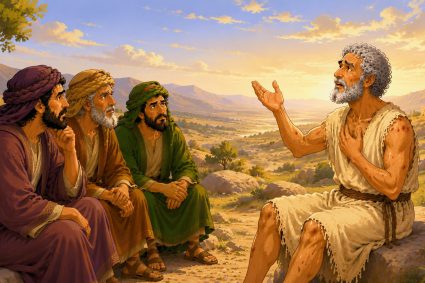
David begins with an urgent prayer. He asks the Lord to hear his righteous cause. He calls out, cries aloud, and prays. His distress is not small, and therefore his prayer is not indifferent.
David believes that God hears. He is not speaking into emptiness. He brings his cause before the Lord because he knows that God sees more than people can see. God knows the truth, injustice, and hidden motives.
This is important for hearts young and old. When someone misunderstands or treats us unjustly, we can go to God first. We do not need to carry everything alone or always strike back immediately.
David shows us that a sincere heart may ask God for help. Those who experience injustice may say: Lord, consider my cause. You know the truth.
💬 A Prayer from Sincere Lips
David says that his prayer does not come from deceitful lips. This means that he does not want to lie to God, pretend, or act as though his heart were different from what it truly is.
God does not hear only beautiful words. He also knows whether those words are honest. A prayer may sound outwardly religious while remaining inwardly insincere. David does not want to pray in this way.
We could explain it to children like this: We do not need to wear a mask before God. When we are sad, we may tell Him. When we are afraid, we may tell Him. When we need help, we may ask Him honestly.
A genuine prayer does not begin with perfect sentences, but with a truthful heart. David comes to God because he knows that the Lord loves truth within us.
⚖️ David Asks God for a Righteous Judgment
David asks that his vindication come from God’s presence. He wants God to look upon what is right. People should not pronounce the final judgment—God should.
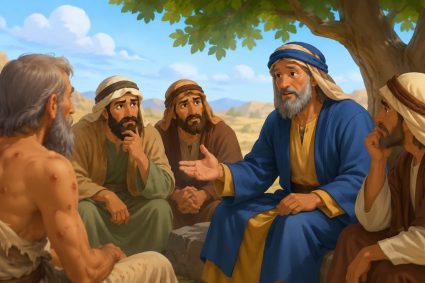
People can be mistaken. They hear rumors, see only part of the situation, or judge others out of pride. God, however, sees clearly. His eyes recognize what is right.
David trusts that God’s perspective is more just than human opinions. He does not want to be condemned by lies, but to stand before God’s truth.
This is comforting for everyone who is judged falsely. God sees not only what others say. He sees what is truly there.
🔍 God Examines the Heart
David says that God has examined his heart. God visited him during the night, tested him, and found no evil purpose. David opens his inner life before God.
This requires courage. Many people would prefer God to see only their good qualities. David, however, knows that God already sees everything. He therefore willingly submits himself to God’s examination.
God’s examination is not like a cruel search for mistakes. God examines us to bring the truth into the light. He wants to cleanse, clarify, and guide the heart onto the right path.
For hearts young and old, this means that we may ask God to examine our hearts—not so that we will live in fear, but so that we may live honestly and freely before Him.
🌙 God Sees Even During the Night
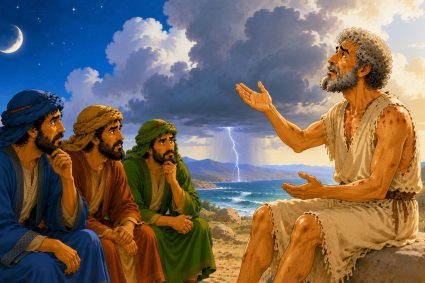
David mentions the night. During the night, everything becomes quiet. People sleep, voices fall silent, and the heart can become very honest. But God also sees during the night.
Sometimes worries arise at night. We think about the day, other people, our mistakes, fears, or unanswered questions. David knows that God is present there as well.
God sees not only what is visible during the day. He also knows the quiet thoughts that no one else can hear. This can be solemn, but also deeply comforting.
When you lie awake at night and feel alone, you may know that God does not sleep. He understands your heart even in the darkness.
👄 David Wants to Guard His Mouth
David says that he has resolved not to sin with his mouth. He knows that words can become dangerous. During times of distress, pain, or anger, the mouth can quickly speak wrongly.
A person can wound, lie, mock, or seek revenge through words. David does not want to do this. He asks God not only to protect him from his enemies, but also pays attention to his own lips.
This is very practical. When others act unjustly, we are strongly tempted to speak unjustly ourselves. David, however, does not want to depart from God’s way.
For hearts young and old, this is an important prayer: Lord, guard not only my path, but also my mouth. Help me to speak truthfully and purely.
🛤️ David Holds Fast to God’s Word
David says that through God’s Word he has kept himself from the paths of violent people. God’s Word is like a protective fence around him. It helps prevent him from entering the wrong paths.
When people oppress him, David could think: I will treat them as harshly as they treat me. But God’s Word restrains him. It shows him that the path of violence is not God’s path.
This reminds us of Psalm 1. There, the blessed person was like a tree planted beside water because he delighted in God’s Word. David also finds direction in God’s Word.
Those who carry God’s Word within their hearts possess light upon dark paths. It helps when anger, fear, or pressure threaten to draw us in the wrong direction.
👣 David Asks for Steady Steps
David asks God to uphold his steps on God’s paths so that his feet will not slip. He knows that even a believer can stumble unless God sustains them.
The image is true to life. We need firm footing on a slippery or rocky path. Those who walk unsteadily can fall. David asks God to make his steps secure.
We could explain it to children this way: When you are walking along a difficult path, it is good to hold a strong hand. David wants to hold God’s hand.
This request reveals humility. David does not say, “I can handle everything alone.” He says: Lord, hold me securely. Preserve my steps.
📣 David Calls Because God Answers
David says: I call upon You because You will answer me, O God. This is trust. David does not pray because he thinks God might not even be there. He prays because he knows that God hears.
Sometimes God’s answer does not come immediately or in the way we expect. Nevertheless, David holds firmly to the truth that God is a hearing God. He inclines His ear toward those who seek Him.
This is comforting for hearts young and old: You do not need to be great, strong, or perfect before God will hear your prayer. A sincere heart may call upon Him.
David asks God to incline His ear and hear his words. This reveals closeness. The great God hears the prayer of one individual person.
💙 David Asks for God’s Wondrous Loving-Kindness
David asks God to reveal His wondrous loving-kindness. He knows that deliverance does not come through his own merit, but through God’s faithful love.
God’s goodness is not ordinary. David calls it wonderful. It is greater than human kindness, deeper than our feelings, and more faithful than our promises.
David also knows that God saves those who seek refuge in Him. He is the Savior of those who flee to His right hand.
This is a powerful image: Those who flee to God are not running into an empty corner. They are fleeing to the Lord, whose hand is strong enough to save.
👁️ Keep Me as the Apple of Your Eye
David then prays a very tender sentence: Keep me as the apple of Your eye. The pupil of the eye is sensitive, precious, and carefully protected. No one deliberately allows something dangerous to enter their eye.
Through this image, David asks: Lord, guard me with special care. Do not look upon me with indifference. Protect me as something very precious is protected.
For hearts young and old, this is a beautiful thought. You matter to God. Those who seek refuge in Him may know that God considers them precious.
David feels threatened, but he knows where he can flee. He does not ask God for cold distance, but for loving protection.
🪽 Under the Shadow of Your Wings
David also asks: Hide me under the shadow of Your wings. This image reminds us of a bird protecting its young beneath its wings. There they find warmth, closeness, and safety.
A little chick cannot defend itself very well. But beneath its mother’s wings, it is safe. David uses this image to describe God’s protection.
God does not literally possess wings like a bird. But the image helps us understand how tender God’s protection can be. He is not merely a wall—He is also near.
When fear comes, we may pray: Lord, hide me in You. Let me find rest beneath Your protection.
⚔️ David Is Threatened by Enemies
David asks for protection from the wicked people who oppress him and the enemies who surround him. He does not feel merely inconvenienced. He is facing genuine danger.
His enemies are described as people who seek his life. They do not look upon him with compassion. Their hearts are hard, and their words are proud.
Such experiences can be very difficult. When people speak evil about us, oppress us, or seek to harm us, the heart can become weary.
David shows us that we may bring such distress to God. God is not present only during peaceful days. He is also our refuge when enemies draw near.
🪨 A Hardened Heart and Proud Words
David describes his enemies as people with closed hearts. They speak proudly with their mouths. This means that their inner lives are hard and their words reveal arrogance.
A hardened heart no longer feels proper compassion. It can see the suffering of others and still remain cold. Proud words make matters worse because they belittle others while exalting the speaker.
For hearts young and old, this is a warning. We should ask God to keep our hearts tender. A tender heart can repent, listen, and show mercy.
David sees the hardness of his enemies, but he does not become like them. He brings their hardness before God.
🦁 Enemies Like a Lurking Lion
David compares his enemies to a lion eager for prey and a young lion lurking in secret. The image is powerful and dangerous.
A lurking lion is quiet, attentive, and ready to pounce. This is how David feels: His enemies are watching him and waiting to bring him down.
Sometimes people do not behave like open enemies, but secretly wait to exploit a weakness. This can be deeply distressing.
David knows that he needs more than his own cleverness against such danger. He needs God to intervene.
🛡️ David Asks God to Arise
David cries out: Arise, O Lord! Confront him! Bring him down! This is a powerful prayer for God’s intervention. David wants God to stop the power of his enemies.
He does not simply take judgment into his own hands. He calls upon God as the righteous Judge. God should decide, deliver, and set limits upon evil.
This is important. When we suffer injustice, we are strongly tempted to become harsh and vengeful ourselves. David reveals another path: He brings the case before God.
God may act. God may deliver. God may judge. David entrusts his cause to the Lord.
⚡ God Can Save with His Sword
David asks God to deliver his life from the wicked with His sword. The sword represents God’s power to stop evil and free those who are oppressed.
David is not helpless because God is strong. Even when his enemies appear powerful, they are not more powerful than the Lord.
For hearts young and old, this means that we sometimes face situations in which we do not know how deliverance can come. But God knows paths that we cannot see.
David calls upon God because he believes that the Lord can intervene, deliver, and preserve him.
🌍 People Whose Portion Is Only in This World
David speaks about people whose portion is in this life. They live as though visible things were everything. Their hearts cling to whatever they can currently possess, enjoy, and control.
They may be wealthy, eat their fill, and leave possessions to their children. Outwardly, their lives may appear strong and successful. But their portion remains limited to this world.
Psalm 16 showed us David saying that the Lord was his portion. Psalm 17 now reveals the contrast: Some people have their portion only in this world.
This is a solemn question for our hearts: What is my portion? Am I seeking only what will pass away, or am I seeking God Himself?
🍽️ Outward Abundance Is Not Enough
David describes how such people are filled with God’s earthly treasures and even leave enough behind for their children. This shows that people who do not seek God can still possess much outwardly.
But possessions are not the same as God’s presence. A full table cannot heal an empty heart. A great inheritance cannot save the soul.
This is important for hearts young and old. Material things are not evil when they are good gifts from God. But they must not become our god.
David sees the difference. Others may seek their portion in visible things, but he seeks the face of God.
🌅 David Wants to Behold God’s Face
At the end, David says: As for me, I will behold Your face in righteousness. This is one of the psalm’s most beautiful contrasts. His enemies seek possessions and power. David seeks God’s face.
To behold God’s face means to be in His presence, be accepted by Him, and experience His glory. This is worth more than everything people can accumulate.
David knows that genuine satisfaction does not come only through bread, money, or success. Genuine satisfaction comes from God’s presence.
For hearts young and old, this is a profound invitation: Do not seek only God’s gifts. Seek God Himself.
😊 David Will Be Satisfied When He Awakes
David says that he will be satisfied with God’s likeness when he awakes. These words are filled with hope. David expects a joy that reaches beyond his present distress.
He is oppressed now. He sees enemies now. He feels danger now. But he believes that an awakening, an encounter, and a vision of God will come that will truly satisfy his heart.
This hope reaches deeply. It demonstrates that God’s presence is stronger than the distress of the present moment. David does not live only by what he can currently see.
Those who wait for God possess a hope greater than today’s pain. One day, God’s presence will fill everything that the heart still lacks.
🕊️ God Is David’s Ultimate Comfort
Psalm 17 begins with a cry for justice and concludes with the hope of seeing God’s face. Between these two points, we see a man under threat who nevertheless refuses to stop praying.
David asks God to examine his heart, uphold his steps, keep him as the apple of His eye, and hide him beneath the shadow of His wings. He knows the danger, but he also knows his refuge.
This makes the psalm so valuable. It does not portray a life without enemies, fear, or difficult paths. It portrays a heart that flees to God in the middle of danger.
For hearts young and old, the message remains clear: When people are harsh, God remains our refuge. When paths are uncertain, God can uphold our steps. When the world cannot satisfy us, God’s face remains our true joy.
🌅 What This Psalm Reveals
Psalm 17 reveals that David calls upon God during distress. He asks God to hear his cause, examine his heart, uphold his steps, and preserve him from his enemies.
The psalm also reveals God’s tender protection. David asks to be kept as the apple of God’s eye and sheltered beneath the shadow of His wings. In the end, David seeks not only deliverance from people, but his deepest joy in beholding God’s face.
🟣 Summary
Psalm 17 is David’s prayer during a time of great distress. David asks God to hear his righteous cause and receive the prayer that comes from his sincere lips. He opens his heart before God and asks to be examined. David wants to guard his mouth and his steps and hold fast to God’s Word. He calls upon God because he believes that God answers. Especially beautiful is his request to be kept as the apple of God’s eye and sheltered beneath the shadow of His wings. David describes his enemies as hardhearted, proud, and dangerous like a lurking lion. Nevertheless, he entrusts his deliverance to God. In the end, David distinguishes between people whose portion is only in this world and his own longing: He wants to behold God’s face and be satisfied with His likeness.
💚 A Message for Hearts Young and Old Today
We learn that when we are oppressed or feel that we are being treated unjustly, we may come to God first. He hears sincere prayers and sees what is truly within the heart.
We also learn that God’s protection is both tender and strong. He can keep us as the apple of His eye and hide us beneath the shadow of His wings. We may seek refuge in Him.
And we learn that visible things alone cannot satisfy our hearts. Possessions, success, and recognition are not enough. We find our deepest joy in God’s presence and in beholding His face.
💭 Reflection
🔸 Why does David ask God to examine his heart?
🔸 What does it mean to be kept by God as the apple of His eye?
🔸 Where do I seek my deepest security—in this world or in God’s presence?
🧒 👧 👦
💌 Invitation to Psalm 18
🏔️ The Lord Is My Rock and My Fortress
Psalm 17 has shown us how David calls upon God during distress. He asks for protection, an examined heart, and deliverance from his enemies. His deepest hope is found not in the possessions of this world, but in the face of God.
Psalm 18 now leads us into a great song of thanksgiving. David looks back and confesses how God delivered him from the hands of his enemies. He calls the Lord his rock, fortress, Deliverer, shield, and strong refuge.
What happens when someone looks back after great danger and realizes: God truly sustained me?
Come along and discover the next psalm!
🔔 Preview of Psalm 18
⚡ When God Intervenes as a Mighty Deliverer
Psalm 18 is a powerful song of deliverance. David describes God with powerful images: as his rock, fortress, shield, the horn of his salvation, and his refuge. He remembers how God brought him out of deep distress.
👉 Why does David call God his rock and fortress?
👉 How does David describe God’s mighty intervention?
👉 And why does fear ultimately become a song of thanksgiving?
✨ In the next psalm, we will learn that those who experience God’s deliverance may confess with all their hearts: The Lord is my strength.
