











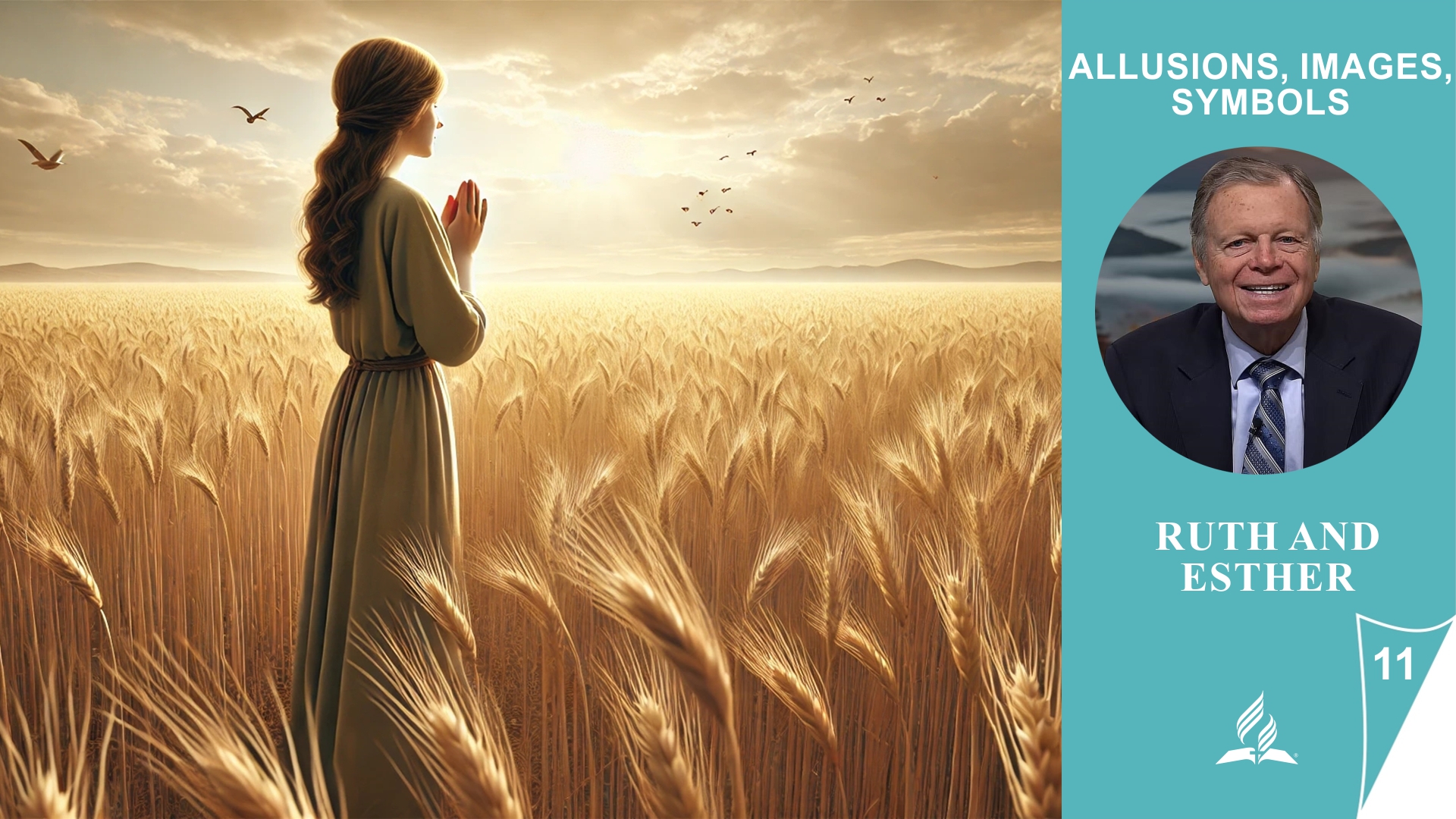
Series ALLUSIONS, IMAGES, SYMBOLS with Pastor Mark Finley
Lesson 11. Ruth and Esther
Divine Providence and the Story of Redemption in the Great Controversy
Lesson 11 invites us to discover the deep connections between the accounts of Ruth and Esther and the great spiritual conflict. In both stories, God’s care meets us in the midst of hardship—whether through Boaz’s saving hand or Esther’s courageous intervention at the royal court. At the same time, the claims of Satan and the dark context in which God protects and delivers His people are revealed. The typology of Boaz as a foreshadowing of Christ and the parallels to biblical prophecy point to God’s comprehensive plan to overcome rebellion and suffering. Thus, this lesson encourages us to recognize God’s sovereign guidance in both small and large matters and to fix our hope firmly on His ultimate intervention.
Content:
11.1 Famine in “The House of Bread”
God’s Caring Presence amid Human Need
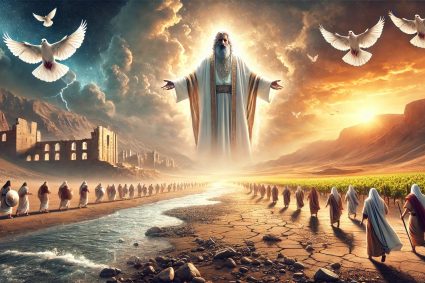
The account of the famine in Bethlehem vividly shows how the consequences of human rebellion alienate us from God’s original blessing. Although the earth still yields abundance, our greed and selfishness lead to scarcity and suffering. Yet even in this apparent emptiness, God’s unfailing faithfulness is revealed: He remains present and acts in history without violating our free will. Naomi’s and Ruth’s plight reminds us that we share responsibility for our situation, but that does not stop Him from offering rescue and hope. The story encourages us to trust that God will one day finally overcome sin and suffering.
11.2 Ruth and Boaz
The Redeeming Kinsman as a Type of Christ
In the encounter between Ruth and Boaz, God’s provident care is revealed in a unique way. Boaz’s kindness takes on even greater significance when Naomi realizes he is also the kinsman-redeemer who can secure her inheritance. This makes clear that our spiritual poverty need not be the end of the story, for God’s salvation comes through one who fully understands our plight. In Boaz, we see a picture of Christ, who not only acts generously but also unites Himself with our condition. His incarnation and sacrifice show that God takes us as His bride despite our brokenness. This truth invites us to derive our identity not from our own efforts but from His redeeming love.
11.3 Boaz as Redeemer
The True Heir: Christ’s Victory over Satan’s Claim
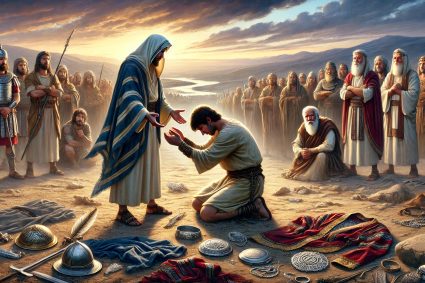
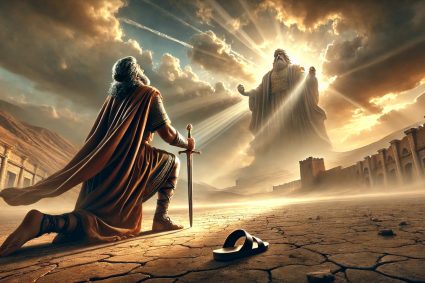
The account of Boaz’s intervention at the city gate demonstrates that love and justice go hand in hand: Boaz is prepared to stand for Ruth and secure her claim. Yet a “closer kinsman” symbolizes Satan’s claim on humanity, asserted through guilt and sin. Just as Boaz bypasses the nearer relative to redeem Ruth, so Christ overcomes Satan’s claim on us by His vicarious sacrifice. The sandal exchange at the gate underscores that ownership and legal right are only truly transferred through payment of the price—Christ’s blood. This image invites us to place our trust not in our own works but in the only One worthy to redeem us.
11.4 Haman and Satan
The Power-Hungry One and His Eternal Adversary
Haman embodies Satan’s pride and obsession with power by elevating himself above all other princes and demanding their homage. Like Lucifer, he rejects any subordination to God’s sovereignty and directs his wrath at those who remain faithful. The parallel in Revelation shows that Satan’s strategy is the same from then until the end: he offers wealth and security but demands total devotion. Yet the faithful—whether in Esther’s story or in John’s vision—resist his demands and thereby affirm God’s ultimate rule. Their steadfastness demonstrates that true loyalty springs not from coerced worship but from unshakable trust in the Redeemer. Finally, this narrative teaches us that those who hold fast in the little things will be victorious in the ultimate test.
11.5 For Such a Time as This
Hope for the Final Act in the Great Controversy
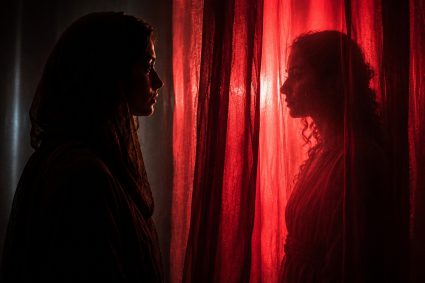
Studying prophecy must not lead us into fear and despair but should keep before us the red thread of divine promise until the end. Though severe trials lie ahead, the story of Esther and the vision in Revelation 12 remind us that God never abandons His bride. Just as Esther was chosen “for such a time as this” to rescue her people, so we are not without divine assistance in the end times. The King Himself advocates for us, and the promise of deliverance is as certain as the announcement of tribulation. Those who read prophecy through to its liberating conclusion maintain their trust in God’s final victory. Therefore, it is worthwhile to keep the big picture in view so that hope is not lost in the details.
11.6 Summary
God’s Saving Hand in the Great Controversy
The stories of Ruth and Esther show how God’s love and care remain effective even in times of need and oppression. In Ruth, God’s promise is revealed through Boaz, the redeemer who rescues the childless family and thus points to Christ as the true Redeemer. The parallels to Satan’s claim—seen in Job’s trial, the dispute over Moses, and the temptation of Christ—make clear that the enemy seeks a “closer kinsman” to claim us. In Esther, we see how God protects His people through seemingly coincidental turns of events and courageous intermediaries. Both narratives encourage us to trust in God’s sovereign salvation in both small and great matters. They invite us to embrace the biblical story of redemption in all its scope, both as a challenge and a comfort until the very end.

(Visited 12 times, 1 visits today)