







🌙 Still Awake?
Every evening, one step closer to Jesus.
📅 September 1
🍞 When Hunger Becomes Intense
📖 Bible Text
“And after He had fasted forty days and forty nights, He was hungry.”
Matthew 4:2
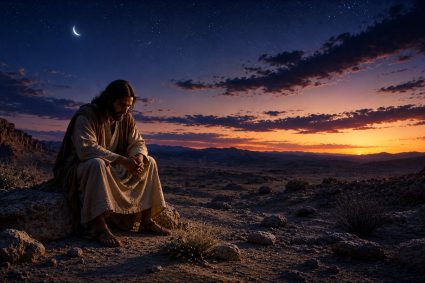
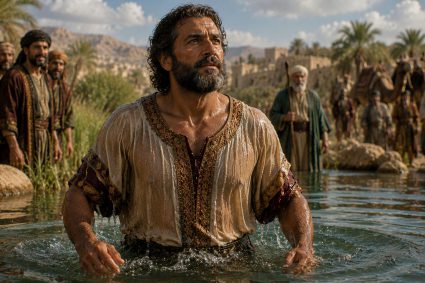
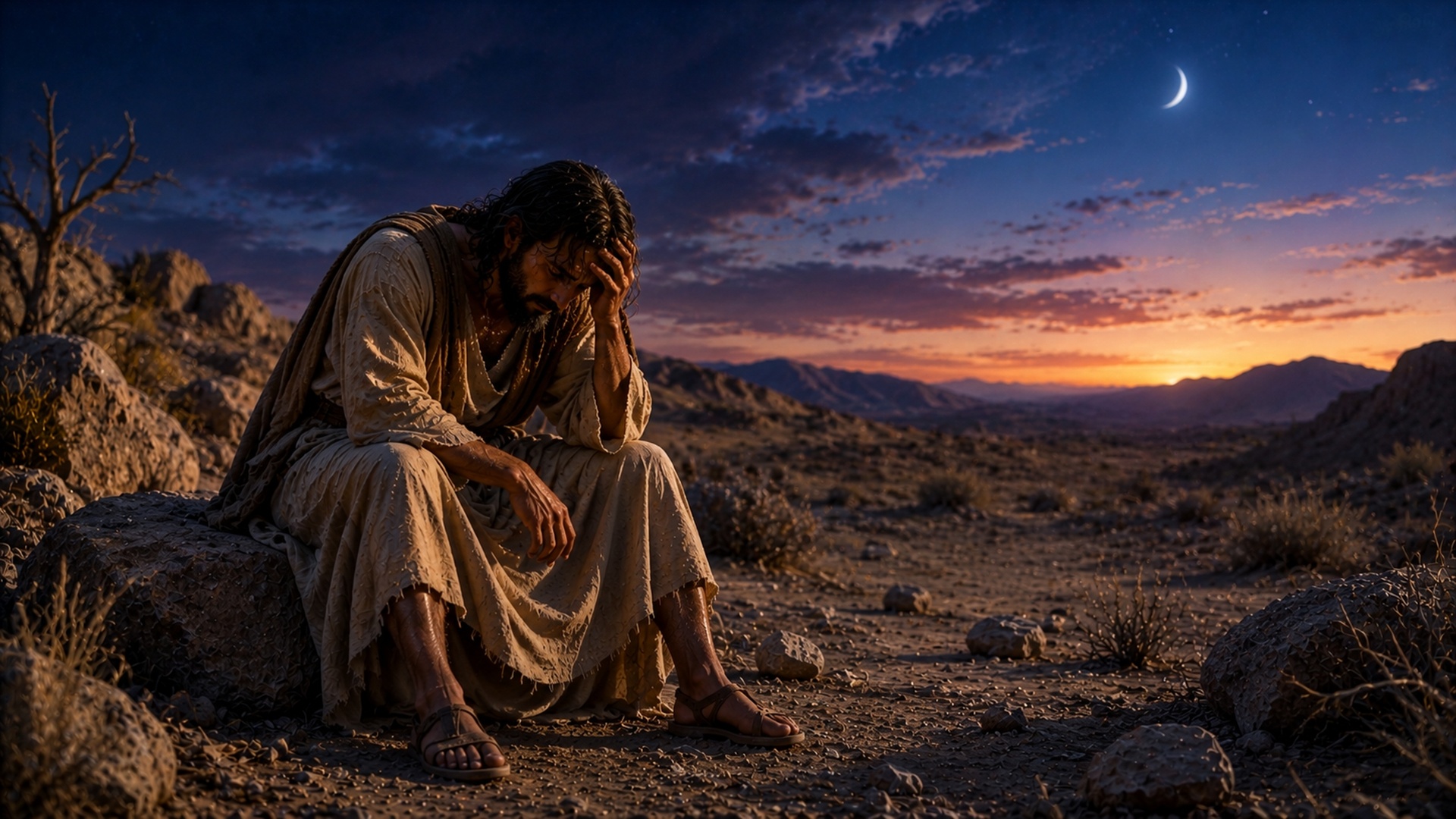
Yesterday, we saw that immediately after His baptism, Jesus was led by the Spirit into the wilderness. What began there was not a comfortable period, but a time of solitude, fasting, and temptation. Matthew now tells us that Jesus fasted for forty days and forty nights and afterward became extremely hungry. This makes it clear that Jesus had not become human merely in a symbolic sense. He possessed a real human body that experienced tiredness, weakness, and hunger. It was precisely in this physically weakened condition that the tempter would approach Him.
This sequence is important because temptations often strike us most powerfully when our strength is fading. When we are tired, stressed, disappointed, or lonely, we become impatient more easily and make decisions more quickly that we might have judged differently in a calm state. Jesus knows such moments of human weakness from His own experience. He did not face the tempter from a comfortable and protected situation, but after His body had fasted for a long time and He was truly hungry.
🏜️ Forty Days in the Wilderness
Matthew does not mention the forty days by chance. The number recalls important periods of preparation and testing throughout biblical history. Moses spent forty days with God on the mountain, and Israel wandered in the wilderness for forty years. Jesus now enters a wilderness experience as well, but unlike Israel, He will remain completely faithful to His Father there.
The wilderness was not a tourist retreat for Jesus or a romantic form of solitude. It was a harsh place where protection, food, and human companionship were absent. It was there that He prepared Himself for His public ministry. Before returning to the crowds, He spent a long period completely focused on His Father.
We also need times when external distractions are reduced and we can reflect intentionally on our relationship with God. This does not mean that we must literally go into a wilderness for forty days. But when our lives are constantly filled with appointments, entertainment, and digital impressions, we may barely notice what is happening within us. Silence can help us see more clearly which thoughts control us, which desires drive us, and where we especially need God’s guidance.
🍞 Jesus Was Truly Hungry
The brief statement “He was hungry” shows how real Jesus’ humanity was. He was not pretending to live a human life; He shared our physical reality. He knew hunger, tiredness, thirst, and pain. Later, after a long journey, He would sit wearily beside a well, experience thirst on the cross, and eat with His disciples after the resurrection.
This is important for our faith because Jesus does not merely observe our human weakness from a divine distance. He knows from personal experience how physical exhaustion can affect a person. When you are tired and notice your patience fading, when you are sick and can barely concentrate, or when stress influences your decisions, you do not need to explain to Jesus how limited a human body can be.
At the same time, this story shows us that physical needs are important, but they must not automatically determine what is right or wrong. Hunger is not a moral problem. Sleep, food, rest, and physical health are good gifts from God. Yet even a legitimate need can become a temptation when we are willing to disregard God’s will in order to satisfy it. This is precisely the point the devil will target in the following verse.
🧠 Temptation Often Seeks a Moment of Weakness
The tempter did not come by chance after the long fast. He waited for a moment when Jesus was physically weakened. This helps us view our own temptations more realistically. We do not always fall because our convictions have suddenly changed completely. Sometimes our self-control is simply weaker because we are exhausted, hurt, or overwhelmed.
Perhaps you notice that you become angry especially quickly when you have not had enough sleep. Perhaps you turn to certain habits when you feel lonely. Perhaps you become more envious when you are disappointed yourself, or you seek approval when you feel insecure. Recognizing such patterns is not a sign of weakness; it can be an important part of spiritual maturity.
When you know that certain situations make you more vulnerable, you can prepare yourself for them. Perhaps you need better sleeping habits, less unnecessary stress, clear boundaries, or someone with whom you can speak honestly. Spiritual life does not mean ignoring the body and emotions. We may learn to arrange our entire human life in a way that helps us follow God more faithfully.
⚠️ Not Every Strong Need Must Be Met Immediately
We live in a culture where many needs can be satisfied almost immediately. When we are hungry, we can order something. When we are bored, we open an app. When we feel lonely, we message someone. When we feel uncomfortable, we quickly look for a distraction. Much of this is not wrong, but it can train us to want every unpleasant feeling removed immediately.
Fasting interrupts precisely this pattern. For a specific period, a person consciously abstains from food in order to focus more closely on God. Fasting should be neither an achievement intended to impress God nor a form of self-punishment. In the biblical sense, it can help us become more aware of our dependence on God and bring spiritual concerns before Him with special concentration.
In the wilderness, Jesus shows that not every physical need must immediately receive the highest priority. His hunger was real and intense, but His trust in the Father was more important. This does not mean treating the body badly, but learning that our desires do not automatically have to become our masters.
🧭 What Controls Me When I Desperately Want Something?
A desire can begin harmlessly and yet gain more and more power over us. Perhaps it concerns food, entertainment, approval, social media, sexuality, money, or the desire to remain constantly available and busy. The decisive question is not merely whether something is generally permitted, but whether we are still able to handle it freely.
Can you give something up when you realize that it is harming your relationship with God? Can you put your phone down even though you constantly feel that you might be missing something? Can you end a conversation that is drawing you in the wrong direction? Can you accept that a desire will not be fulfilled immediately without allowing your entire mood to depend on it?
Self-control does not mean that we no longer have needs. It means that our needs do not automatically determine our decisions. God’s Spirit wants to help us develop an inner freedom in which we can say: “I feel this desire strongly, but I do not have to follow it if it leads me away from Jesus.”
🙏 Fasting Is More Than Simply Not Eating
Fasting can easily be misunderstood. Some people associate it only with a religious obligation or an attempt to appear more spiritual through special acts of self-denial. Jesus Himself would later warn against fasting to gain the attention of others. When someone fasts so that others will consider them especially devout, they miss its true purpose.
Biblical fasting directs our attention toward God. Abstaining creates intentional space for prayer, reflection, and greater concentration on a spiritual concern. The length of the fast is not what matters, and comparison with others matters even less. A person can fast and still remain inwardly proud. Another person may abstain from something for a shorter time and spend that period with God in complete sincerity.
If you are still young, have health restrictions, or take medication, physical fasting should not be undertaken carelessly or without sensible guidance. The purpose is not to harm the body. Other forms of intentional abstinence can also help create more room for God, such as spending time without social media, videos, or other distractions.
The decisive question is always whether the abstinence is truly drawing you closer to God or has merely become a religious performance.
📱 Perhaps You Need a Different Kind of Fast
For many people today, abstaining from food would not be the only challenge. Perhaps even one evening without a smartphone would reveal how powerful certain habits have become. Sometimes we reach for the device automatically without consciously deciding what we actually want to do. One message leads to the next post, one video to another, and suddenly a great deal of time has passed.
An intentional break can reveal how dependent we have become on constant entertainment and new stimulation. Perhaps it is only in the silence that you notice how difficult it is for your mind to rest or how uncomfortable you feel when no distraction is available. Such observations are not meant to condemn you, but they can help you develop healthier habits.
For example, you could consciously abstain from social media for a certain period and use those minutes instead to read a passage from the New Testament, pray, or take a walk without headphones. What matters is that the space you have gained is not simply filled with another distraction, but is truly made available to God.
💪 Self-Control Grows Through Practice
Sometimes we wish that God would simply remove a difficult habit from one moment to the next. This can happen, but self-control often grows through many small decisions. Someone who learns to say no consciously in small matters is frequently better prepared when a stronger temptation comes.
This can be very practical. Perhaps you decide not to take your phone to bed. Perhaps you establish certain periods when you will not be online. Perhaps you make it a habit to pause briefly before reacting impulsively. Perhaps you do not immediately buy or consume everything you happen to desire.
Such decisions are not automatically spiritual, but they can help cultivate an attitude in which desires do not immediately take command. When this attitude is connected with prayer and God’s Word, it can become an important part of spiritual growth.
At the same time, we must be careful that self-control does not produce pride. We do not become better people because we can give up more things than others. The goal is not to admire ourselves, but to become freer to follow Jesus.
🤍 Your Body Is Not Your Enemy
Because Jesus fasted and did not immediately satisfy His hunger, someone might mistakenly conclude that physical needs are fundamentally inferior or unspiritual. But the Bible does not treat the body as an enemy. God created human beings with bodies, and Jesus Himself truly became human. Food, sleep, and rest are good and necessary things.
The problem does not begin with the need, but with its rule over us. Hunger is good because it reminds us that the body needs nourishment. Sleep is good because our bodies require rest. Sexuality is part of God’s creation. Joy and pleasure have their proper place. Yet every good need can cause harm when it becomes the sole standard, independent of God’s order.
A healthy Christian life therefore does not despise the body, but places it within a greater whole. We care for it responsibly while also learning that not every desire must be fulfilled immediately. The body may be a good servant, but it should not become the master of our lives.
🫶 Sometimes Tiredness Needs Rest, Not Just More Prayer
There is another practical side of this story that we should not overlook. If temptations become stronger in moments of weakness, the spiritual response is not always exclusively to pray longer. Sometimes part of the solution is simply to get enough sleep, eat sensibly, take breaks, or reduce excessive demands.
We are allowed to take human limitations seriously. After a severe crisis, Elijah first needed sleep and food before God continued speaking with him. Jesus would also later tell His disciples to rest after they had worked hard.
Perhaps you are reacting irritably precisely because you have not slept enough for several days. Perhaps self-control is more difficult because your daily life is constantly overloaded. In that case, it may be spiritually responsible not only to ask for more strength, but also to change something about the rhythm of your life.
God did not create us to live continually beyond our limits. An orderly daily life can also be part of how we prevent temptation and create room for a healthy relationship with Jesus.
❤️ Jesus Knows Weakness Without Yielding to It
The humanity of Jesus becomes very clear in this verse, and that is precisely why it is so comforting. Jesus was hungry. He was physically weakened and was about to face an intense temptation. Yet He remained faithful to His Father. This means that in Him we have not only a Savior who forgives our failures, but also One who understands our human struggles.
When you are tired, Jesus understands. When a temptation seems stronger because you are emotionally distressed, He understands that too. When you feel lonely or have endured a long and difficult season, you do not approach a Savior who knows such experiences only in theory.
At the same time, Jesus shows that weakness does not automatically have to lead to failure. We can be tired or burdened and still seek God’s help. We do not need to be ashamed that our strength is limited. We may acknowledge our limitations and, for that very reason, seek God’s protection and guidance even more intentionally.
🚨 Recognize Your Vulnerable Moments
Everyone has situations in which they become more vulnerable. For one person it may be loneliness; for another, stress, boredom, anger, or the feeling of having been rejected. Some temptations appear especially late at night, while others come after conflicts or in moments when we want to prove something to ourselves.
When you recognize such patterns, you can respond more intentionally. Perhaps you should not make important decisions when you are in a certain state. Perhaps after a difficult day, you need rest before responding to a hurtful message. Perhaps it would be helpful not to face certain situations alone, but to contact a trustworthy person in good time.
This attentiveness has nothing to do with fear. It is a form of wisdom. A person who knows their weaknesses can take better precautions than someone who repeatedly claims to have everything under control.
Therefore, ask your dear Father not only to rescue you from temptation, but also to show you when and why you are especially vulnerable.
🌿 Abstaining Can Show You What Truly Matters to You
When we intentionally give something up, we often discover how much space it has occupied in our lives. Perhaps you think a particular habit is completely unimportant until you try to abstain from it for several days. Suddenly, you notice how frequently your thoughts revolve around it or how automatically you reach for it.
This can be a valuable spiritual insight. Abstaining does not automatically make us more devout, but it can reveal where dependencies have developed. Afterward, you can decide much more consciously what place something should have in your life.
Perhaps it would be helpful not to ask immediately: “Is this forbidden?” Sometimes another question is more revealing: “Can I still handle this freely, or is it now controlling my daily life more strongly than is good for me?”
Christian freedom does not mean that we must do everything that is possible. It also means that we possess the freedom to give something up when it is not good for us or occupies too much space.
🌙 Before You Fall Asleep Tonight
Perhaps your day was exhausting, and you noticed that you had less patience than usual. Perhaps there was a moment when you reacted wrongly because of tiredness, stress, or disappointment. Tonight, you do not need to convince yourself that your human limitations are a personal failure. You may honestly acknowledge that you are limited while still taking responsibility for your decisions.
If something was wrong, bring it to your dear Father and ask for forgiveness. Then consider not only how you can try harder tomorrow, but also which circumstances influenced your reaction. Perhaps you need more rest, a better boundary, fewer distractions, or earlier support.
Jesus knows hunger, tiredness, and human weakness. But He also knows the way of trust in the midst of that weakness. Therefore, tonight you may ask not only for forgiveness, but also for wisdom in dealing with your own limitations.
Perhaps this is an important step for the new month: instead of beginning with as many ambitious resolutions as possible, honestly recognize what strengthens you, what weakens you, and where you especially need Jesus.
💭 Think About It
When are you especially vulnerable to making wrong decisions: when you are tired, feel lonely, are under stress, or seek approval? Is there also something in your daily life that you find very difficult to give up and about which you should ask whether you still use it freely or whether it already controls you more strongly than is good for you?
🌟 Thought for Tomorrow
Tomorrow, intentionally observe the situations in which your self-control becomes weaker. Do not try to condemn yourself for them; instead, ask what causes them and bring those causes to your dear Father in prayer. Also choose one small thing that you can consciously give up for a few hours, and use part of the time you gain for prayer or reading a passage from the New Testament. This act of abstaining should not be an achievement, but should help you recognize which things occupy a great deal of space in your daily life and whether there is still enough room for Jesus.
🙏 Prayer
Dear Father,
thank You that Jesus truly became human and experienced hunger, tiredness, and physical weakness. It comforts me to know that He understands my limitations and does not observe my struggles from a great distance.
Please help me recognize the situations in which I am especially vulnerable to temptation and wrong reactions. Show me whether tiredness, stress, loneliness, boredom, or the desire for approval influences my behavior more strongly than I realize.
Give me wisdom to care responsibly for my body and my strength. Help me find enough rest, establish healthy boundaries, and not live as though I must constantly push myself beyond my limits.
At the same time, teach me self-control. I do not want to be ruled by every desire and every need. Show me whether certain things have taken up too much space in my life, and give me the freedom to give them up when they harm my relationship with You.
When I am weak, do not let me proudly try to accomplish everything alone. Remind me that Jesus knows my weakness and wants to help me. Tomorrow, give me an attentive mind concerning my decisions and a heart that trusts You even when another path appears easier or more pleasant.
Amen.
🌙 Sleep well. Your dear Father knows your limitations and does not expect you to pretend that you have none. Tomorrow, ask Him for wisdom to deal responsibly with your weaknesses and to order your needs so that they do not control you, but so that your life continues to belong to Jesus. Until tomorrow.
