











🤩 Bible Stories to Marvel At
Where God’s wonders become great – for young and old hearts
🔍 Psalm 26 – Examine Me, Lord
🕯️ When a Heart Desires to Walk in God’s Light
🌅 Introduction
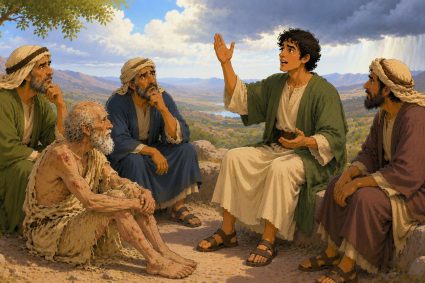
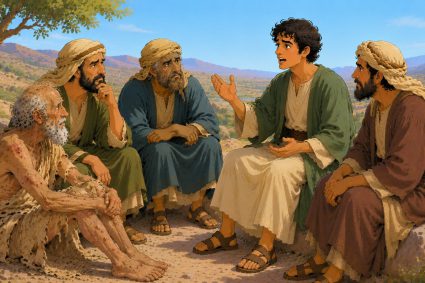
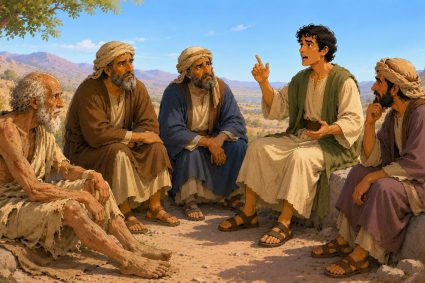
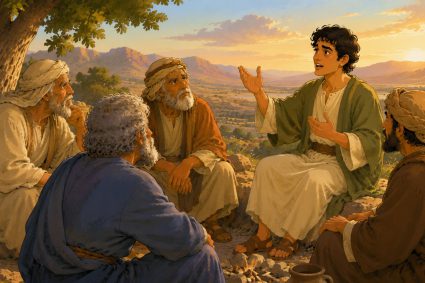
Psalm 26 is a prayer in which David speaks very openly to God: Examine me, Lord, and test me; purify my heart and my innermost being. This is a courageous prayer. David does not want merely to appear righteous outwardly. He wants God to look deeply into his heart and examine his path in the light.
In Psalm 25, David asked God for guidance, forgiveness, and deliverance. He said: Lord, show me Your ways. In Psalm 26, he now goes one step further. He asks not only to recognize the right path, but also to remain sincere as he walks upon it.
In this psalm, David speaks about trust, truth, clean hands, God’s house, and public praise. At the same time, he distances himself from false paths. He does not want to sit with deceitful people, associate with hypocrites, or belong to the gathering of evildoers. His heart longs for God’s presence, not for fellowship with evil.
This psalm must not be understood as though David were proudly claiming that he did not need grace. Here, too, he asks: Redeem me and be merciful to me. He knows that sincerity does not mean becoming perfect through one’s own strength. It means living honestly before God, refusing to love evil, and seeking God’s grace.
Psalm 26 invites young and grown-up hearts to become honest before God. Not only our words, but also our paths, friendships, decisions, and inner motives may be brought into God’s light. Those who love God’s house and desire to walk in His truth may pray: Lord, examine me, cleanse me, and keep my foot on level ground.
📖 The Biblical Story
⚖️ David Asks God to Vindicate Him
David begins with the request: Vindicate me, O Lord. He brings his case before God because he knows that the Lord judges justly. People may see incorrectly, speak falsely, or make unjust accusations. God, however, knows the truth.
David does not want lies and false suspicions to have the final word. He asks the Lord to examine his case. This demonstrates trust, because only someone who knows God as a righteous Judge can place his life so openly before Him.
This is comforting for young and grown-up hearts. When we are treated unjustly or misunderstood, we do not have to defend everything by ourselves. We may say: Lord, You see my heart. You know the truth.
David does not seek human applause first. He seeks God’s judgment. That is the safest place for a sincere heart.
🚶 I Have Walked in My Integrity
David says that he has walked in his integrity. To walk means to live, move forward, and follow a particular path. Integrity means that the heart desires to be honest before God and refuses to live a double life.
David is not saying that he has never sinned. Other passages in the Bible make it very clear that David needed forgiveness. In this particular situation, however, he declares: I have not deliberately chosen a false and hypocritical path.
A person of integrity is not someone who never falls. It is someone who does not want to remain in darkness. When God calls, that person comes into the light.
We can explain it to children this way: Sincerity means not having two faces. The heart should be honest both before people and before God.
🛡️ I Trust in the Lord
David says that he trusts in the Lord and therefore will not fall. His security does not rest on his own strength. It rests on his trust in God.
This is important. David connects integrity with trust. He does not say: I stand firmly because I am so good. He says: I trust in the Lord. God sustains me.
Those who trust God do not build their lives upon pride, human praise, or personal achievement. They build upon the Lord, who is faithful.
For young and grown-up hearts, this means that when you trust God, you do not have to pretend that you are always strong. You may know that the Lord can sustain you.
🔍 Examine Me, Lord
David then asks: Examine me, O Lord, and test me. This is a very serious prayer. David invites God to look carefully at his life.
Many people would rather not be examined. They are afraid that something hidden might become visible. David, however, knows that God’s examination is better than self-deception.
God does not examine His children in order to destroy them. He examines them to bring the truth into the light, reveal false paths, and cleanse the heart.
For young and grown-up hearts, this is an important request: Lord, show me what is not good in my life. Help me to become honest and allow You to change me.
🔥 Purify My Heart and My Innermost Being
David asks God to purify his heart and his innermost being. Purification reminds us of fire refining metal. The impurities are removed so that what is valuable may appear more clearly.
David knows that outward order is not enough. A person may appear friendly while remaining inwardly filled with false thoughts. God sees more deeply.
David therefore does not ask only: Examine my actions. He asks: Examine my heart. Examine my thoughts, desires, and deepest motives.
For young and grown-up hearts, this means that God does not want merely to improve our outward behavior. He desires to cleanse our hearts so that truth and love may dwell within them.
💚 God’s Goodness Is Before David’s Eyes
David says: Your lovingkindness is before my eyes. This means that he lives with his attention fixed on God’s faithful love. God’s goodness is not at the margins of his life, but directly before his eyes.
What we keep before our eyes shapes the path we follow. Those who constantly look at fear easily become discouraged. Those who constantly look at what others possess become dissatisfied. Those who keep God’s goodness before their eyes learn to trust.
David remembers that God is good and faithful. God has guided, forgiven, and preserved him. This goodness helps David remain on the right path.
This is a beautiful practice for young and grown-up hearts: Keep God’s goodness before your eyes. Remember the good things the Lord has done.
📖 I Walk in Your Truth
David says that he walks in God’s truth. For him, God’s truth is not merely something to hear. It is a path upon which to walk.
Walking in God’s truth means: I want to live honestly. I do not want to be guided by lies, hypocrisy, or false paths. God’s Word should direct my steps.
This connects with Psalm 25, where David prayed: Lead me in Your truth. Now he says: I walk in Your truth. God’s guidance should become visible in everyday life.
For young and grown-up hearts, this means that truth is not only for the mind. It should become visible in our words, decisions, and conduct.
🪑 I Do Not Sit with Deceitful People
David says that he does not sit with deceitful people. Here, deceitful does not merely refer to someone who cares greatly about outward appearance. It describes empty, false, and godless ways that have no genuine value.
Sitting with someone indicates fellowship. David is therefore saying: I do not make myself comfortable where people despise God, love falsehood, or treat evil lightly.
This is an important decision. Fellowship shapes the heart. The people with whom we spend much of our time influence our thoughts and speech.
We can explain it to children this way: Friends can lead you closer to God or draw you farther away from Him. It is therefore important to choose carefully where your heart feels at home.
🎭 I Do Not Associate with Hypocrites
David also says that he does not associate with hypocrites. A hypocrite presents an outward appearance that differs from what is truly within the heart. Such a person pretends to be devout, honest, or kind while something else rules within.
David does not want to follow such paths. He knows that hypocrisy corrupts the heart. Those who pretend for a long time that everything is good lose their love for the truth.
God, however, loves a truthful heart. He does not desire religious masks, but honest people who live before Him.
For young and grown-up hearts, this means that being honest with God is better than pretending to be devout. God can heal an honest heart, but a mask cannot grow.
🚫 I Hate the Assembly of Evildoers
David says that he hates the assembly of evildoers. This does not mean that he cruelly despises people. It means that he refuses to love fellowship with evil ways.
Evildoers are people who deliberately practice injustice, hurt others, and reject God’s ways. David does not want to connect himself with such paths.
Love for God also requires a clear separation from evil. We cannot love God while simultaneously choosing evil as our home.
For young and grown-up hearts, this means that we should treat people with mercy without making evil our friend.
🌑 I Do Not Sit with the Wicked
David repeats this thought and says that he does not sit with the wicked. Psalm 1 also begins with this theme: Blessed is the person who does not walk in the counsel of the wicked, stand in the path of sinners, or sit in the seat of mockers.
The Bible thereby shows how important our path is. First, a person listens to false advice. Then he remains standing on a false path. Finally, he sits there as though it were his home.
David does not want to follow this path. He does not want to dwell where God is not honored.
For young and grown-up hearts, this is a loving appeal: Be careful which voices you follow and where your heart settles down.
👐 I Wash My Hands in Innocence
David says that he will wash his hands in innocence. Hands represent actions, and washing represents cleansing. David desires to stand before God with cleansed hands.
This image reminds us that worship and the way we live belong together. We cannot come to the altar with hands stained by wrongdoing and pretend that everything is right.
David does not merely want to sing; he also wants to come before God in purity. He knows that God’s presence is holy.
For young and grown-up hearts, this means that before we praise God, we may also ask: Lord, is there something I need to make right? Is there anything from which You desire to cleanse me?
⛪ I Draw Near to Your Altar
David says that he draws near to God’s altar. The altar was the place of surrender, sacrifice, and encounter with God. It made one reality visible: Human beings need God’s grace.
This is important because, despite his words about integrity, David does not live independently of God’s grace. He approaches the altar because he knows that he needs God’s acceptance, cleansing, and presence.
In the light of the whole Bible, the altar points to Jesus Christ. Through Him, we receive forgiveness and access to God.
For young and grown-up hearts, this means that sincerity does not mean living without grace. Sincerity leads us directly to God’s grace.
🎶 David Wants to Proclaim His Gratitude Aloud
David says that he desires to proclaim thanksgiving with a loud voice. His faith does not remain silent. God’s goodness should be declared.
Gratitude is more than politeness. Gratitude recognizes God’s hand. Those who give thanks are saying: Lord, I did not accomplish everything by myself. You helped, guided, protected, and provided.
David does not want to conceal God’s deeds. He desires to confess them aloud. His praise comes from a heart that loves God’s presence.
For young and grown-up hearts, this is a beautiful invitation: Tell others why you are grateful to God. Gratitude fills the heart with light.
✨ I Will Tell of All Your Wonders
David desires not only to give thanks, but also to tell of all God’s wonders. God’s wonders are His mighty, faithful, and gracious deeds.
Those who tell of God’s wonders help others to marvel. Children learn to know God when adults tell them how He has guided their lives. Friends are encouraged when they hear that God is faithful.
Wonders are not only great events that everyone can see. Sometimes protection, forgiveness, comfort, or a new beginning is also one of God’s wonders in a person’s life.
For young and grown-up hearts, this means that the stories of God must not fall silent. Continue telling others what the Lord has done.
🏠 I Love the House of the Lord
David says: Lord, I have loved the dwelling place of Your house. This is a very warm statement. David does not love only God’s help; he loves God’s presence.
The house of the Lord represents the place where God is worshiped and where His presence is especially sought. David longs to be with God.
Some people seek God only when they need something. David reveals a different kind of heart. He loves God’s house because he loves God.
For young and grown-up hearts, this raises a question: Do I love God’s presence? Do I rejoice in prayer, God’s Word, worship, and fellowship with His people?
🌟 God’s Glory Dwells There
David loves the place where God’s glory dwells. God’s glory means His holy presence, beauty, power, and light.
In God’s glory, people recognize that He is greater than everything. Before Him, pride becomes small, fear grows quiet, and the heart becomes reverent.
David does not merely want to stand near people who affirm him. He desires to be where God’s glory is revealed.
For young and grown-up hearts, this means that the most beautiful thing about God’s house is not the building, music, or crowd. The most beautiful thing is God’s presence.
⚠️ Do Not Gather My Soul with Sinners
David asks God not to gather his soul with sinners. He does not want to share the end of those who deliberately live against God.
This is a serious prayer. David knows that paths have destinations. Those who continually love the way of evil are moving toward a dangerous end.
He therefore asks God to preserve him. He does not want to be counted among those whose lives are characterized by violence, lies, and injustice.
For young and grown-up hearts, this means that the path we choose matters. Not every path leads to life. That is why we need God’s deliverance.
🩸 Not with Bloodthirsty People
David speaks about people who shed blood. He means violent people who harm others and show no mercy.
Violence does not always begin with the hands. It can begin within the heart through hatred, contempt, harsh words, and the desire to destroy others.
David does not want to belong to such people. He does not seek fellowship with violence, but the way of God.
For young and grown-up hearts, this means that God desires to protect our hearts from hardness. He calls us to peace, truth, and mercy.
💰 Their Right Hand Is Full of Bribes
David describes the wicked as people whose hands carry evil plans and whose right hands are filled with bribes. Bribery means selling truth and justice for personal advantage.
Those who accept bribes no longer decide according to what is right, but according to what they can gain. This especially harms the weak and innocent.
Psalm 26 shows that God sees more than religious words. He also sees money, power, and secret agreements. He sees when people plan wrongdoing.
For young and grown-up hearts, this means that honesty is more precious than personal advantage. It is better to stand before God with a pure heart than to gain something through injustice.
🛤️ But I Walk in Integrity
After describing the wicked, David says: But as for me, I will walk in my integrity. The words “but as for me” reveal a clear decision. David refuses to follow their path.
An upright path can sometimes be lonely. Others may laugh, deceive, or take dishonest shortcuts. David, however, desires to remain with God’s truth.
Integrity becomes especially visible when another path appears easier. At that moment, the true love of the heart is revealed.
For young and grown-up hearts, this means that you are allowed to live differently. You do not have to participate when others lie, mock, deceive, or call evil good.
🙏 Redeem Me and Be Merciful to Me
David then asks: Redeem me and be merciful to me. This sentence is very important. David does not trust in his integrity as though it could save him. He needs redemption and grace.
Integrity and grace belong together. An honest heart recognizes: Lord, I desire to walk in Your way, but I need Your help. I cannot save myself.
David knows that God not only examines, but also redeems. He is not merely the holy Judge, but also the gracious Savior.
For young and grown-up hearts, this is the good news: You may ask God for cleansing and also for grace. He can forgive, save, and make you new.
🪨 My Foot Stands on Level Ground
David says: My foot stands on level ground. After all his requests for examination, protection, and grace, he speaks about standing firmly.
Level ground is a secure place where one does not slip easily. David experiences the truth that when he remains on God’s path, the Lord gives him stability.
This does not mean that David no longer experiences difficulties. His inward position, however, is more secure because he holds on to the Lord.
For young and grown-up hearts, this means that God’s truth provides solid ground. Those who build upon lies stand insecurely, but those who build upon God find stability.
👥 I Will Praise the Lord in the Congregation
David concludes by saying that he will praise the Lord in the assemblies. His path does not lead into proud isolation, but into shared praise.
He desires to praise God publicly. This corresponds with his desire to love God’s house and tell of His wonders. A heart that is grateful to God seeks fellowship in praise.
Faith is personal, but it is not merely private. God’s people may gather together to give thanks, listen, pray, and honor the Lord.
For young and grown-up hearts, this means that it is good to praise God alone, but it is also beautiful to praise Him with others. Gratitude becomes stronger when it is shared.
✝️ Jesus Makes Pure Hearts Possible
Psalm 26 acquires a profound meaning in the light of Jesus Christ. David asks for examination, cleansing, grace, and redemption. In Jesus, we see how God answers this request in the deepest possible way.
Jesus is the perfectly righteous One. There was no falsehood, hypocrisy, or guilt in Him. He loved His Father’s house, walked in God’s truth, and remained faithful all the way to the cross.
Through Jesus, we can also come to God with our guilt. He cleanses not only our hands, but also our hearts. He grants forgiveness, a new beginning, and strength to walk in integrity.
For young and grown-up hearts, this means that we do not have to become pure enough through our own strength before coming to God. We may come to Jesus, who cleanses, redeems, and shows mercy.
🕯️ A Life in God’s Light
Psalm 26 is a prayer for people who do not want to live in darkness. David asks God to examine his heart, preserve his ways, and place his feet on solid ground.
This prayer is not proud, but honest. David does not want to sit with the wicked, but to walk in God’s truth. He does not want to live with unclean hands, but to thank God at the altar. He does not want to love evil, but God’s house and His glory.
Psalm 26 therefore becomes an invitation: Allow God to examine your life. Do this not out of fear, but out of trust; not because God desires to cast you away, but because He desires to cleanse and sustain you.
The prayer remains for young and grown-up hearts: Lord, examine me. Cleanse me. Redeem me. Be merciful to me. Let my foot stand on level ground and my heart walk in Your light.
🌅 What This Psalm Shows Us
Psalm 26 shows that a sincere heart is willing to be examined by God. David asks the Lord to search his innermost being, purify his heart, and preserve his path in the light of truth.
The psalm also shows that God’s presence and a holy way of life belong together. David does not want to sit with false and godless people, but to approach the altar with clean hands, tell of God’s wonders, love the house of the Lord, and praise Him in the congregation.
🟣 Summary
Psalm 26 is David’s prayer for examination, protection, and grace. David asks God to vindicate him because he has walked in integrity and trusted in the Lord. He asks the Lord to examine and purify his heart and innermost being. God’s goodness is before his eyes, and he desires to walk in God’s truth. David separates himself from deceitful people, hypocrites, evildoers, and the wicked. He desires to wash his hands in innocence, approach God’s altar, proclaim thanksgiving, and tell of God’s wonders. He loves the house of the Lord and the place where God’s glory dwells. At the same time, he asks not to be gathered with sinners and violent people. In the end, he declares his desire to walk in integrity, asks for redemption and grace, and says: My foot stands on level ground; in the congregation I will praise the Lord.
💚 A Message for Young and Grown-Up Hearts Today
We learn that an honest heart is not afraid to ask God for examination. God sees not only our words and behavior, but also our thoughts, desires, and motives. He examines us in order to cleanse and preserve us.
We also learn that fellowship shapes our hearts. David does not want to sit where lies, hypocrisy, and godlessness are at home. Those who love God’s truth should choose carefully which paths and voices they follow.
We also learn that integrity needs grace. David asks not only for examination, but also for redemption and mercy. In Jesus, God grants cleansing, forgiveness, and solid ground for a life lived in His light.
💭 Thought for Reflection
🔸 Am I willing to ask God to examine my heart and innermost being?
🔸 Which people, voices, or paths draw my heart closer to God, and which lead me farther away from Him?
🔸 How can I live before God today with clean hands, honest words, and a grateful heart?
🧒 👧 👦
💌 Invitation to Psalm 27
💡 The Lord Is My Light and My Salvation
Psalm 26 showed us a heart that desires to walk in God’s light. David asks God to examine him, cleanse him, and preserve him on an upright path. He loves God’s house and desires to praise the Lord in the congregation.
Psalm 27 now leads us into a powerful song of trust. David declares: The Lord is my light and my salvation; whom shall I fear? He speaks about enemies, fear, and danger, but also about his one great desire: to remain in the house of the Lord and behold God’s beauty.
What happens when God’s light becomes stronger than the fear within the heart?
Come along and discover the next psalm!
🔔 Teaser for Psalm 27
🛡️ When God’s Presence Is Stronger Than Fear
Psalm 27 is filled with trust and longing. David knows that enemies may come, but he holds on to the Lord as the light, salvation, and protection of his life.
👉 Why does David not need to be afraid when the Lord is his light?
👉 What does his one great desire to remain in the house of the Lord mean?
👉 Why does the psalm end with the encouragement: Wait on the Lord?
✨ In the next psalm, we will learn that those who know God’s light do not have to give fear the final word.
