







💧 THE SILENT INTELLIGENCE OF THE BODY
🔑 The Hidden Principles of a Healthy Life
✨ Series 5: The Spiritual Dimension of Health
💡 How faith, trust, and inner orientation influence the body.
✨ 5.7 Why True Health Is Holistic
🎯 Key Message
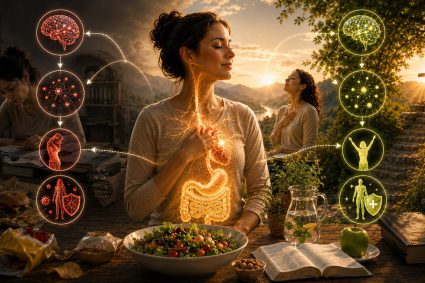
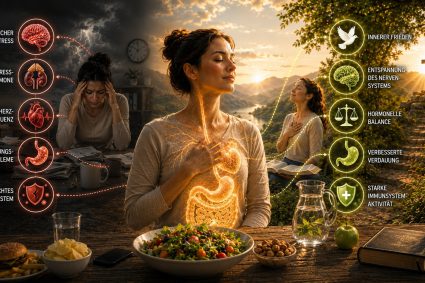
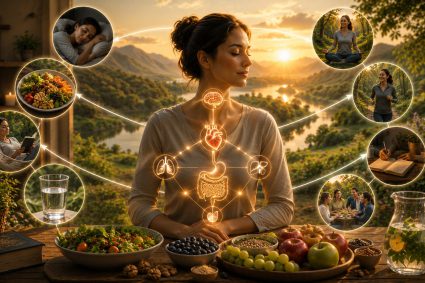
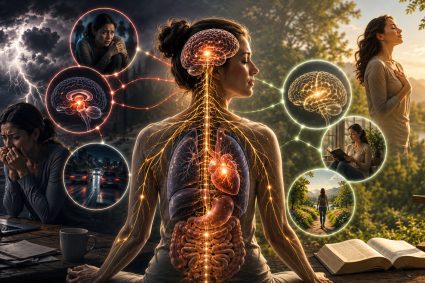
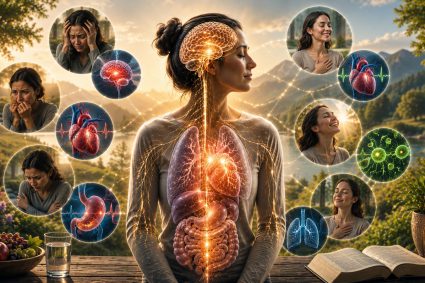
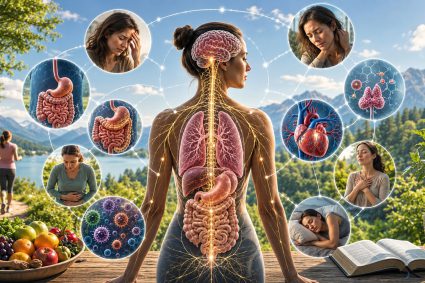
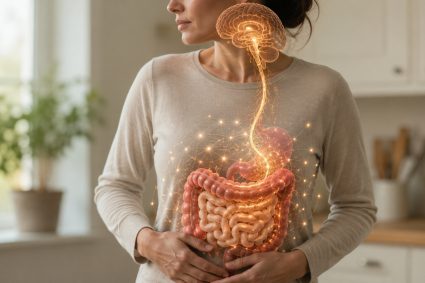
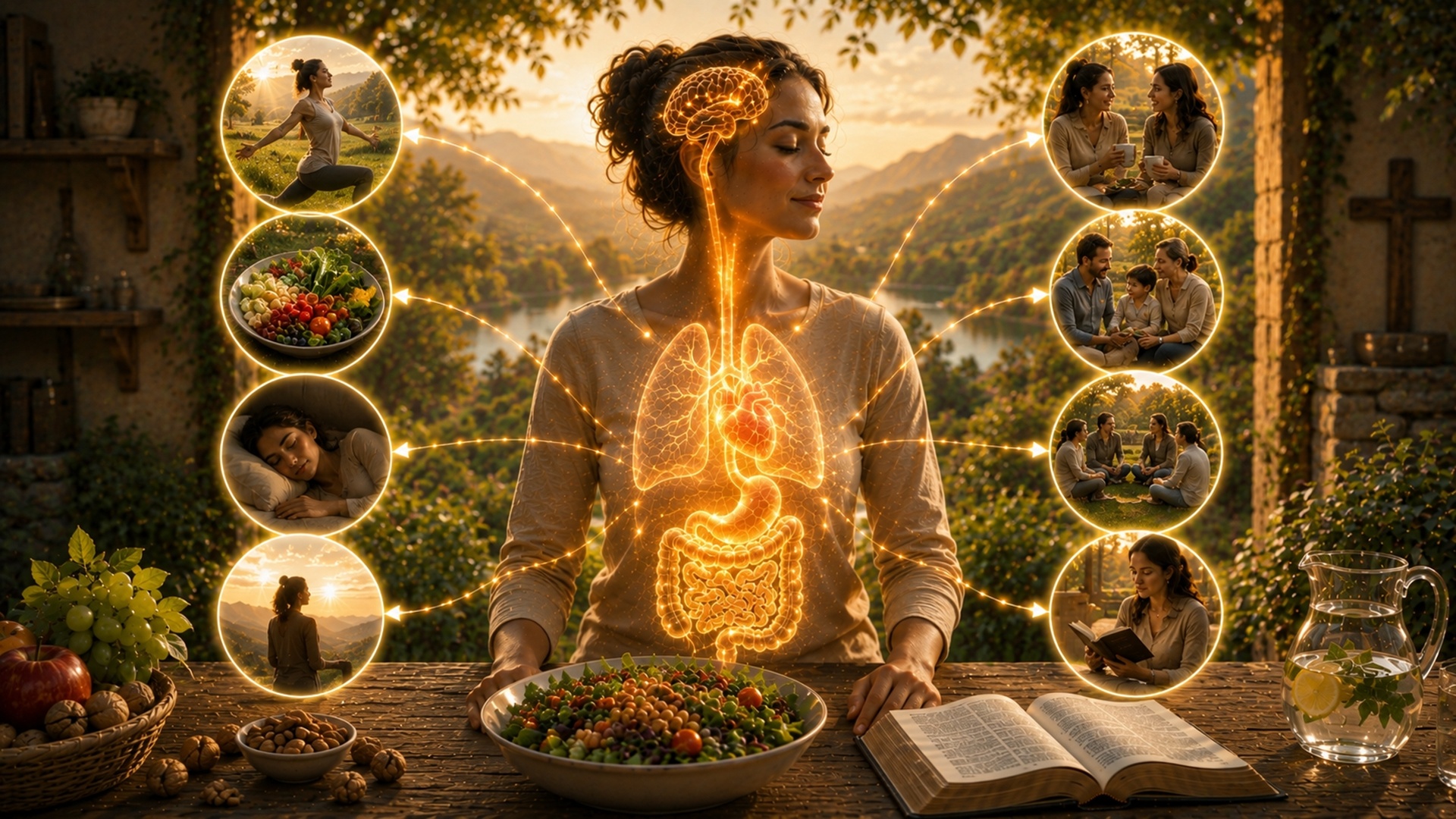
Health does not develop independently in separate areas of a person’s life, but through the interaction of physical, psychological, social, and spiritual factors. Nutrition, exercise, and sleep are important, but they do not operate in a biological vacuum. Thoughts, emotions, relationships, stress, hope, and faith likewise influence how a person lives and how the body responds to everyday life. Holistic health, therefore, does not mean finding an additional method for every area of life, but understanding the human being as an interconnected whole.
⚙️ Explanation – Why We Cannot Divide the Human Being into Separate Parts
When people want to improve their health, they often focus on one particular area. Those who are tired think about sleep; those who have digestive problems change their diet; those who are under stress look for relaxation techniques. These approaches can certainly be helpful, but they fall short if we forget that the body responds as a whole to the conditions in which a person lives.
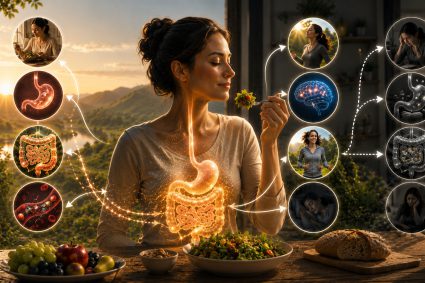
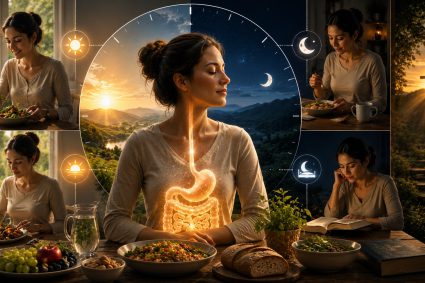
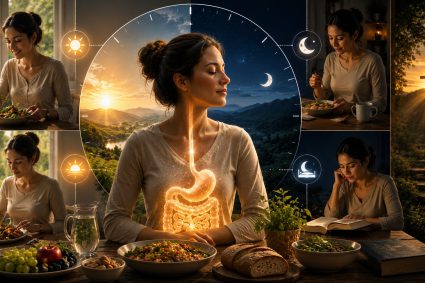
For example, a person does not eat independently of their psychological state. Severe stress can affect appetite, eating habits, and digestion. Sleep, in turn, depends not only on how many hours someone spends in bed, but also on daily rhythm, light, physical activity, worries, illnesses, medication, and numerous other factors. Exercise affects not only the muscles and cardiovascular system, but can also influence sleep, mood, metabolism, and stress regulation. Relationships can provide security and support, while chronic conflict can create an additional burden.
This makes it clear why the idea of separate, mutually independent “areas of health” works only to a limited extent. Although these different dimensions can be distinguished from one another for the sake of explanation, in real life they remain interconnected.
Holism, therefore, does not mean erasing scientific distinctions between the body, the mind, and social factors. Rather, it means taking their interactions seriously.
🧠 The Body Influences the Mind – and the Mind Influences the Body
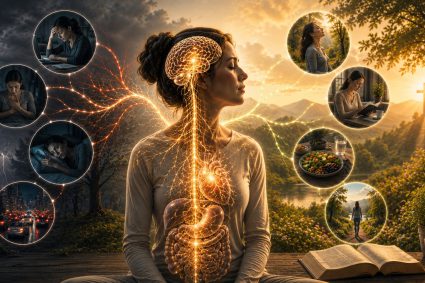
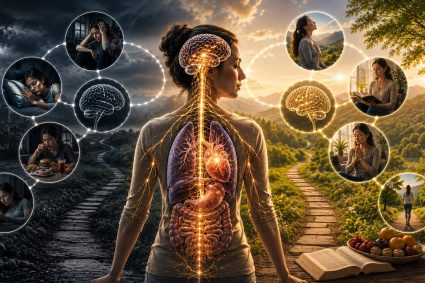
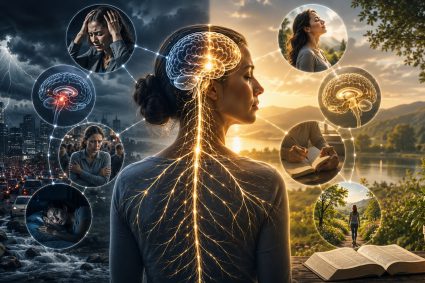
This connection becomes particularly clear in the relationship between physical and psychological processes. Thoughts and feelings do not arise outside the body. They are connected with patterns of brain activity, hormonal processes, autonomic responses, and physical sensations. At the same time, our physical condition influences how we think and feel.
Lack of sleep is a simple example. People who sleep too little or poorly over a prolonged period experience more than physical fatigue. Attention, memory, emotional regulation, and decision-making ability can also be impaired. Conversely, worry, anxiety, or persistent rumination can make it difficult to fall asleep and, in turn, affect the body’s condition the following day.
Similar interactions can be found in exercise, chronic stress, pain, nutrition, and social relationships. For this reason, it is often unhelpful to ask only whether a problem is “physical” or “psychological.” In many situations, the more useful question is: Which factors are interacting here?
🔍 Did You Know? – One Healthy Step Can Benefit Several Systems at the Same Time
Many health-promoting behaviors have more than one effect. Regular physical activity, for example, engages the muscles and cardiovascular system, but it also influences metabolism, sleep, and psychological well-being. A consistent sleep-wake rhythm affects not only morning tiredness, but is also connected with numerous hormonal and metabolic processes. Good social relationships, in turn, can provide practical assistance, buffer stress, and support health-promoting behavior.
This is precisely why holistic health does not have to mean adding more and more measures to everyday life. Often, the opposite is more helpful: shaping a few fundamental living conditions in such a way that several systems can benefit from them at the same time.
🔬 Scientific Insight – Health as a Network of Interactions
Modern medicine recognizes numerous examples of close communication among different regulatory systems. The nervous system interacts with hormonal and immunological processes; stress responses can influence metabolism and sleep; inflammatory processes, in turn, can affect the central nervous system. Behavior, environment, and social conditions are also part of this network.
One well-known framework is the biopsychosocial model, which was developed in the twentieth century as an alternative to viewing illness exclusively in biological terms. It does not claim that every illness is caused equally by biological, psychological, and social factors. Rather, it calls for recognizing—depending on the illness and the situation—that biological processes, psychological factors, and social living conditions can interact with one another.
Another field of research is psychoneuroimmunology. Among other things, it investigates how the nervous system, psychological processes, and the immune system are interconnected. Chronic stress is a particularly well-researched example. Stress is initially a normal adaptive response, but when strain persists for a long time and adequate recovery is lacking, changes can develop in neuroendocrine and immunological regulatory processes. This does not mean that stress causes every illness, but that the overall burden carried by the body can be relevant to health.
The notion that psychological or social factors are therefore less “real” than physical ones is also misleading. If a social experience affects the stress-response systems, for example, this is not a contrast between something “truly physical” and something “merely psychological.” These are different dimensions of the same human being.
⚖️ Holism Does Not Mean Explaining Everything by Everything Else
Precisely because the holistic approach sounds appealing, it needs clear boundaries. Not every physical symptom can be explained by stress, not every illness is caused by lifestyle, and a positive spiritual attitude is no substitute for diagnosis or medical treatment. A broken bone, for example, requires appropriate medical care; a bacterial infection may require specific treatment; genetic disorders do not disappear because a person changes their thoughts.
Holistic health, therefore, does not mean replacing medical causes with psychological or spiritual explanations. It means not setting specific medical treatment and a person’s overall life context against one another.
A person can receive necessary medical treatment while also benefiting from adequate sleep, appropriate exercise, good nutrition, supportive relationships, and spiritual care. This very combination prevents holism from becoming an alternative ideology. It remains what it should be: a more comprehensive view of the human being.
🌿 Health Is More Than the Absence of a Diagnosis
Holistic thinking also changes the way we define health itself. A person may have no acute medical condition and yet feel permanently exhausted, isolated, and inwardly overwhelmed. Conversely, a person with a chronic illness may lead a remarkably stable, meaningful, and socially connected life.
Health, therefore, cannot be described exclusively by a laboratory value or a diagnosis. Medical measurements are important because they provide specific information about physical processes. But they do not automatically capture a person’s entire life situation.
This distinction is crucial to this project. “The Silent Intelligence of the Body” does not seek to separate the body from the rest of the person. A human being does not sleep, eat, think, work, believe, love, suffer, and hope in separate, self-contained systems. All these experiences come together in one life.
🙏 The Spiritual Dimension – Why Faith Belongs to the Whole Person
From a biblical perspective, this unity becomes even clearer. The Bible does not treat a person’s spiritual life as though it were an isolated area that matters only during prayer or worship. Faith influences values, decisions, relationships, hope, the way a person deals with guilt, the processing of loss, and the direction in which a person’s life is oriented.
This does not mean that faith should be understood as medical treatment. Prayer does not replace necessary care, and spiritual trust does not guarantee physical healing. Nevertheless, the spiritual dimension is real because it belongs to human life and influences how a person deals with health, illness, uncertainty, suffering, and mortality.
Christian faith, in particular, opens a perspective that reaches beyond physical health. The highest value of life is not to remain free of symptoms for as long as possible. Health is a gift and should be cared for responsibly, but it is not the ultimate meaning of human existence. The human being belongs to God, and even a person who is ill or physically limited possesses unconditional dignity and can lead a fulfilling spiritual life.
In this way, the Christian view of wholeness also protects us from a dangerous form of health perfectionism in which illness eventually comes to be regarded as personal failure.
📖 Ellen G. White – The Unity of Body, Mind, and Spiritual Life
Ellen G. White explicitly develops her teaching on health from a comprehensive understanding of the human being. In The Ministry of Healing, therefore, she addresses not only nutrition, exercise, water, air, and nursing care, but also trust, hope, prayer, interpersonal care, the influence of the mind, and a person’s relationship with God. Health care is thus not reduced to a single method, but placed within the context of a person’s entire way of life.
A particularly characteristic thought appears in The Ministry of Healing, in the section dealing with the influence of the mind upon the body. There Ellen White writes about the close relationship between a person’s mental and emotional state and physical health:
“The relation that exists between the mind and the body is very intimate. When one is affected, the other sympathizes. The condition of the mind affects the health to a far greater degree than many realize. Many of the diseases from which men suffer are the result of mental depression. Grief, anxiety, discontent, remorse, guilt, distrust, all tend to break down the life forces and to invite decay and death.”
— Ellen G. White, The Ministry of Healing, p. 241.
In the broader context, she does not simply contrast this harmful influence with positive thinking, but points to courage, hope, faith, compassion, and love as forces that can strengthen human life. She is not describing a simplistic formula according to which thoughts cause illnesses or faith automatically removes them. Her fundamental point is that the human being must be viewed as a whole and that the mental, emotional, physical, and spiritual dimensions of life cannot be completely separated from one another.
This is precisely why this thought is so fitting at the conclusion of this series: Christian teaching on health is not concerned exclusively with the body, but asks how the whole person lives before God.
🧩 What Holistic Health Means in Everyday Life
Living holistically does not mean analyzing sleep, nutrition, exercise, stress, relationships, emotions, and spiritual life all at once every morning. That would quickly turn health awareness into a new form of overload. It is far more helpful to recognize connections when problems arise and not to allow fundamental areas of life to remain permanently in conflict with one another.
For example, a person who improves their diet but chronically gets too little sleep should not automatically look for an even more perfect nutrition plan. Someone who exercises regularly but leaves no room for recovery may not need more training. Someone who outwardly does everything “right,” yet lives with persistent stress, loneliness, or unresolved conflict, should also take these factors seriously.
And someone who focuses exclusively on physical health while losing sight of their relationship with God, fellowship, meaning, and hope has likewise considered only one part of the human being.
Holism, therefore, does not constantly ask:
“What additional measure am I still missing?”
It asks:
“Where has the interplay of my life fallen out of balance?”
✅ Application
👉 Consider your health not as a list of separate habits, but as an interconnected picture. Ask yourself how sleep, nutrition, exercise, work, rest, relationships, thoughts, and spiritual life are currently connected. Perhaps one area is already functioning well and helping to sustain another. But perhaps there is also an area that continually demands so much energy that other areas suffer as a result.
Then choose not five new health goals, but one sensible starting point. A regular bedtime, for example, can simultaneously influence energy, daily structure, and eating habits. Regular exercise can support physical activity, stress regulation, and sleep. A reconciling conversation can reduce a social burden that has continued to weigh inwardly for a long time. A regular time with God can help prevent the day from being governed exclusively by demands.
Holistic health does not begin by optimizing everything at once. It begins by recognizing connections and creating order where one change can meaningfully support several areas of life.
✨ Bible Verse
“Now may the God of peace Himself sanctify you completely; and may your whole spirit, soul, and body be preserved blameless at the coming of our Lord Jesus Christ.”
— 1 Thessalonians 5:23
Paul is not presenting a medical theory here about three mutually independent components of the human being. In the context of his letter, his focus is instead on the human being as a whole, belonging to God and to be sanctified by Him. This is precisely why the verse is so fitting as the conclusion to this series: Christian faith is not directed merely toward a small “spiritual part” of our lives. God claims and accompanies the whole person.
💡 Thought to Take With You
True health cannot be reduced to a perfect diet, sufficient exercise, good sleep, or a particular spiritual practice. Each of these areas may be important, but its significance unfolds within a larger context. Physical processes influence thought and emotion, psychological strain can have physical relevance, relationships can support or burden us, and faith shapes the way a person understands meaning, hope, responsibility, and limitations.
Living in holistic health, therefore, does not mean mastering every area perfectly, but keeping the whole person in view and allowing the body, the mind, relationships, and spiritual life to function together in a responsible order rather than against one another.
