





📅 July 21, 2026
📚 BELIEVE HIS PROPHETS
📖 Daily Bible Reading: 🙏 Job 25
✨ God’s Holiness and the Limits of Humanity
✨ When Reverence Becomes Greater Than Human Pride
🌐 Read online here
📍 Introduction
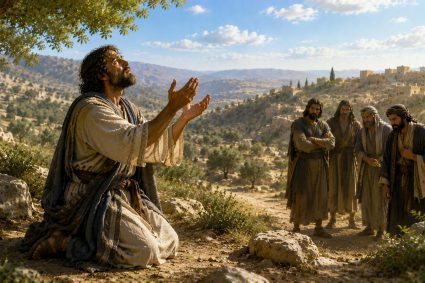
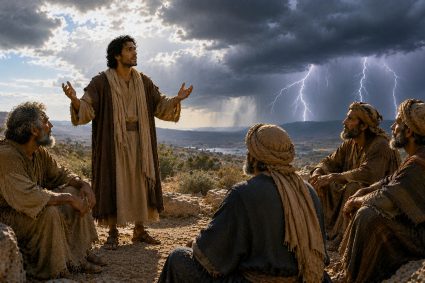
Bildad speaks for the last time. His speech is the shortest in the entire book of Job, yet it draws attention to an important truth: God is holy, powerful, and incomparable. At the same time, Bildad once again draws the wrong conclusion that no human being can be righteous before God. Job 25 reveals both the greatness of God and the limits of human understanding.
⋯⋯⋯⋯⋯⋯⋯⋯⋯⋯◆⋯⋯⋯⋯⋯⋯⋯⋯⋯⋯
🧵 Commentary
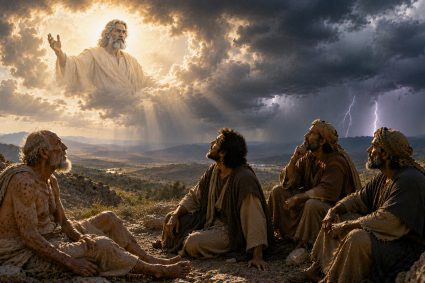
Bildad begins by praising God’s greatness. He describes God as the Ruler of heaven and earth, whose power and majesty are immeasurable. God establishes peace in the heights of heaven, and no one can escape His rule.
He reminds us that God’s armies are countless and that His light rises over all people. Everything is under His sovereign authority.
Bildad then asks the decisive question: How could a human being be righteous before such a holy God? Even the moon and the stars do not appear perfect before God’s purity. How much less a human being, who is mortal and limited.
In this, Bildad expresses a fundamental truth. No human being can make himself righteous before God by his own strength. Every person depends on God’s grace.
Yet once again, Bildad overlooks the decisive point. He uses this truth to declare Job indirectly guilty. However, at the beginning of the book, God had already described Job as upright and God-fearing. Bildad understands God’s holiness in general terms, but he does not understand God’s specific dealings with Job.
His speech ends abruptly and without comfort. It offers no answer to Job’s questions and shows no compassion for his pain. This makes it clear that even correct statements about God remain incomplete when they are not accompanied by love.
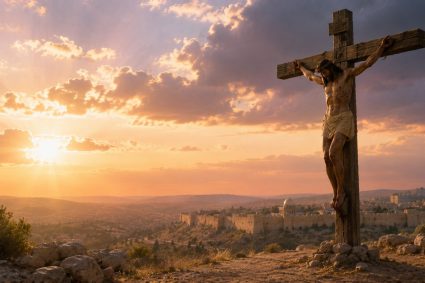
Job 25 reminds us that God’s holiness inspires reverence. At the same time, the Bible teaches that human beings cannot stand before God through their own righteousness, but only through His grace—a truth that finds its fulfillment in Jesus Christ in the New Testament.
⋯⋯⋯⋯⋯⋯⋯⋯⋯⋯◆⋯⋯⋯⋯⋯⋯⋯⋯⋯⋯
🧺 Summary
Job 25 contains Bildad’s final speech. He describes God’s infinite greatness and holiness and emphasizes that no human being can be righteous before God through his own strength. His statements are fundamentally true, but once again they are wrongly applied to Job’s situation.
⋯⋯⋯⋯⋯⋯⋯⋯⋯⋯◆⋯⋯⋯⋯⋯⋯⋯⋯⋯⋯
🔦 Message for Us Today
God’s holiness reveals our limitations. Yet it should not lead us into hopelessness, but toward His grace. No one can make himself righteous. Therefore, we can be grateful that God has opened the way to Himself through Jesus Christ.
⋯⋯⋯⋯⋯⋯⋯⋯⋯⋯◆⋯⋯⋯⋯⋯⋯⋯⋯⋯⋯
📝 Reflection Question
Do you trust in your own righteousness, or in the grace of God that He gives us through Jesus Christ?