


🤩 Bible Stories to Marvel At
Where God’s wonders become great – for little and big hearts
☀️ Psalm 19 – The Heavens and the Word Declare God’s Glory
🌌 When Creation Speaks and God’s Word Shines
🌅 Introduction
Psalm 19 is filled with wonder. David first looks toward the heavens. He sees the vastness above him, the course of the sun, and the alternation of day and night, and he recognizes that creation declares God’s glory. Without words, without an audible voice, and without human language, it proclaims that a great Creator stands behind everything.
But David does not stop with the heavens. After looking at creation, he turns his attention to God’s Word. The heavens reveal God’s power, but His Word reveals His will. Creation fills us with wonder, but God’s instruction speaks directly to the heart.
David describes God’s Word with beautiful expressions. It is perfect, restores the soul, makes the simple wise, rejoices the heart, and enlightens the eyes. God’s Word is not dark and burdensome, but more precious than gold and sweeter than honey.
At the end, the psalm becomes deeply personal. David recognizes that if God’s creation is so great and His Word so pure, then he also needs a clean heart. He therefore asks God to preserve him from hidden faults and presumptuous sins.
Psalm 19 leads young and grown-up hearts through three steps: Look upward and marvel at God’s creation. Listen to God’s Word and allow your heart to be filled with light. Then come personally to God and ask Him to make your words and thoughts pleasing to Him.
📖 The Biblical Story
🌌 The Heavens Declare God’s Glory
David begins by looking toward the heavens. He says that the heavens declare God’s glory and the firmament shows His handiwork. To David, the sky is not empty. It is like a great book that speaks about God.
When we look into the blue daytime sky or see the stars at night, our hearts can become quiet. The vastness above us reminds us that the world is greater than our worries and that God is greater than the world.
The heavens do not speak with human words. They do not preach a sermon composed of sentences. Nevertheless, they still communicate. Their beauty, order, and greatness point toward the Creator.
For young and grown-up hearts, this means that nature is not God, but it points to God. It is like a window through which we see something of His power, wisdom, and glory.
📅 One Day Speaks to Another
David says that one day passes the message on to the next and one night reveals knowledge to another. Every new day carries forward the reminder of God’s faithfulness.
Morning comes, light spreads, people awaken, birds sing, and work begins. Then night arrives, the sky grows dark, stars appear, and rest settles over the earth.
Day and night are like two messengers of God. The day speaks about light, warmth, and life. The night speaks about stillness, order, and God’s watchful care over us.
We can explain it to children this way: Every morning whispers, “God has not forgotten the world.” Every night says, “God is still here while you sleep.”
🤫 A Language Without Audible Words
David says that there is no speech or language, and yet their voice is heard. Creation speaks without using human language. It does not require German, Hebrew, English, or any other language.
A sunrise can touch people in many countries. A starry sky can cause a child, a shepherd, a king, or a traveler to marvel. Creation speaks a language everyone can see.
This language is quiet yet powerful. It does not force itself upon us, but it is always present. Those who become attentive can recognize that behind this beauty stands not a meaningless accident, but God’s creative hand.
David hears the silent message of the heavens. His heart understands: God is glorious.
🌍 The Message Reaches the Ends of the World
The psalm says that their voice goes out through all the earth and their words to the end of the world. God’s creation is a testimony to all humanity.
Not everyone immediately has a Bible in their hands. But everyone lives beneath God’s heavens. Everyone experiences light, darkness, seasons, rain, warmth, plants, animals, and the breath of life.
Creation is like a great invitation: Seek the Creator. Ask about the God who made all these things. Do not stop with the gift, but seek the Giver.
This is important for young and grown-up hearts: God’s glory is not concealed in a corner. It shines over the whole earth.
☀️ God Has Set a Tent for the Sun
David now speaks especially about the sun. He says that God has set a tent for it in the heavens. This is a poetic image: The sun appears in the morning like someone emerging from their dwelling.
To David, the sun is not a god. It is one of God’s creations. It is not worshiped, but points to the One who created it.
This is extremely important. In ancient times, people often worshiped the sun, moon, and stars. David, however, knows that the sun is not Lord. The Lord has appointed its course.
The sun is great, bright, and powerful, but it is not greater than God. It serves the Creator.
🤵 The Sun Is Like a Bridegroom
David compares the sun to a bridegroom coming out of his chamber. This image is filled with joy. A bridegroom does not come forth sad and weary, but joyful and radiant.
This is how the sun appears in the morning. Light emerges, darkness retreats, and the world becomes bright. It is as though the day were beginning with joy.
Children can imagine the sun rising like a joyful guest who fills the day with light. Everything becomes visible, warm, and alive.
David sees more than weather in the sunrise. He sees an image of God’s good order and creative joy.
🏃 The Sun Runs Like a Strong Man
David also compares the sun to a strong man who joyfully runs his course. It travels from one end of the heavens to the other, and nothing remains hidden from its heat.
The sun’s course is reliable. It appears every day, follows its path, and gives light. Human beings cannot push it forward or hold it back. God has appointed its course.
This image reveals God’s order. What appears ordinary to us is actually a tremendous wonder. The sun does not return every day by meaningless chance. God’s creation is ordered.
For young and grown-up hearts, this is an invitation to gratitude: Light, warmth, and time are gifts from God.
📖 After the Heavens, God’s Word Speaks
After looking at creation, David suddenly begins speaking about God’s Word. This is an important transition. The heavens declare God’s glory, but His Word speaks even more clearly to our hearts.
Creation reveals that God is powerful, wise, and glorious. But God’s Word shows us how we should live, how God saves, what truth is, and how our hearts can return to Him.
Human beings therefore need both: open eyes for God’s creation and open ears for His Word. Marveling at the heavens is good, but the heart also needs God’s instruction.
David shows us that the God who guides the sun also speaks to us through His Word.
💧 God’s Law Restores the Soul
David says that the law of the Lord is perfect and restores the soul. God’s law is not presented here as a cold list. It is His good instruction that gives life.
To restore means to revive, strengthen, and refresh. A weary soul can breathe freely again through God’s Word. A confused heart can find direction.
We can explain it to children this way: God’s Word is like fresh water for a thirsty heart. When you are inwardly weary, God’s truth can strengthen you again.
David loves God’s Word because it does not destroy, but heals. It leads the soul back to life.
🧠 God’s Testimony Makes Us Wise
David says that the testimony of the Lord is sure and makes the simple wise. God’s Word is reliable. It is not unstable like an opinion that continually changes.
A simple person is not necessarily someone who knows very little. It may be someone who has not yet learned to recognize God’s way. God’s Word can make that person wise.
In the Bible, wisdom means living rightly before God. It means not only possessing knowledge, but choosing what is good; not merely speaking intelligently, but acting with a heart that honors God.
This is comforting for young and grown-up hearts: Those who listen to God can grow. God’s Word makes simple hearts wise.
😊 God’s Statutes Rejoice the Heart
David says that the statutes of the Lord are right and rejoice the heart. This may sound surprising. Many people first associate commandments with restrictions. David, however, experiences God’s commandments as a source of joy.
Why? Because God’s commandments do not lead people away from life, but toward it. They reveal what is good, pure, and healing.
A child may initially find a warning annoying. But when that warning protects them from danger, it becomes a gift. God’s commandments are like that: They protect and guide.
A heart that loves God rejoices in His instruction because it recognizes His goodness within it.
👀 God’s Commandment Enlightens the Eyes
David says that the commandment of the Lord is pure and enlightens the eyes. God’s Word brings light to our vision. It helps us see things correctly.
Without light, we can stumble. Without God’s Word, the heart can mistake a wrong path for the right one. God’s Word reveals what sin is, what truth is, and where the path of life can be found.
We can tell children: God’s Word is like a lamp when you are walking in the dark. It shows you where to place your feet.
When God enlightens our eyes, we not only see the world more clearly. We also see ourselves more honestly.
🕊️ The Fear of the Lord Is Pure
David says that the fear of the Lord is clean and endures forever. The fear of the Lord does not mean being terrified of God, but possessing deep reverence, love, and respect for His holiness.
Those who fear the Lord take God seriously. They do not treat evil as a game. They know that God is holy and His ways are good.
This reverence is pure. It does not contaminate the heart, but preserves it. It does not lead into darkness, but into truth.
For young and grown-up hearts, this means that God is not someone to be treated carelessly. He is the holy Lord whom we may approach with both trust and reverence.
⚖️ God’s Judgments Are True and Righteous
David says that the judgments of the Lord are true and altogether righteous. God’s judgments are not unfair, confused, or corruptible. They are true.
People can judge incorrectly. They see only part of the situation, allow themselves to be driven by feelings, or treat others unjustly. God, however, sees perfectly.
His judgments are righteous because His character is righteous. What God says corresponds with truth, love, and holiness.
David trusts God’s Word because he trusts God’s character. God’s instruction is not arbitrary. It comes from His righteous heart.
🥇 God’s Word Is More Precious Than Gold
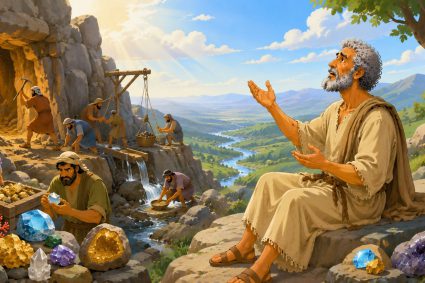
David says that God’s Word is more desirable than gold, even than much fine gold. In David’s time, as today, gold represented wealth and value. But David says that God’s Word is worth more.
Gold can purchase many things, but it cannot save the soul. Gold can shine, but it cannot cleanse the heart. Gold can increase possessions, but it cannot give true wisdom.
God’s Word, however, leads to life. It shows the way to God, warns us of danger, comforts us in distress, and gives us truth.
For young and grown-up hearts, this raises a question: What is truly precious to me? What do I seek more eagerly—visible gain or God’s voice?
🍯 God’s Word Is Sweeter Than Honey
David also says that God’s Word is sweeter than honey and the honeycomb. Honey is sweet, pleasant, and precious. To David, God’s Word is not only right, but also deeply satisfying.
This does not mean that God’s Word is always easy. Sometimes it corrects us. Sometimes it reveals our guilt. But even this correction arises from God’s goodness.
Medicine may taste bitter and still bring healing, but David even says that God’s Word is sweet because it fills the heart with God’s truth. It tastes good to the soul that loves God.
Those who truly become acquainted with God’s Word discover that it is neither dry nor empty. It is rich, living, and filled with grace.
⚠️ God’s Word Warns Us
David says that God’s servant is warned by His Word. A warning is not against us, but for us. It protects us from danger.
If a sign says, “Warning: Deep Ravine,” it is not being unkind. It is providing help. In the same way, God’s Word warns us against paths that destroy.
We can tell children: When your parents tell you not to run into the road, they do not want to take away your joy. They want to protect you. God’s Word warns us because He loves us.
David knows that he needs this warning. His heart is not automatically safe. God’s Word preserves him.
🎁 Keeping God’s Word Brings Great Reward
David says that there is great reward in keeping God’s Word. This does not mean that we earn God’s love like money. It means that God’s way is blessed.
Those who honor God’s Word do not live empty lives. They receive wisdom, peace, purity, direction, and closeness to God. This is a profound reward.
Sometimes the reward is not immediately visible. Faithfulness can also be difficult. But God’s way remains the way of life.
The greatest reward is not merely that circumstances go well. The greatest reward is living with God and being shaped by His Word.
🪞 Who Can Understand Their Errors?
After all his wonder at creation and God’s Word, David becomes deeply personal. He asks, “Who can understand his errors?” This question reveals humility.
David knows that he cannot even see all his own faults. Some sins are obvious. Others are hidden, even from himself. The heart can deceive itself.
David therefore needs not only God’s Word before him, but God’s light within him. He needs to be cleansed from hidden faults.
This is important for young and grown-up hearts: We need God not only for the great problems surrounding us. We also need Him for what remains hidden within us.
🧼 Cleanse Me from Hidden Faults
David asks God to forgive or cleanse him from hidden faults. He does not want to hold on to things that grieve God merely because he cannot clearly see them himself.
This is a deeply honest prayer. David does not say, “I am certain that everything within me is right.” He says, “Lord, You see more deeply than I do. Cleanse me.”
Sometimes we realize only later that a word was unloving, a thought was proud, or a decision was selfish. God can reveal these things without destroying us.
He cleanses because He loves. His light does not uncover sin to leave us hopeless, but to set us free.
🚫 Keep Me from Presumptuous Sins
David also asks to be preserved from presumptuous sins. These are sins in which a person knowingly and proudly acts against God’s way.
Presumption says, “I know better. I want my own way, even if God says something different.” Such sin can rule over a person if they do not repent.
David knows that he needs God’s protection. He does not want sin to rule over him. He wants to be free, pure, and walking in God’s way.
For young and grown-up hearts, this is an important request: Lord, protect me from pride. Help me not to act deliberately against Your light.
🕊️ A Heart That Desires to Stand Blameless Before God
David says that he will then be blameless and innocent of great transgression. He longs for a heart that is not ruled by sin.
These are not proud words. They form a prayer for protection. David knows that without God’s help, he can fall. With God’s help, his heart can remain steadfast.
A clean heart does not arise through human effort alone. It needs God’s grace, God’s Word, and God’s preserving hand.
Psalm 19 therefore leads us from the heavens to the heart. Those who see God’s glory and love His Word also desire to become pure before Him.
💭 May Our Words and Thoughts Please God
The psalm ends with a beautiful prayer: Let the words of my mouth and the meditation of my heart be acceptable in Your sight, O Lord, my Rock and my Redeemer.
David does not ask merely that his outward words be right. He also wants the thoughts of his heart to please God. God sees both: the mouth and the heart.
For young and grown-up hearts, this is a beautiful daily prayer. Before we speak, write, decide, or dwell on our thoughts, we may ask: Lord, let my words and thoughts be pleasing to You.
At the end, David calls God his Rock and Redeemer. The God who created the heavens and the sun is also the God who can save, cleanse, and strengthen David’s heart.
🌟 Creation, the Word, and the Heart Belong Together
Psalm 19 connects three great areas. First, we see creation silently declaring God’s glory. Then we hear God’s Word, which is clear, pure, righteous, and life-giving. Finally, we see David’s heart, which needs cleansing and protection.
This is a wonderful journey. Those who observe the heavens learn to marvel. Those who listen to God’s Word learn to live. Those who open their hearts before God learn to pray humbly.
Creation reveals God’s power. God’s Word reveals His will. Prayer shows how a person can respond.
The invitation for young and grown-up hearts remains: Look, listen, and pray. Look at God’s works. Listen to God’s Word. Pray that your heart may be pleasing to Him.
🌅 What This Psalm Reveals
Psalm 19 reveals that creation declares God’s glory. The heavens, day, night, and the sun speak without audible words, yet they point toward the Creator.
The psalm also shows that God’s Word speaks even more clearly to the heart. It restores the soul, makes us wise, rejoices the heart, enlightens the eyes, warns us of danger, and is more precious than gold and sweeter than honey. At the end, David asks God to give him a clean heart, pure words, and thoughts that are pleasing to the Lord.
🟣 Summary
Psalm 19 begins with wonder at creation. The heavens declare God’s glory, and day and night pass the message forward without using audible words. The sun is described as a bridegroom and a strong man running his course across the heavens. David then speaks about God’s Word. The law of the Lord is perfect and restores the soul. God’s testimony makes us wise, His statutes rejoice the heart, His commandment enlightens the eyes, and His judgments are true and righteous. God’s Word is more precious than gold and sweeter than honey. It warns us and brings great reward. At the end, David recognizes that he needs God’s cleansing. He asks for forgiveness for hidden faults, protection from presumptuous sins, and that his words and thoughts may please God.
💚 A Message for Young and Grown-Up Hearts Today
We learn that creation is filled with signs pointing toward God. The heavens, the sun, the day, and the night invite us to honor the Creator and marvel at His glory.
We also learn that God’s Word is a precious treasure. It provides light, wisdom, joy, warning, and renewed strength. Those who love God’s Word receive direction for their hearts and lives.
And we learn that wonder and Bible reading should lead us to prayer. We need hearts that God cleanses, preserves, and guides. Our words and thoughts should please the Lord, who is our Rock and Redeemer.
💭 Thoughts for Reflection
🔸 What does the sky reveal to me about God’s greatness?
🔸 Why is God’s Word more precious than gold and sweeter than honey?
🔸 Which words and thoughts would I like to entrust to God today?
🧒 👧 👦
💌 Invitation to Psalm 20
🚩 God Helps in the Day of Trouble
Psalm 19 has shown us how creation declares God’s glory and how His Word enlightens the heart. At the end, David prayed that his words and thoughts would be pleasing to God.
Psalm 20 now leads us into a prayer for help. The people ask God to answer the king in the day of trouble, strengthen him, and grant success to his plans according to God’s will.
What does a person trust when great challenges arise?
Come along and discover the next psalm!
🔔 Teaser for Psalm 20
🛡️ When Help Does Not Come from Chariots and Horses
Psalm 20 is a prayer before danger. Some trust in chariots and horses, but God’s people choose to remember the name of the Lord.
👉 Why do the people ask for help in the day of trouble?
👉 What does it mean to raise a banner in the name of God?
👉 And why is trust in God stronger than trust in human power?
✨ In the next psalm, we will learn that true security is found not in strength, weapons, or plans, but in the name of the Lord.
