




















✉️ FIRST AND SECOND CORINTHIANS
🤲 Lesson 9: Love-driven Ministry
🤝 9.4 Forgiveness and Reaffirmation of Love
🌿 Correction With the Goal of Forgiveness and Restoration
📖 1. Introduction
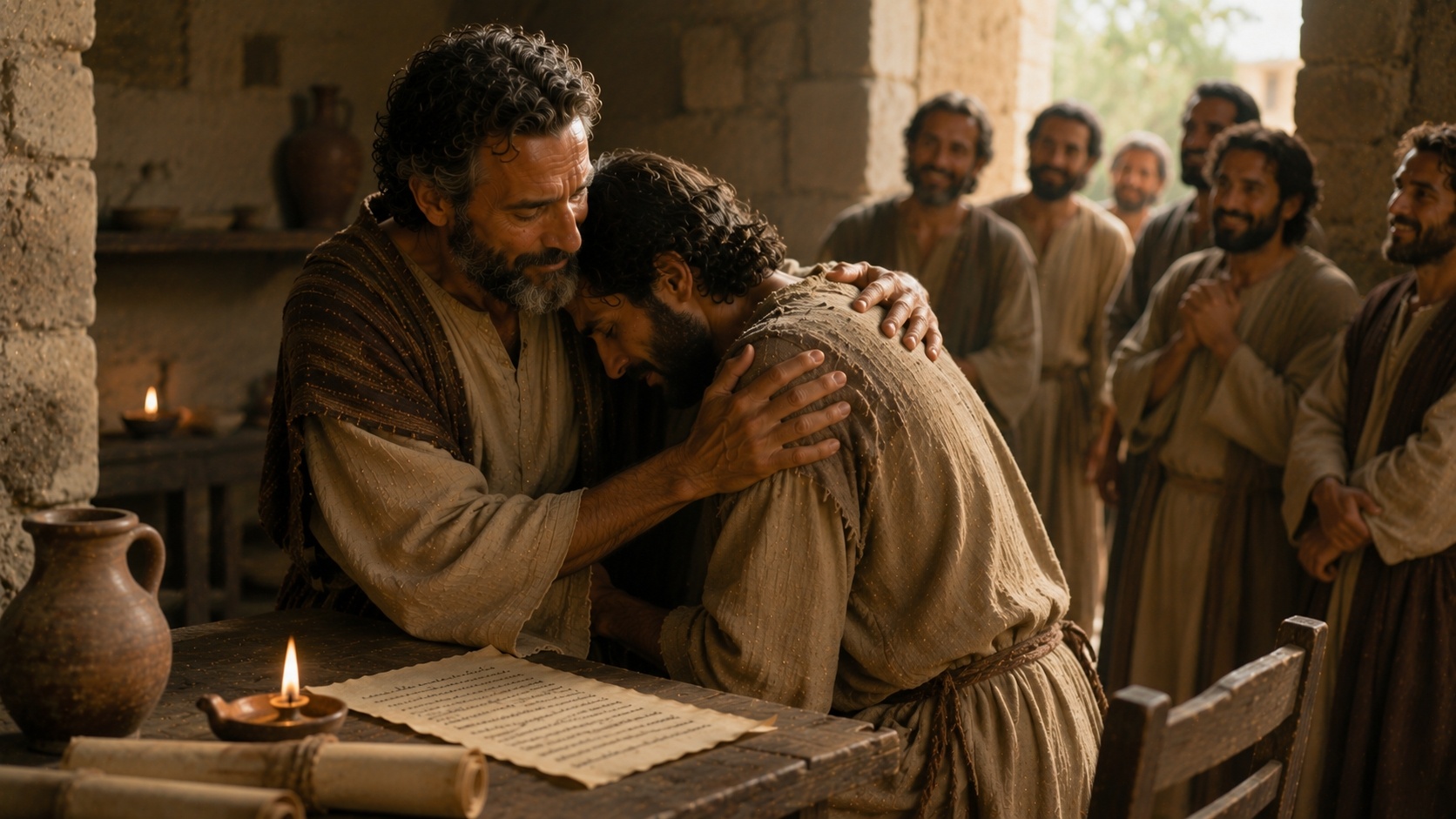
In this passage, Paul shows that Christian love does not merely comfort and act honestly; it is also able to forgive and restore. The church in Corinth had responded to his serious admonition and had become willing to identify wrongdoing clearly. But a new danger had now arisen: The person who had been corrected should not remain permanently crushed. Paul therefore calls upon the church to forgive him and reaffirm their love for him. Biblical correction does not end with punishment, but seeks healing, repentance, and restoration to fellowship. True love holds truth and mercy together.
📜 2. The Biblical Foundation
Paul writes:
“This punishment which was inflicted by the majority is sufficient for such a man.”
2 Corinthians 2:6
He then urges the church:
“So that, on the contrary, you ought rather to forgive and comfort him, lest perhaps such a one be swallowed up with too much sorrow.”
2 Corinthians 2:7
And he continues:
“Therefore I urge you to reaffirm your love to him.”
2 Corinthians 2:8
Paul also explains:
“Now whom you forgive anything, I also forgive.”
2 Corinthians 2:10
And he warns:
“Lest Satan should take advantage of us; for we are not ignorant of his devices.”
2 Corinthians 2:11
These verses show that forgiveness and renewed love protect the church from harshness, bitterness, and destructive sorrow.
🌍 3. Connection to Our Time
Churches today also face the challenge of dealing spiritually with guilt, wounds, and public failures. Some respond too leniently and avoid every form of clear correction. Others respond too harshly and leave little room for restoration after genuine repentance. Paul shows us another way: Sin must be taken seriously, but the sinner must not be abandoned. Where genuine repentance becomes visible, the church should no longer crush the person, but forgive, comfort, and reaffirm its love. A healthy church is therefore neither indifferent toward sin nor merciless toward those who repent.
💡 4. Central Message of the Lesson
👉 Biblical correction does not seek to shame people permanently, but to restore them through forgiveness, comfort, and renewed love.
✝️ 5. Theological Emphasis
The theological emphasis of this lesson lies in the healing purpose of Christian correction. Paul shows that church discipline or corrective pastoral care is never an end in itself. It should not demonstrate power, humiliate people, or permanently exclude those who have done wrong. Its purpose is restoration.
The church had apparently responded to Paul’s admonition and corrected the person who had sinned. Paul now says that this measure is sufficient. This is remarkable. He does not demand endless punishment, but recognizes the moment when severity must give way to comfort.
Paul thereby demonstrates spiritual balance. There is a time for clear admonition and a time for loving restoration. When sin is ignored, the church becomes unhealthy. When repentance is ignored, the church becomes hard. Both responses contradict the Spirit of Christ.
Forgiveness does not mean that the sin was harmless. Paul does not minimize the wrongdoing. He knows that guilt causes genuine harm. But he also knows that when genuine repentance takes place, God’s grace is greater than guilt. Forgiveness takes sin seriously, but it does not allow sin to have the final word.
Paul’s statement that the person should not be swallowed up with “too much sorrow” is especially important. Paul is concerned about his heart. Correction may be necessary, but it can also break a person if it is not accompanied by love. Spiritual leadership must therefore see not only the truth, but also the emotional burden carried by the individual.
Paul urges the church to reaffirm its love. Love should not merely be felt inwardly; it must be shown visibly. The repentant person should be able to sense: You have not been written off. You may return. God’s grace applies to you. The church is reopening the way into fellowship.
Here the gospel becomes practical. Christ does not forgive only in theory. He restores. Peter, who denied Jesus, was not cast away, but called again. Paul himself, who had persecuted the church, was transformed by grace into a servant of Christ. Those who live by grace cannot deny grace to others.
At the same time, Paul warns against Satan. This is serious. Satan can work both through sin and through merciless harshness after repentance. First, he tries to lead people into guilt; afterward, he attempts to destroy them through despair, shame, and rejection. A church that refuses to forgive can unknowingly become an instrument of this destruction.
The theological core is this: The church should reflect God’s character. God is holy and merciful, just and gracious, truthful and restorative. The church’s response to guilt must therefore also be shaped by both truth and love.
🌟 6. Spiritual Deepening
This lesson touches a very sensitive area of church life. How do we treat people who have failed? How do we respond when guilt becomes visible? How do we act when someone repents, but the memory of that person’s failure remains?
Paul shows that love does not mean ignoring sin. A church that never corrects does not truly love, because sin destroys relationships, consciences, and the church’s witness. Those who genuinely love another person will not watch indifferently while that person remains on a dangerous path.
But Paul shows just as clearly that love must not remain harsh after repentance has taken place. Some people can be extremely severe when someone falls. They may forgive outwardly, but inwardly they continue holding on to the person’s guilt. They repeatedly bring it up and never allow the other person to make a genuine new beginning.
That is not the way of Christ. Jesus calls people to repentance, but He also gives restoration. He does not say, “Come back, but remain under suspicion forever.” His grace raises people up. His forgiveness gives them a future. His love is not blind to the past, but it does not allow the past to rule over God’s new grace.
This is especially important within the church. A person who repents needs more than a formal decision; that person needs genuine acceptance. They need people who will encourage them, pray for them, accompany them, and help them regain confidence. Forgiveness must become practical.
At the same time, restoration requires wisdom. Not every responsibility can be returned immediately. Sometimes time, guidance, maturity, and safeguards are necessary. But even when certain consequences remain, love must never be absent. Caution and mercy do not contradict each other.
Paul’s words help us distinguish between consequences and condemnation. Consequences can be healing. Condemnation destroys. Consequences say, “This was serious, and we must deal with it responsibly.” Condemnation says, “You will always be defined by your mistake.” The gospel contradicts this second voice.
The warning against “too much sorrow” is especially powerful. Guilt can place a heavy burden upon a person. When rejection, harshness, and constant reminders are added, that person can fall into despair. Paul wants to prevent precisely this. The church must not lose the person whom it originally wanted to win back.
This reveals the pastoral depth of Paul’s concern. He is interested not only in order, but also in the salvation and healing of the person. He thinks not only about the purity of the church, but also about the rescue of the individual. In his ministry, truth and love remain inseparable.
We, too, must examine ourselves. Are there people whose past we continue to hold against them? Is there someone whom we officially accept but have not inwardly welcomed back? Is there guilt that we keep ready to use as a weapon? These questions are not easy, but they are necessary.
Forgiveness does not mean that trust is immediately and completely restored. Trust may require time. But forgiveness means that we no longer force another person to wear their guilt as their identity. We surrender the wrong to God and open the way for healing.
The church becomes especially credible when it is able to do both: clearly identify sin and lovingly receive repentant sinners again. A church that is only strict creates fear. A church that is only permissive loses spiritual clarity. A church that unites truth and grace reflects Christ.
Paul calls upon the Corinthians to reaffirm their love visibly. That is a beautiful expression. Love should not merely be assumed; it should be confirmed. After guilt and repentance, people sometimes need a clear message: “We love you. We desire your healing. We want you to continue walking with Christ.”
This attitude can transform families, churches, and friendships. Many relationships remain unhealthy because guilt is never properly addressed. Others remain unhealthy because guilt is never truly forgiven. The gospel leads us through both narrow passages—to truth and to grace.
In the end, this lesson reveals the heart of God. God confronts sin because it destroys. But God forgives those who repent because He wants to save. Those who live by this love will learn not to hold others captive within their guilt, but to open the way for them to return to Christ.
🔧 7. Application in Everyday Life
Practical Steps:
- Take sin seriously without reducing a person to their sin.
- When offering correction, seek restoration rather than humiliation.
- Forgive when genuine repentance becomes visible.
- Reaffirm love not only with words, but also through tangible acceptance.
- Help people rise spiritually again after they have fallen.
- Do not confuse forgiveness with naivety; act with both mercy and wisdom.
- Do not keep a permanent inward record of other people’s guilt.
- Ask God for a heart that holds truth and mercy together.
❓ 8. Reflection Question
Is there someone whom I have outwardly forgiven, but whose guilt I still hold on to inwardly instead of opening the way for that person’s restoration?
🌟 9. Closing Thought
Paul shows that love does not stop with correction. When guilt has been recognized and repented of, the church should forgive, comfort, and reaffirm its love. The purpose of biblical admonition is not permanent humiliation, but restoration in Christ. A church that reflects God’s love takes sin seriously while also opening the door of grace to those who repent. Satan wants either to hold people in sin or to plunge them into despair after they have sinned. Christ, however, calls them to repentance, forgives them, and raises them up again.
“Therefore I urge you to reaffirm your love to him.”
2 Corinthians 2:8 🤝🌿🙏✨
