










Series JESUS IN THE GOSPEL OF JOHN with Pastor Mark Finley |
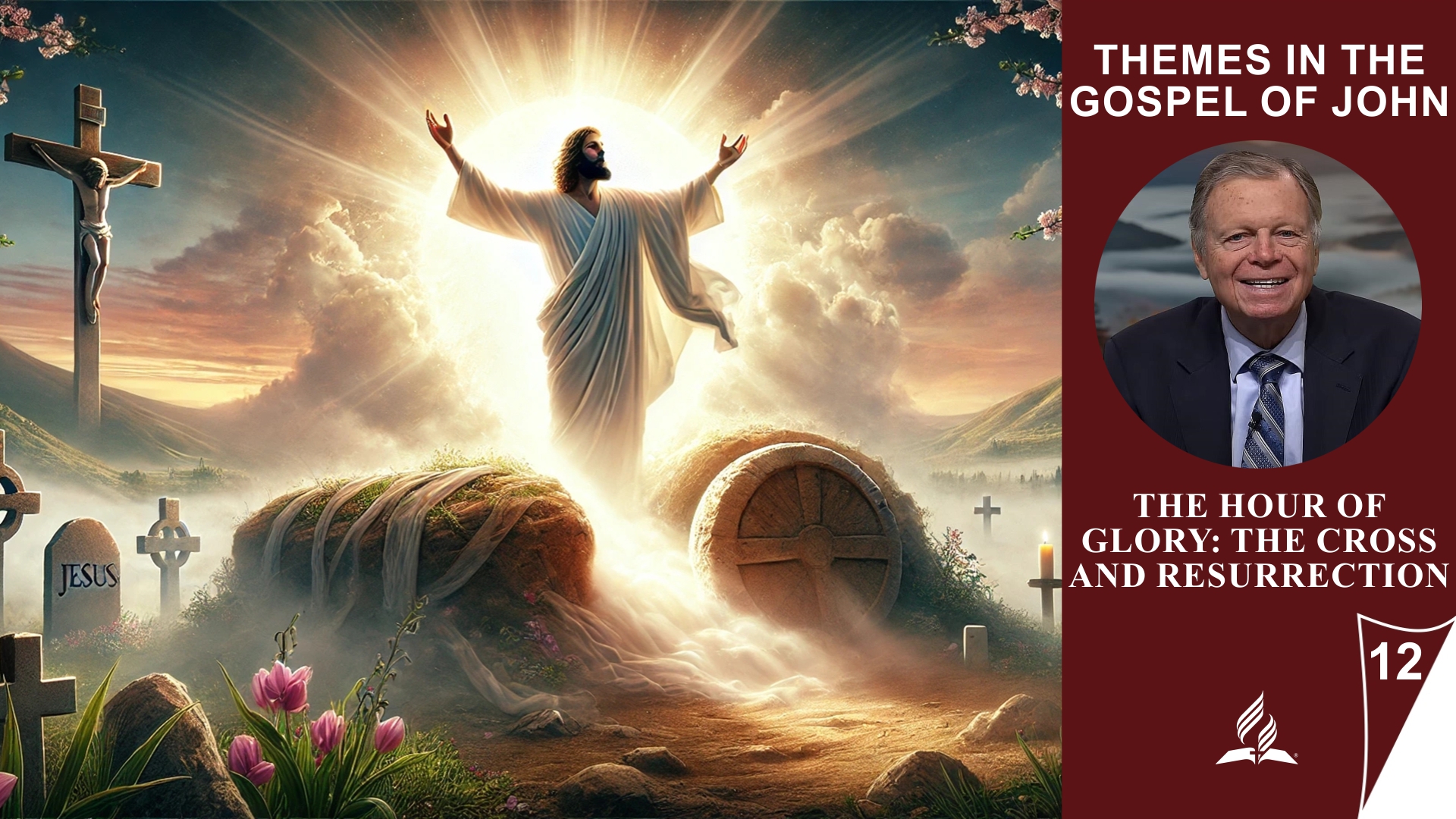
Lesson 12.The Hour of Glory: The Cross and Resurrection |
The Cross and the Resurrection: The Turning Point of History |
Lesson 12 deals with the central events of the Christian faith: the death and resurrection of Jesus Christ. This week, we explore how the cross represents the fulfillment of God’s plan to save humanity and how the resurrection transforms the empty tomb into a symbol of hope. From the trial before Pilate to the encounter between the risen Christ and Mary Magdalene, God’s love and grace are powerfully demonstrated. Jesus’ last words, “It is finished,” mark the victory over sin and death. This lesson invites us to reflect on the significance of the cross and resurrection for our own lives and to embody the hope of the resurrection in our daily lives.
Memory Text: John 18:37 – “Then Pilate said to him, ‘So you are a king?’ Jesus answered, ‘You say that I am a king. For this purpose I was born and for this purpose I have come into the world—to bear witness to the truth. Everyone who is of the truth listens to my voice’.”
Content:
12.1 What is Truth?
The Truth Stands Before Us: Pilate’s Missed Opportunity
The encounter between Jesus and Pilate in John 18:33–38 is more than just a political interrogation—it is a profound confrontation with the truth. Jesus makes it clear that His kingdom is not of this world and reveals that He has come to testify to the truth. Pilate’s question, “What is truth?” reflects his inner turmoil and confusion, yet he seeks no real answer. Instead, he ignores the truth that stands right before him and chooses the more convenient path, shaped by prejudice and external pressures. In the Gospel of John, truth is inseparably linked with Jesus, who is “the way, the truth, and the life.” This episode calls us to overcome our own prejudices and fears to recognize and accept the truth in Jesus.
12.2 Behold the Man!
The Irony of Judgment: The True King and the Lamb of God
In John 18:38–19:5, Pilate attempts to release Jesus by leaving the decision to the crowd. He presents Jesus, mocked and humiliated with a crown of thorns and a purple robe, saying, “Behold the man!” However, his strategy fails: the religious leaders and the people choose Barabbas instead of Jesus. Ironically, Pilate unknowingly presents Jesus not only as a ridiculed king but also as the Lamb of God who bears the sin of the world. This scene illustrates how political power, fear, and hatred can suppress truth and justice. It is telling that a pagan governor hesitates more to condemn Jesus than the spiritual leaders who should have recognized Him. This story warns us to be vigilant against prejudice and abuse of power and to courageously defend the truth.
12.3 “It Is Finished”
The Completed Work: Hope Through Jesus’ Sacrifice
The words “It is finished” mark the culmination of Jesus’ mission. On the cross, He completed the work of redemption that the Father had commissioned, fulfilling Scripture in every aspect. Pilate’s inscription, “Jesus of Nazareth, the King of the Jews,” became a silent testimony to Jesus’ true identity, even though it was intended as mockery. In the moving scene where Jesus entrusts His mother Mary to John, it is evident that even in suffering, His love and care for others are paramount. Jesus’ death is not the end but the beginning of new hope for humanity. For us, His accomplished work means forgiveness, redemption, and the possibility of living in a renewed relationship with God.
12.4 The Empty Tomb
The Empty Tomb: A Sign of Resurrection and Hope
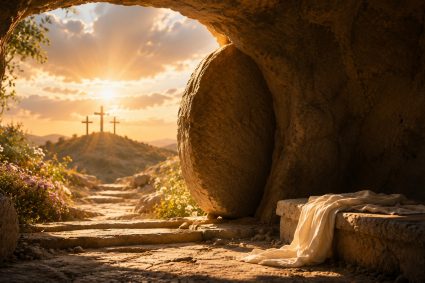
The empty tomb is the central proof of Jesus’ resurrection and gives us the assurance that death does not have the final word. The description of the folded burial cloths, especially the linen wrappings, emphasizes that Jesus’ resurrection was not the work of grave robbers but a deliberate and divine act. John saw and believed—the order and calm in the tomb convinced him that something supernatural had occurred. For Jesus’ followers, this event marks the fulfillment of His promises and the foundation of their faith. Jesus’ resurrection means hope for new life and the overcoming of death and sin. The empty tomb challenges us to live in this living hope.
12.5 Jesus and Mary
A Personal Revelation: Mary Recognizes the Risen Lord
Mary Magdalene experiences a turning point in history at the empty tomb. Despite her grief and confusion, she is personally addressed by Jesus, and only by hearing her name does she recognize Him. This encounter demonstrates the personal relationship Jesus has with His followers. His resurrection changes everything—it not only brings comfort to Mary’s sorrow but also gives all of humanity hope and life. Mary becomes the first witness to the resurrection and is entrusted with spreading this message to the disciples. Without the resurrection, as Paul emphasizes in 1 Corinthians 15:12–20, our faith would be in vain. But through Jesus’ resurrection, we have a solid foundation for our faith and hope.
12.6 Summary
The Cross and Resurrection: The Climax of God’s Plan of Redemption
In Lesson 12, the significance of Jesus’ crucifixion and resurrection is highlighted as the climax of His redemptive work. During His trial before Pilate, Jesus explains that He has come to testify to the truth, yet people miss this truth through prejudice and power plays. On the cross, Jesus completes His mission with the words “It is finished,” bringing hope and redemption for humanity. The empty tomb confirms His resurrection and demonstrates that death has been overcome. Mary Magdalene, as the first witness to the resurrection, is personally addressed by Jesus and entrusted with the task of proclaiming the good news to the disciples. These events call us to live in the hope and faith of the resurrection and to accept the gift of redemption.

(Visited 30 times, 1 visits today)