





✉️ FIRST AND SECOND CORINTHIANS
🤲 Lesson 9: Love-driven Ministry
🏆 9.5 Triumph in Christ
✝️ Despite Concern and Pain, Christ Leads His Ministry to Victory
📖 1. Introduction
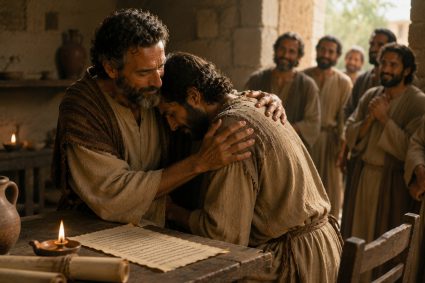
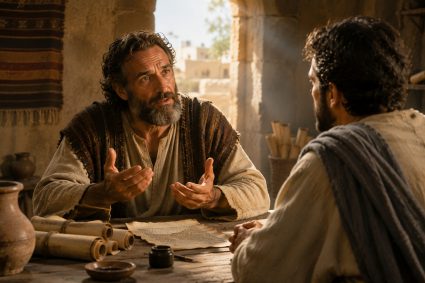
Paul was deeply troubled because he was waiting for Titus and did not yet know how the Corinthians had responded to his serious letter. Although a door for the gospel had been opened to him in Troas, his heart found no rest. Concern for the church weighed heavily upon him. Later, however, when Titus brought him good news in Macedonia, gratitude poured from his heart. Paul did not regard this as his own success, but as God’s triumph in Christ. To him, victory did not mean glory for the servant, but that Christ was working, reaching hearts, and restoring His church.
📜 2. The Biblical Foundation
Paul writes:
“Furthermore, when I came to Troas to preach Christ’s gospel, and a door was opened to me by the Lord, I had no rest in my spirit, because I did not find Titus my brother.”
2 Corinthians 2:12–13
Then he declares with gratitude:
“Now thanks be to God who always leads us in triumph in Christ, and through us diffuses the fragrance of His knowledge in every place.”
2 Corinthians 2:14
Paul continues:
“For we are to God the fragrance of Christ among those who are being saved and among those who are perishing.”
2 Corinthians 2:15
Finally, he emphasizes his sincerity:
“For we are not, as so many, peddling the word of God; but as of sincerity, but as from God, we speak in the sight of God in Christ.”
2 Corinthians 2:17
These verses show that ministry often takes place amid concern and pressure, but Christ nevertheless leads His work to victory.
🌍 3. Connection to Our Time
Many Christians today are also familiar with the tension between ministry and inner unrest. We desire to serve God, yet at the same time we carry concerns about people, churches, families, or unresolved conflicts. We do not always see immediately what our efforts are accomplishing. Sometimes we pray, write, speak, and hope without receiving an immediate response. Paul reminds us that God’s work does not depend upon our inner calm or upon our having a complete understanding of the situation. Christ can reveal His triumph even through concerned, weak, and waiting servants.
💡 4. Central Message of the Lesson
👉 Christ leads His ministry to victory even through concern, pain, and uncertainty when His servants remain sincere, faithful, and entirely focused upon Him.
✝️ 5. Theological Emphasis
The theological emphasis of this lesson lies in Christ’s triumph and in the role of His servants as bearers of the gospel. Paul does not speak first about his own victory, but about God’s triumph in Christ. This distinction is crucial. The ministry does not belong to Paul, but to Christ. The church does not belong to Paul, but to Christ. The fruit does not belong to Paul, but to Christ.
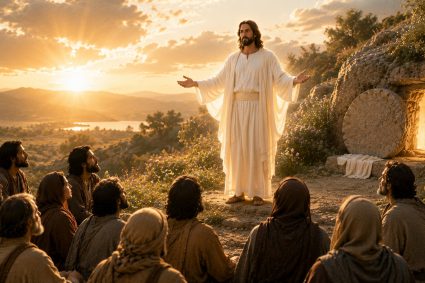
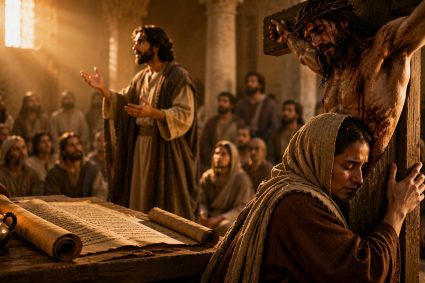
When Paul says that God “always leads us in triumph in Christ,” he shows that the true Victor has already been established. Through the cross and resurrection, Christ has triumphed over sin, death, and the powers of darkness. This victory is now being made known throughout the world through the proclamation of the gospel. Paul understands his ministry as part of this great divine triumphal procession.
It is remarkable that Paul does not describe this triumph during a period of outward ease. He had previously been troubled, burdened, and filled with concern. This means that Christ’s triumph is not the same as a problem-free life. God’s victory is revealed not only when everything proceeds smoothly, but especially when Christ works through weakness, tears, and faithfulness.
Paul had an open door for the gospel in Troas. Nevertheless, he found no rest because Titus was not there and he had received no news from Corinth. This shows that spiritual people are permitted to experience genuine concern. Faithful servants of God are not insensitive. They love people so deeply that they are moved by their spiritual condition.
This concern, however, was not self-centered. Paul did not suffer because his personal reputation was threatened, but because the church was precious to him. His unrest arose from love. This is an important distinction. There is an unhealthy concern that arises from control, fear, or pride, but there is also a spiritual concern that grows out of responsibility and love.
When Paul finally learned about the Corinthians’ positive response, he interpreted the outcome spiritually. He did not say, “I prevailed.” He did not declare, “My strategy succeeded.” He thanked God. To Paul, every spiritual fruit was a gift of God’s grace.
Paul then uses the image of the “fragrance of His knowledge.” The gospel spreads like a fragrance. Wherever Christ is made known through His servants, something of His presence becomes perceptible. People encounter more than human speech; they encounter the knowledge of Christ.
This fragrance, however, does not affect everyone in the same way. To some, it is the fragrance of life because they accept the gospel. To others, it becomes the fragrance of death because they reject Christ. Paul thus shows that the proclamation of the gospel always calls for a decision. The gospel brings comfort and salvation to those who believe, but it also stands as a solemn testimony before those who close themselves to it.
This truth protects Christ’s servant from false expectations. Not everyone will respond positively, and not every proclamation will immediately produce visible success. Nevertheless, the ministry remains meaningful because it is performed before God and bears witness to Christ. The standard is not merely human approval, but faithfulness to Christ.
At the end, Paul presents a contrast: some peddle the Word of God, but he preaches out of sincerity, as from God, in the sight of God, and in Christ. This is a powerful image. God’s Word must not be sold, distorted, or used for personal gain. True proclamation is sacred because it carries God’s message.
The theological core is this: Christ is the Victor, and His servants are called to bear sincere witness to His name. The triumph belongs not to humanity, but to God. Ministry is not a commodity, but a sacred responsibility. Its fruit does not arise from human self-promotion, but through the power of Christ.
🌟 6. Spiritual Deepening
This lesson helps us understand ministry more realistically. Paul does not present a ministry without burdens. He shows us a ministry in which open doors and inner unrest can exist side by side. This is true to life. A person can be engaged in God’s work while still carrying concern within the heart.
We sometimes imagine that spiritual ministry should always be accompanied by enthusiasm, peace, and clarity. Paul, however, experiences something different. An open door stands before him in Troas, but his spirit remains troubled. He recognizes opportunities, yet his heart is with the Corinthians. He proclaims Christ while simultaneously waiting anxiously for news.
This shows that even spiritually mature people remain human. They carry emotions, concerns, and unanswered questions. Paul does not suppress his inner unrest; he describes it honestly. This honesty makes his testimony credible. God’s servant does not need to appear untouchable, but must remain faithful even while carrying an inner burden.
This faithfulness is important. Paul does not stop loving and proclaiming Christ. Even in his unrest, the gospel remains at the center of his life. Concern does not take away his love for Christ. Pain does not remove his calling. Waiting does not destroy his hope.
This is a powerful spiritual lesson. We, too, sometimes wait for answers. We wait for reconciliation, for another person’s response, for change within a family, or for fruit within a church. During such times, the temptation to become weary, bitter, or resigned can be very strong.
Paul shows us another way. He continues his journey. He searches for Titus and travels onward to Macedonia. When the good news arrives, he responds with gratitude. He recognizes God’s hand in what has happened. This is spiritual attentiveness: not overlooking God’s work when it finally becomes visible.
His gratitude is not superficial. He knows how difficult the path has been. His letter had been written through tears. The Corinthians’ response had been uncertain, and his relationship with the church had been strained. For this very reason, his joy is so profound when God grants healing. The more difficult the path has been, the more precious the fruit of grace becomes.
The expression “triumph in Christ” shows that Paul does not interpret his experience merely from a human perspective. Behind the events, he sees Christ’s great victory. What happened in Corinth was more than conflict management. It was a spiritual battle for hearts, truth, love, and restoration—and Christ led this battle to victory.
The same is true today. Many conflicts within churches are not merely organizational problems. They often involve trust, humility, truth, forgiveness, and spiritual maturity. When Christ brings healing in such situations, it is a triumph of His grace.
Paul also speaks about the “fragrance of Christ.” This is both a beautiful and solemn image. Our lives and ministry spread something around us. People recognize whether Christ is becoming visible through us or whether we are merely presenting ourselves. They can sense whether our words are carried by love, truth, and humility.
The fragrance of Christ does not arise from perfection, but from closeness to Jesus. Those who live with Christ carry something of His character into the lives of others: patience, sincerity, compassion, courage, truth, and hope. Such people make the gospel not only audible, but also perceptible.
At the same time, Paul reminds us that not everyone receives the fragrance of Christ in the same way. This protects us from discouragement. When people reject the gospel, it does not automatically mean that Christ’s servant has failed. The Word of God calls people to a decision. Our responsibility is faithfulness; the response ultimately lies before God.
Nevertheless, we must examine ourselves. Do we proclaim Christ sincerely or for selfish reasons? Do we serve because we want to be noticed? Do we speak in order to gain influence? Do we use spiritual matters to obtain recognition, power, or security? Paul addresses these questions indirectly but very seriously.
He says that we speak in the sight of God in Christ. This means that every ministry is carried out beneath God’s gaze. That truth can be sobering, but it can also be liberating. We do not need to please people, but we must serve God honestly. We do not need to control our influence, but we should examine our motives.
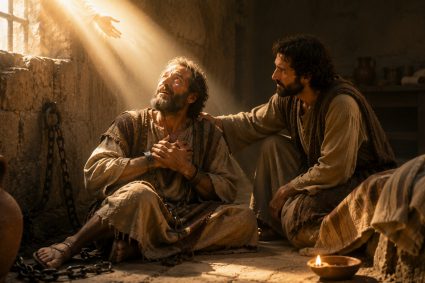
It is especially comforting to know that Christ reveals His triumph through weak human beings. Paul was concerned, hurt, waiting, and dependent upon news brought by someone else. Nevertheless, God used him. This shows that God does not require our unshakable strength, but our surrender.
When we are weary, we may come to Christ. When we are concerned, we may give Him our worries. When we are waiting for fruit, we may continue faithfully. When God acts, we should not praise ourselves, but give thanks to Him.
Ultimately, this lesson invites us to view ministry in the light of Christ. Not every open door means an easy path. Not every concern indicates a lack of faith. Not every delay means defeat. When Christ remains at the center, even a path filled with tears can become a triumph of His grace.
🔧 7. Application in Everyday Life
Practical Steps:
- Remain faithful to Christ even when you are inwardly troubled.
- Consciously entrust your concerns about people and churches to God.
- Wait patiently for God to work, even when the results are not immediately visible.
- Thank God for every fruit instead of taking the credit for yourself.
- Examine whether your ministry arises from love for Christ or from self-interest.
- Proclaim God’s Word sincerely and without manipulation.
- Be a “fragrance of Christ” through your words, attitude, and behavior.
- Do not become discouraged when not everyone responds positively to the gospel.
❓ 8. Reflection Question
What truly motivates my ministry: the desire for recognition, control, and success, or love for Christ and the desire for people to know Him?
🌟 9. Closing Thought
Paul shows us that ministry for Christ is not free from concern, pain, and inner unrest. Nevertheless, God leads His servants in Christ’s triumph because victory does not depend upon human strength, but upon Christ Himself. When Paul received the good news through Titus, he recognized God’s gracious work and responded with gratitude. True proclamation does not seek personal gain, but speaks sincerely before God and in Christ. Christ’s servant is called to spread the “fragrance of His knowledge” through a sincere life and faithful testimony. In this way, even a path filled with tears becomes a sign of Christ’s victory.
“Now thanks be to God who always leads us in triumph in Christ.”
2 Corinthians 2:14 🏆✝️🙏✨
