

9.3 The Origin of the Controversy in Heaven
The Fall of Lucifer – Pride as the Source of the Heavenly Conflict
Read Ezekiel 28:12–19 in light of Exodus 25:19–20. What is the nature of this being’s fall?
The origin of evil did not begin on Earth but in heaven. Ezekiel 28:12–19 offers insight into the fall of Lucifer, who later became Satan. Although initially addressed to the king of Tyre, the passage describes a being far beyond any human ruler. Terms like “anointed cherub,” “full of wisdom,” and “perfect in beauty” point to a heavenly figure—Lucifer, originally a high-ranking angel close to God’s throne (cf. Exodus 25:19–20, where cherubim surround God’s presence).
-
The Fall of Lucifer: Pride and Rebellion
Lucifer was initially perfect, beautiful, and endowed with a special position before God. However, these very gifts led him to pride. In his heart, he exalted himself and desired to be like God (cf. Isaiah 14:12–14). This pride turned admiration into self-glorification and obedience into rebellion. Thus began the cosmic conflict—not due to external lack but because of internal selfishness and arrogance.
Key thought: Evil did not arise from God’s creation but from the misuse of free will by a created being.
-
The Beginning of the Cosmic Conflict in Heaven
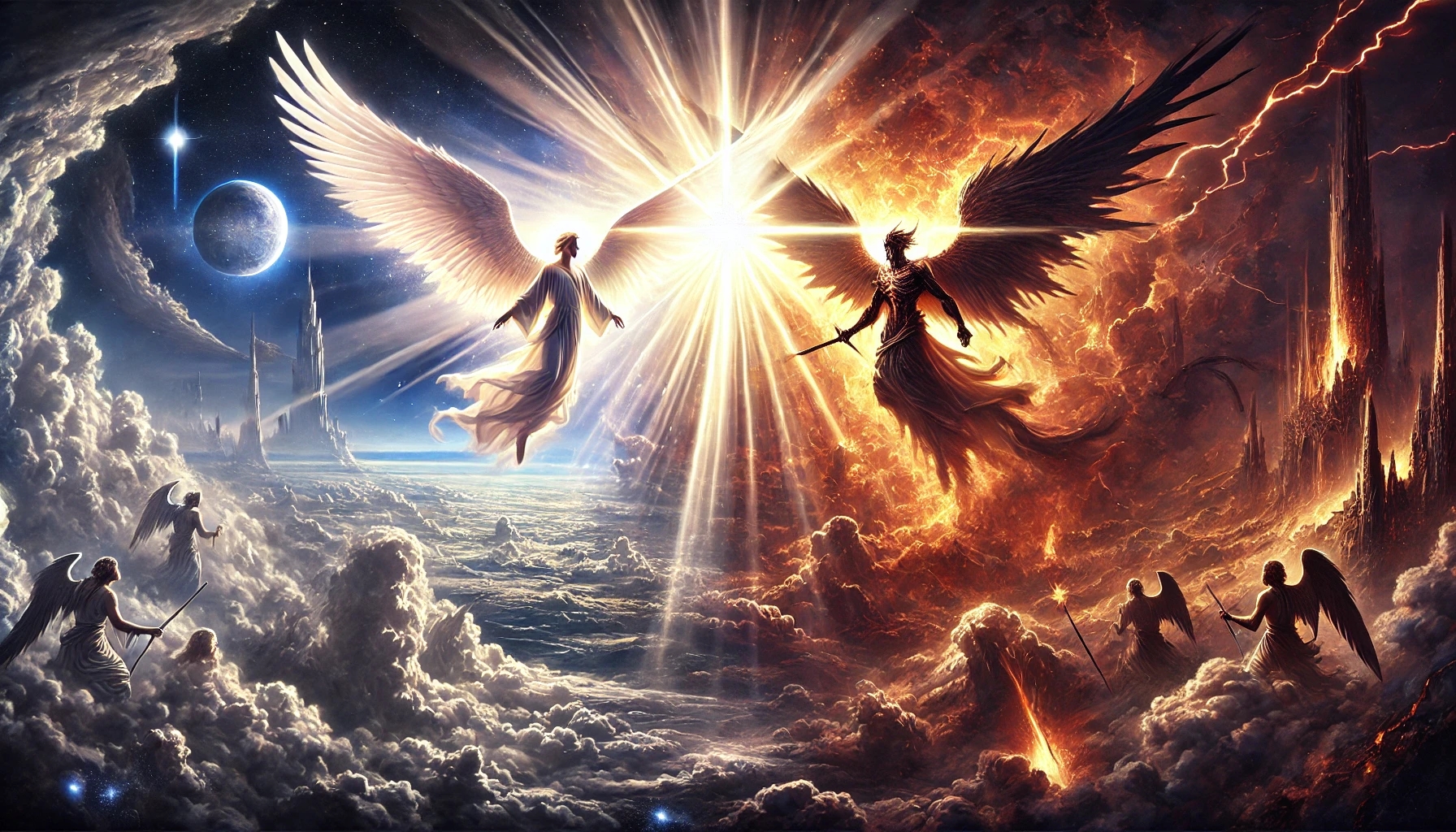
Revelation 12:7–9 describes how Lucifer’s rebellion escalated into open conflict: “And war broke out in heaven.” Lucifer, who became Satan, led other angels into rebellion. Heaven, a place of perfect harmony, was disrupted by pride and distrust. But Satan was defeated and cast to the Earth—where the conflict continued as he tempted Adam and Eve.
Why did God allow this?
God could have immediately destroyed Lucifer, but that would have raised questions about His justice and love. Instead, He allowed the conflict to unfold to show the universe the consequences of rebellion—and the superiority of His love.
-
Connection to Our Lives Today
This heavenly conflict is not distant—it reflects in our daily lives:
-
Pride and Selfishness: Like Lucifer, we can be tempted to exalt ourselves above others or even above God.
-
Trusting God’s Guidance: Satan’s lies sow doubt about God’s love. We must ask: Do I trust God’s ways even when I don’t fully understand them?
-
Participating in the Spiritual Battle: We are in the midst of this conflict. Our decisions reveal whose side we are on.
-
Hope Amid the Conflict
Despite the alarming origin of evil, the Bible offers hope:
-
God’s Love Remains Constant: Despite rebellion and sin, God has provided a plan of salvation (Genesis 3:15).
-
Victory is Certain: Jesus’ life, death, and resurrection dealt the decisive blow against Satan.
-
We Are Not Alone: God strengthens us in the battle. His Word, prayer, and the Holy Spirit help us remain steadfast.
Final Thought:
The origin of evil began in heaven through pride and rebellion. God’s response is love, patience, and redemption. In our lives, the question arises: Whom do we trust—ourselves, Satan’s lies, or God’s truth? Let us remain on God’s side, for His victory is sure, and His love carries us through every battle.

Read Isaiah 14:12–15. What additional insight does this passage provide about the origin of the great conflict?
Isaiah 14:12–15 highlights the heart issue behind the great conflict: pride and self-exaltation. Lucifer, once a glorious being, sought not just admiration but God’s throne. His fall began not with an act but with an internal decision to elevate himself above God. This passage underscores that the great conflict is not merely external but a battle for the heart—between humility and pride. Satan’s slander against God mirrors a temptation we also face: Will we give God the glory or exalt ourselves? The text calls us to humility and warns of pride’s destructive consequences.
How should we understand that Lucifer, who fell, was originally “perfect … from the day you were created until unrighteousness was found in you” (Ezekiel 28:15)? How could a perfect being fall if being “perfect” did not include true moral freedom?
Lucifer’s original perfection (Ezekiel 28:15) shows that God created him flawless, with a pure character, wisdom, and beauty. This perfection, however, included the ability to choose freely. True love and obedience exist only when there is freedom to choose otherwise. Perfection here does not mean an inability to sin but the moral maturity and freedom to choose to love God. Lucifer’s fall resulted from his misuse of free will—not from a fault in God’s creation. Pride and self-exaltation led him to rebel against divine order. Without free choice, Lucifer would have been a programmed servant without a genuine relationship with God. But God desires voluntary love and worship, not forced loyalty. Lucifer’s fall is a tragic reminder that even perfect beings can err when they turn away from God and focus on themselves.
Final Thought:
Perfection includes free will—and this enables genuine love. Yet, that same freedom carries the risk of choosing against God. Lucifer’s fall urges us to use our freedom responsibly and remain humble in our relationship with God.

The fall of Lucifer and the origin of the heavenly conflict are not just historical or theological events—they directly impact our daily lives and faith. Here’s how:
-
Pride vs. Humility – A Daily Challenge:
-
In daily life: We’re tempted to elevate ourselves, seek recognition, or always be right.
-
In faith: God calls us to humility. Jesus taught: “Whoever exalts himself will be humbled” (Luke 14:11).
-
-
Free Will – Our Choices Matter:
-
In daily life: Every day, we face decisions: honesty vs. deceit, love vs. indifference, forgiveness vs. bitterness.
-
In faith: God desires our willing love. Choosing to trust Him strengthens our relationship with Him.
-
-
The Spiritual Battle is Real:
-
In daily life: Temptations and challenges are not random—they are part of a spiritual conflict.
-
In faith: God’s Word, prayer, and fellowship are our weapons. We are never alone—Jesus fights for us.
-
-
Trust Instead of Distrust in God:
-
In daily life: In crises or confusing times, doubt arises. But God promises: “I will never leave you nor forsake you” (Hebrews 13:5).
-
In faith: Trusting God brings peace even when circumstances are challenging.
-
-
Hope Amid the Conflict:
-
In daily life: Even when we fail, God’s forgiveness is available.
-
In faith: Christ’s victory ensures that evil does not have the final word. We can live boldly and with hope.
-
Final Thought:
The cosmic conflict began with pride and rebellion, but God’s response is love and redemption. Daily, we face the same choice Lucifer did: Will we trust God or our pride? Faith reveals itself in small daily decisions. Standing on God’s side brings hope, peace, and a victory already won.
👉 Reflection for Today: Where am I challenged to remain humble and trust God more?

Trust in God’s love, even in the struggle—His victory is certain, and His grace sustains you.

(Visited 58 times, 1 visits today)