




















🤩 Bible Stories to Marvel At
Where God’s miracles become great – for little and big children
🔎 Job Chapter 23 — Job Seeks God but Cannot Find Him
🕯️ When God Seems Hidden
🌅 Introduction
In the previous chapter, Eliphaz had accused Job very harshly. He claimed that Job must have wronged the poor, the hungry, widows, and orphans. To Eliphaz, it was clear: if Job was suffering so much, there had to be great guilt behind it. But Eliphaz did not really know that. He saw Job’s pain and turned it into accusations.
For Job, these words were like another heavy burden. He had already lost so much: his children, his possessions, his health, and the respect of many people. Now he also had to hear his friend accuse him of serious wrongdoing. But in his heart, Job knew that Eliphaz was interpreting his story incorrectly.
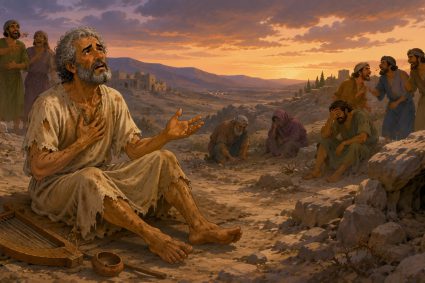
In this chapter, Job responds. But something is especially striking: he does not begin by speaking at length about Eliphaz. He does not remain focused on his friend’s accusations. His gaze goes deeper. Job longs for God. He wants to find God, stand before him, and present his case to him.
Job believes that God would listen to him. He believes that God’s judgment would not be like the harsh words of his friends. If only he could come before God, he would arrange his words and express his questions. He hopes that God would not simply push him away, but would pay attention to him.
Yet this is precisely the pain of this chapter: Job seeks God but cannot find him. He looks forward, backward, to the left, and to the right, but God remains hidden. Even so, Job does not give up on God. In the midst of this hiddenness, he says: God knows my way. And within those words is a quiet, powerful spark of trust.
📖 The Biblical Story
😔 Job’s Complaint Remains Bitter
Job begins by saying that his complaint is still bitter. His suffering has not grown smaller. The words of his friends have not brought him relief, and his questions have not yet found an answer.
He feels as though a heavy hand is resting upon him. His sighing is great, and he barely has enough strength to carry everything. Job is tired, but not indifferent. He is sad, but not silent.
This is important to understand: Job does not pretend that everything is suddenly better. He does not try to hide his pain behind beautiful words. He honestly says that his complaint is bitter.
Sometimes people think that faith means never being sad. But Job shows something different. A person can hold on to God and still weep. He can seek God and still say: My heart is heavy.
🔎 Job Wants to Know Where God Can Be Found
Then Job expresses his great desire: he wants to know where he can find God. He longs to reach God’s throne. Not to run away from God, but to come closer to him.
Job wants to present his case before God. He no longer wants to speak only with friends who misunderstand him. He does not want to keep hearing new human explanations. He wants to go to the source of all truth.
For children, we can imagine it this way: if two children are arguing and one feels completely falsely accused, that child may want to go to a fair teacher and say: Please listen to what really happened. Job longs for God’s fair hearing.
He believes that God sees more than people do. His friends see only his suffering and think they know the cause. But God also sees his heart, his ways, his tears, and the truth about him.
📜 Job Would Arrange His Words
Job imagines what it would be like if he could truly stand before God. He would present his case in an orderly way. He would gather his arguments and clearly express his questions.
This does not mean that Job wants to approach God proudly. He knows that God is great and holy. But he also believes that God is just. Therefore, he does not want to shout chaotically, but to speak honestly and clearly about what troubles him.
Job would ask God why all of this had happened. He would explain that he is not the person his friends believe him to be. He would place his complaint before the one who can truly judge.
In Job’s heart lives the hope that God listens differently from his friends. People sometimes listen only halfway, judge quickly, and misunderstand. God can listen completely.
⚖️ Job Hopes That God Will Listen Justly
Job wonders whether God would contend with him using his great power. But then he says something hopeful: no, God would pay attention to him. Job believes that God is not simply a cruel opponent.
This is an astonishing thought. Although Job feels that God has struck him severely, he still believes that God’s judgment would be different from the judgment of his friends. If he could only stand before God, God would recognize the truth.
Job is convinced that an upright person could speak with God there. He hopes that he would be cleared before his Judge, not because he is perfect, but because his friends have accused him falsely.
Here we see Job’s deep struggle once again. He does not understand God, but he trusts God’s justice more than the explanations of his friends. He fears God and seeks him at the same time.
🧭 Job Searches in Every Direction
Then Job describes his search for God. He looks ahead, but God is not there. He looks behind, but he does not perceive him. He looks to the left, where God might be working, but he does not see him. He looks to the right, but there too God remains hidden.
These words sound very lonely. Job is not searching superficially. He searches with all his heart. Yet no matter where he looks, God’s presence is not visible.
For children, we can imagine a child calling for a familiar person in the fog. The child knows that person must be somewhere nearby, but cannot see them. Everything is quiet, and the waiting becomes difficult.
This is how Job feels. God has not disappeared because Job no longer believes in him. God is hidden even though Job seeks him. This is a deep and painful experience.
🕯️ Job Says: God Knows My Way
In the middle of this search, Job says something important: God knows the way he is taking. Even though Job cannot see God, he believes that God sees him.
That is a great difference. Job does not find God, but he holds on to the truth that God knows him. He cannot see God’s face, but he believes that God sees his way. His eyes cannot find God, but God’s eyes never lose sight of Job.
Then Job says that if God tested him, he would come forth like gold. Gold is refined in fire. Fire is hot and dangerous, but it can reveal what is genuine. Job believes: if God truly examines my case, it will become clear that I am not the person my friends claim I am.
This statement is not made lightly. Job is truly suffering. But he trusts that God’s vision goes deeper than human suspicions.
👣 Job Remembers His Walk with God
Job says that his feet have held firmly to God’s path. He has kept God’s way and has not turned aside from it. God’s commands were important to him, and God’s words were more precious to him than his daily food.
This shows how Job sees himself before God. He does not say that he never needed God. He does not claim to be completely perfect and without weakness. But he knows that he has not lived as a godless person.
Job took God’s word seriously. He tried to walk in God’s ways. That is why it hurts him so deeply that his friends treat him as though he were secretly an evil man.
For children, we can say it this way: Job knows that he sought and loved God. He does not understand why others now act as though he had never taken God seriously.
🍞 God’s Words Were More Important Than Bread
Job’s statement that God’s words were more important to him than the things he needed for life is especially beautiful. Bread strengthens the body, but God’s word strengthens the heart.
Job had not merely heard God’s words casually. He had treasured them. They were valuable to him. They gave direction to his life, just as a light shows a traveler the way.
This makes clear why Job does not simply stop asking about God. God was not a distant idea to him. God was the center of his life. That is why God’s hiddenness is so painful.
When someone we love suddenly becomes silent, it hurts. Job loves God and experiences God’s silence. That is exactly why his longing sounds so deep.
🌫️ God Remains Great and Unsearchable
Then Job reflects again on God’s greatness. He knows that God is unique. If God decides something, who can stop him? Whatever God desires, he does.
This understanding does not immediately comfort Job. It also frightens him. For if God is so powerful and Job is still suffering, then Job cannot simply change God’s way.
Job realizes that God is not like a person who can quickly be persuaded. God is greater, deeper, and more mysterious. His plans are not small. His ways are higher than human thoughts.
That is why Job is filled with both reverence and fear. He seeks God, but he also knows that God is mighty. He wants to speak before God, but he trembles before God’s greatness.
😨 Job Is Frightened by God’s Power
Job says that his heart grows faint before God. When he thinks about God, he is afraid. This does not mean that Job hates God. It means that he senses how small a human being is before the great God.
Job is not only sad because of his suffering. He is also frightened because God’s ways remain dark to him. He had hoped to find God and present his case before him. But God remains hidden, and his power remains beyond understanding.
For children, we can imagine the sea. The sea is beautiful, but it is also vast and powerful. We can admire it and at the same time be afraid of it. This is how Job experiences God’s greatness: wonderful, yet overwhelming.
Job’s faith is therefore not shallow. He does not know only easy words about God. He experiences that God’s nearness can sometimes seem hidden and that God’s greatness can shake a person deeply.
🌑 Job Remains in Darkness, but Not Without God
At the end of this chapter, Job remains in darkness. He says that God has made his heart faint and has frightened him. The darkness has not been removed. He still sees no clear way out.
Yet this very chapter shows that Job has not given up on God. Someone who no longer seeks God does not continue asking: Where can I find him? Someone who has completely forgotten God does not say: God knows my way.
Job is passing through a difficult night, but his words continue to move toward God. He complains, searches, remembers, and holds on to the truth that God knows him. His trust is wounded, but it is still alive.
This makes Job a special example. He shows that faith sometimes means continuing to seek even when we have not yet found. Continuing to speak even when no answer has come. Continuing to wait even when the path is dark.
🌟 A Quiet Spark of Trust
This chapter does not end with a great celebration. Job does not jump up and say that everything has become easy. His questions remain, his fear remains, and God’s hiddenness remains.
But in the middle of it all stands a sentence like a small candle: God knows my way. Job cannot see God, but he believes that God sees him. He cannot hear God’s answer, but he believes that God knows his story.
For a child, this can be very comforting. Even though we cannot see God with our eyes, we are not invisible. Even though we do not understand everything, God knows our way.
Job is still waiting. The story is not yet over. But his search shows that even in darkness, a person can reach out toward God.
🌅 What This Chapter Shows
This chapter shows how deeply Job seeks God. He wants to know where God is, stand before him, and present his case. Job believes that God would listen more justly than his friends.
This chapter also shows that God sometimes seems hidden. Job searches in every direction but cannot find him. Yet he holds on to the truth that God knows his way and sees the truth about him.
🟣 Summary
After Eliphaz’s harsh accusations, Job responds with a deep longing for God. He wants to find God, stand before him, and honestly present his case. Job believes that God would not misjudge him as his friends have done. Yet although Job seeks God, God remains hidden from him. He looks forward, backward, left, and right, but he cannot see him. Even so, Job confidently says that God knows his way. He remembers that he has kept God’s path and valued God’s words more highly than his daily bread. At the end, Job remains afraid before God’s power and surrounded by darkness, but he continues to seek God.
💚 A Message for Children Today
Sometimes we do not feel God as close as we would like. Perhaps we pray and do not notice an immediate answer. Perhaps we have questions and do not understand why something is happening. Job shows us that even then, we may continue seeking God.
We can know this: even if we cannot see God, God sees us. Even if we do not understand the way, God knows our way. Our questions are not lost before him.
💭 Thought for Reflection
🔸 Why does Job so desperately want to find God?
🔸 What does the sentence “God knows my way” mean?
🔸 How can we continue trusting when God seems hidden?
🧒 👧 👦
💌 Invitation to Job Chapter 24
🌒 Job Asks About Injustice in the World
Job has sought God but has not found him. Yet he holds on to the truth that God knows his way. His questions have not yet been answered, but his longing for God remains alive.
Now Job will turn his attention toward the world. He sees people who wrong others, oppress the poor, and exploit the weak. And he asks why God does not intervene immediately.
Why does it sometimes seem that people must wait so long for justice?
Come and discover the next chapter!
🔔 Preview of Job Chapter 24
⚖️ When Injustice Remains Visible for a Long Time
Job looks at the world and sees painful things: the poor are exploited, the weak suffer, and evil people act in darkness.
👉 Why does Job ask about God’s times of judgment?
👉 Which people suffer because of the injustice of others?
👉 And why does God’s justice sometimes remain hidden?
✨ In the next chapter, we will hear Job’s difficult questions about injustice and justice—and learn that God also sees what people overlook.
